The Roman Empire of the East ceased as a sovereign state on the 29th of May 1453. The cultural-religious-institutional structures that the Empire had developed across eleven hundred and twenty-three years continued, however, in a sequence of successor institutions: the Patriarchate of Constantinople (substantially continuous as a institution from the 451 Council of Chalcedon to the present), the Orthodox Church (across the Greek-speaking, the Slavic-speaking, the Romanian-speaking and subsequent national jurisdictions), the Russian state's inheritance of the imperial-Orthodox synthesis (the "Third Rome" doctrine), the Greek diaspora and the 1832 modern Greek state, and the more diffuse cultural-historical legacy that the subsequent Western Renaissance and the modern Orthodox confessional cultures have carried forward.
Ottoman Constantinople
Mehmed II's reconstruction of the conquered city as the Ottoman capital from 1453 onwards produced one of the most urban-administrative transformations of the medieval period. The post-conquest population of the city was approximately fifty to seventy thousand; by the end of the sixteenth century it had been restored to approximately five hundred thousand, exceeding the late-Byzantine population by a factor of ten. The repopulation programme — involving forced transfers (sürgün) of Greek, Armenian, Jewish and Anatolian Turkish populations to the new capital — reconstructed the cosmopolitan-imperial population that the classical Constantinople had possessed.
The Ottoman institutional treatment of the Patriarchate of Constantinople was distinctive. Mehmed II confirmed Gennadios Scholarios as Patriarch in January 1454 — less than eight months after the conquest — with the constitutional position that the Patriarch was the recognised representative of the Orthodox millet (the Orthodox community within the Ottoman state). The millet system extended religious-judicial autonomy to the Orthodox community — including jurisdiction over civil matters of marriage, inheritance and intra-community disputes — under the Patriarchal hierarchy. The arrangement persisted, modified, until the nineteenth-century Tanzimat reforms and the twentieth-century population exchanges.
The Russian Third Rome
The Russian state's inheritance of the Roman-Orthodox imperial tradition was conducted through the 1472 marriage of Grand Prince Ivan III of Moscow to Zoe (subsequently Sophia) Palaiologa, the niece of the last Roman emperor. The subsequent doctrinal-political articulation of the Russian inheritance was expressed in the 1510 letter of the monk Philotheus of Pskov to the Grand Prince Vasily III:
"The old Rome fell on account of its apostate doctrine; the second Rome, which is Constantinople, fell on account of its union with the Latin heretics; but the new Rome, which is the reigning city, the God-preserved Moscow, shines on the whole world more brightly than the sun. The two Romes have fallen, the third stands firm, and a fourth there shall not be."
The Third Rome doctrine — developed across the sixteenth and seventeenth centuries — provided the ideological framework for the Russian imperial-Orthodox synthesis. The title of "Tsar" (substantially derived from "Caesar") was assumed by Ivan IV in 1547; the Russian Patriarchate was established at Moscow in 1589; the Russian imperial double-headed eagle was adopted from the late-Roman imperial heraldry. The Russian-Orthodox imperial state that the doctrine produced persisted until 1917 and conditioned the subsequent Soviet and post-Soviet Russian political-cultural identity.
The Greek diaspora and the Renaissance
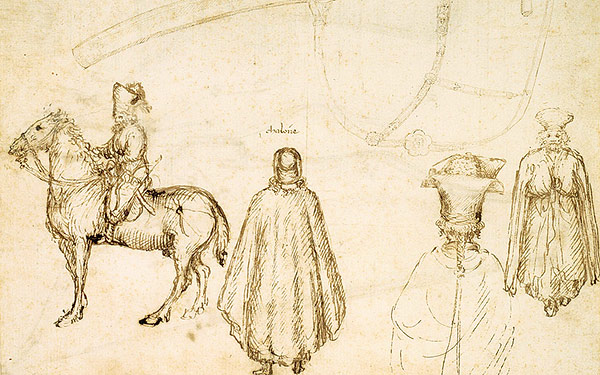
The migration of Greek-speaking scholars and manuscript collections to the Italian peninsula in the fifteenth century — commencing with the Council of Florence delegation of 1438–39, expanded by the post-1453 exodus, institutionalised by the Cardinal Bessarion's library and the subsequent Marciana at Venice — produced the principal mechanism by which the Greek classical and Christian inheritance was transmitted to the Italian Renaissance.
The figures of the transmission included: George Gemistos Plethon (c. 1355–1452), the Platonist philosopher whose 1438 Florence lectures produced the revival of Italian Platonism; Cardinal Bessarion (1403–1472), the Greek bishop who became a Cardinal of the Roman Church and donated his library of approximately a thousand Greek manuscripts to the Republic of Venice; Theodore Gaza (c. 1410–1475), the classical translator; Demetrios Chalkokondyles (1423–1511), the Florence and Padua scholar; Janus Lascaris (1445–1535), the Medici-sponsored scholar and editor. The scholarly cumulative effect of the Greek diaspora on the Italian intellectual culture of the fifteenth and sixteenth centuries is impossible to overstate.
Modern Greece
The Greek national independence from the Ottoman state — produced by the Greek War of Independence of 1821–1829, supported by the Anglo-French-Russian naval intervention at Navarino in 1827, and constitutionalised by the London Protocol of 1830 — produced the modern Greek state under the 1832 Treaty of Constantinople. The new Kingdom of Greece — comprising the Peloponnese, the central Greek mainland, and the Cyclades islands — was smaller than the Greek-speaking territories of the Ottoman empire and excluded Constantinople, Smyrna, Crete, the Aegean islands, and Epirus and Macedonia.
The subsequent "Megali Idea" (the "Great Idea") — the Greek nationalist project of territorial expansion to incorporate the Greek-speaking lands of the Ottoman empire — pursued through the late nineteenth and early twentieth centuries, produced territorial expansion through the Balkan Wars (1912–13) and the First World War, but collapsed in the Greek defeat in the Greco-Turkish War of 1919–22 and the subsequent population exchange of 1923 (substantially eliminating the Greek-Orthodox population from Anatolia and the Turkish-Muslim population from Greek territories). The modern Greek state settled into approximately its present boundaries with the 1947 recovery of the Dodecanese from Italy.
The Byzantine afterlife in Orthodoxy
The principal continuing Byzantine institutional legacy in the twenty-first century is the Eastern Orthodox Church — structured as a communion of fifteen autocephalous and autonomous churches, recognising the Ecumenical Patriarch of Constantinople as "first among equals" but without the centralised authority that the Roman Catholic papacy possesses. The Orthodox liturgical tradition — crystallised in its present form in the post-iconoclast Byzantine church and preserved with remarkable continuity across the subsequent eleven hundred years — constitutes the principal cultural-religious inheritance of the Byzantine tradition that the Orthodox faithful of the twenty-first century still encounter.
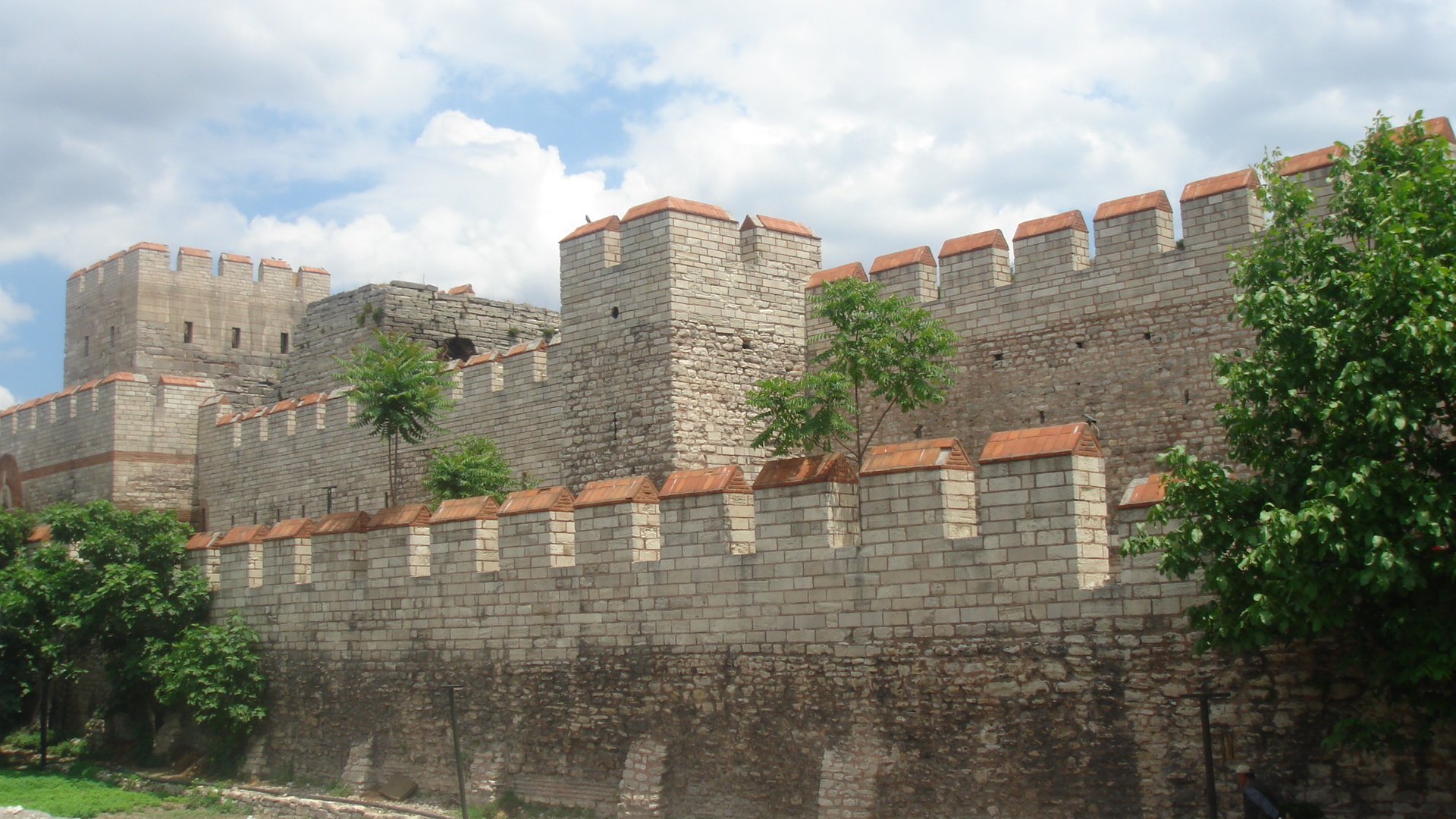
The cultural-historical inheritance — the Greek language, the Roman law (substantially through the Justinianic codification and subsequent Russian-Greek transmissions), the corpus of Greek classical-and-Christian literature (substantially preserved through the Byzantine scribal tradition and transmitted to the Latin West in the fifteenth-century diaspora), the Orthodox iconographic tradition, the imperial-political model (substantially adopted by Russia and diffused into European political theology), the Hagia Sophia itself standing in Istanbul as physical evidence of the late-antique imperial achievement — constitutes the fundamental cultural inheritance from the eastern Empire to the subsequent world. Constantinople, as a city, has never been replaced; the subsequent global cities have been functionally distinct rather than substitutional. The walls of Theodosius still stand in Istanbul, fragmentary but recognisable, and the visitor who walks along them encounters the physical evidence of the state that defended itself behind them for a thousand years.
End of Chapter X