Constantinople
The city was the empire and the empire was the city. What survives is scattered through modern Istanbul, mostly converted, mostly still in use, and almost never signposted as Byzantine.
Istanbul · Turkey
Hagia Sophia

Built in five years and ten months, from 532 to 537, after the Nika riots burned its predecessor. Anthemius of Tralles and Isidore of Miletus were mathematicians rather than architects, and their dome — thirty-one metres across, floating on a ring of forty windows so that it appears unsupported — was a structural gamble that partly collapsed in 558 and was rebuilt steeper.
Justinian is supposed to have walked in at the consecration and said that he had outdone Solomon. The Ottomans converted it to a mosque in 1453, whitewashed the mosaics, added minarets and buttresses that are the reason it still stands, and preserved it. Atatürk made it a museum in 1934; it reverted to a mosque in 2020.
Go to the upper gallery, where the surviving mosaics are, and find the Viking runes scratched into a parapet by a bored Varangian guardsman.
Istanbul · Turkey
The land walls

Six and a half kilometres from the Sea of Marmara to the Golden Horn: a moat, an outer wall, a terrace, an inner wall twelve metres high with ninety-six towers. Built under Theodosius II when the emperor was eleven years old, and repaired after an earthquake in 447 by the city's circus factions working in shifts, who finished in sixty days.
They held against Avars, Arabs twice, Bulgars, Rus and Ottomans, and were not taken by assault until the Fourth Crusade came at them from the sea in 1204. In 1453 Mehmed II needed cannon that fired stone balls of 270 kilograms, fifty-five days, and a small postern left unlocked.
Long stretches survive, some restored badly in the 1980s and some untouched with fig trees growing out of them. The Marble Tower at the southern end is the most photogenic point.
Istanbul · Turkey
The Chora mosaics
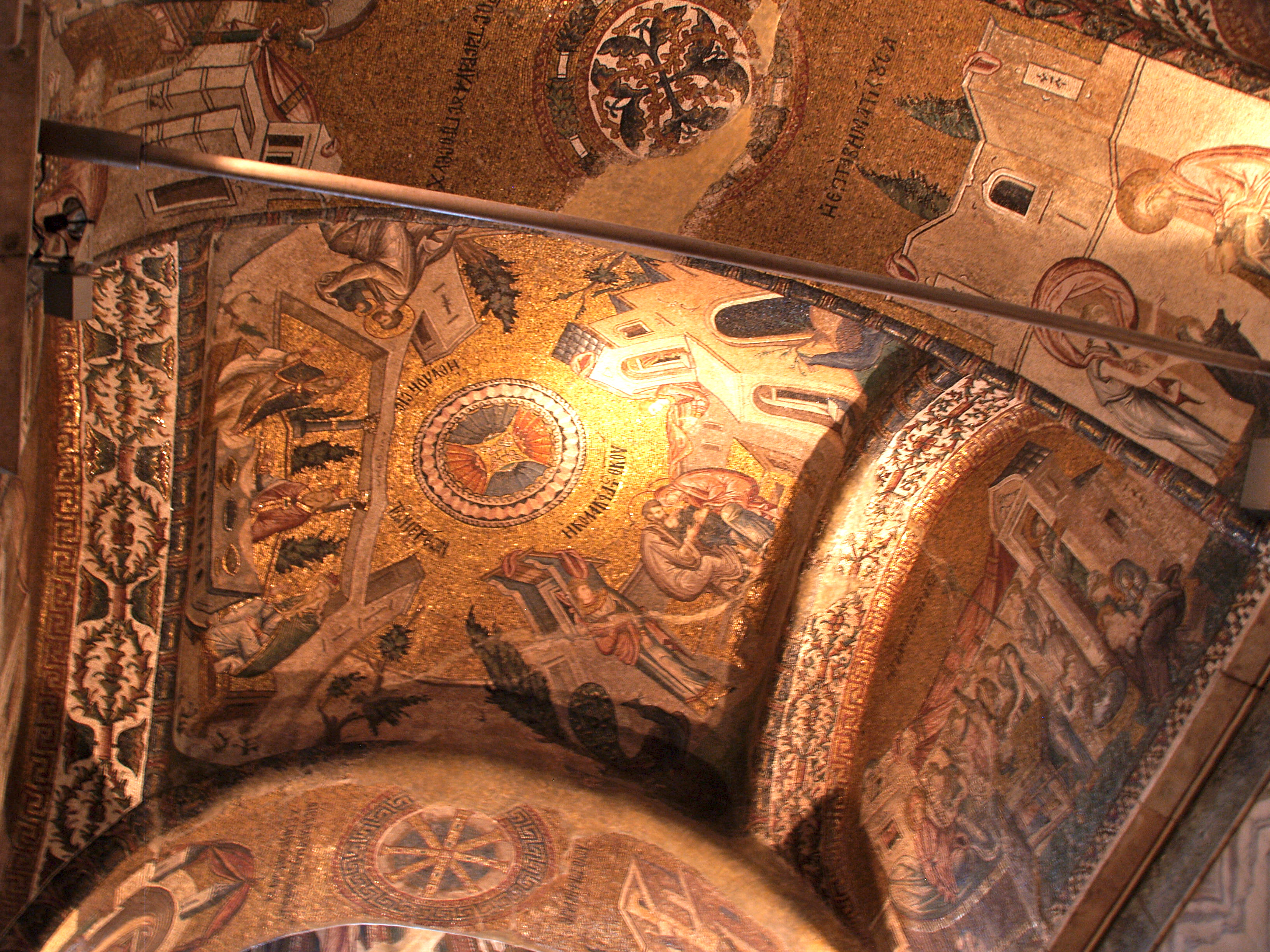
A small church near the land walls whose interior was redecorated between 1315 and 1321 at the expense of Theodore Metochites, a scholar-statesman who is shown in one mosaic presenting the building to Christ while wearing an enormous striped hat.
The work belongs to the Palaiologan revival — the empire was by then a rump state, bankrupt and shrinking, and produced its most humane and least stiff art at exactly that moment. The Anastasis fresco in the side chapel, with Christ hauling Adam and Eve bodily out of their tombs, is the finest single image in Byzantine art.
Metochites lost everything in a coup, and ended his life as a monk in this monastery, having asked to be buried in it.
Istanbul · Turkey
The Hippodrome
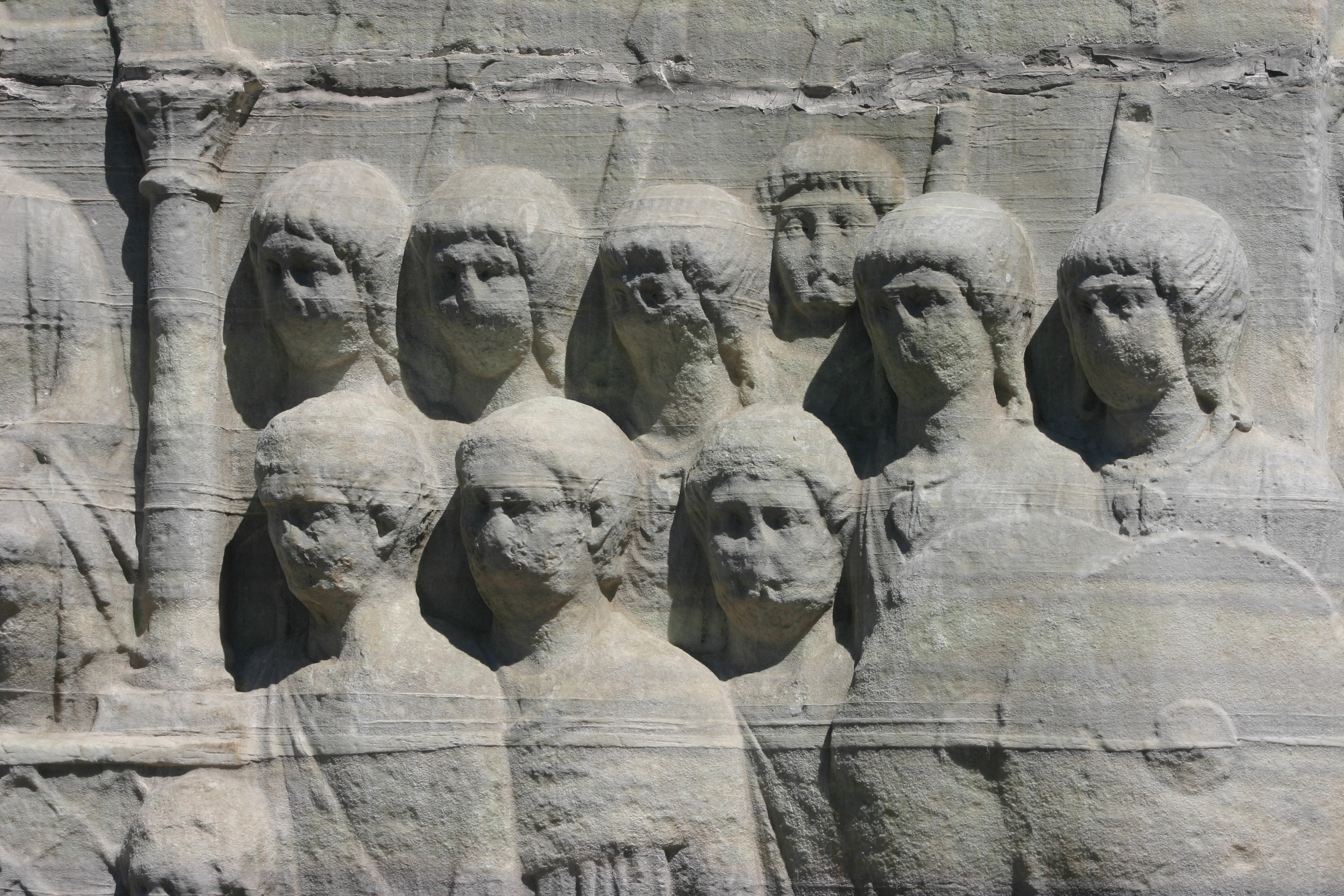
Now a long park in front of the Blue Mosque, and once a stadium for 100,000 people. The circus factions — the Blues and the Greens — were sporting clubs that functioned as political parties, and the emperor appeared in the imperial box to be acclaimed or shouted at.
In January 532 the two factions united against Justinian, burned half the city and proclaimed a rival emperor. Justinian was packing to flee when Theodora is said to have told him that the purple made a fine winding-sheet. Belisarius then trapped the crowd in the Hippodrome and killed perhaps 30,000 of them.
Three monuments remain on the spina: an Egyptian obelisk of Thutmose III, the bronze Serpent Column looted from Delphi where it commemorated the Greek victory at Plataea in 479 BC, and a masonry obelisk stripped of its bronze by the Fourth Crusade.
Istanbul · Turkey
The Basilica Cistern

Justinian's cistern of 532, one of hundreds under the city, fed by an aqueduct system running 250 kilometres out into Thrace — the longest water-supply line of the ancient world.
The columns were salvaged from older buildings, which is why two of them stand on Medusa heads, one on her side and one upside down. Nobody knows whether that was superstition, indifference or the need for a base of the right height.
Water storage is why the city could survive sieges of months and years, and it is the least glamorous and most important thing here. The cistern was forgotten after the conquest and rediscovered in 1545 when a French scholar noticed that residents were drawing water, and sometimes fish, through holes in their basement floors.
Istanbul · Turkey
Hagia Irene

Older than Hagia Sophia as a foundation and rebuilt after the same riots. It stands in the outer courtyard of Topkapı and was used by the Ottomans as an armoury rather than a mosque, which is why it kept its Byzantine interior almost unaltered.
In the apse, where a figure of Christ or the Virgin would be, there is a plain black cross on gold. It was put there during the iconoclast controversy of the eighth and ninth centuries, when the empire spent more than a hundred years arguing about whether religious images were idolatry, and it survives because nobody replaced it.
That cross is the best physical evidence anywhere of a dispute that split the church, deposed emperors and destroyed most of the empire's earlier art.
Istanbul · Turkey
The Golden Gate

The ceremonial entrance to the city, a triumphal arch of the late fourth century faced in marble with gilded doors, through which emperors entered after a victory. The last full triumph through it was in 1126.
The Ottomans built the Yedikule fortress around it in 1458 and bricked the gate up. The fortress then served as a treasury and a prison, and several foreign ambassadors and one sultan were held or killed in it.
A Byzantine prophecy held that a Christian emperor would one day re-enter the city through this gate, which is one reason it was sealed. It is a quiet, half-ruined, unvisited corner at the end of the walls, and much the best place to end a day on them.
Ravenna — the western capital
Justinian's reconquest of Italy left the finest surviving Byzantine mosaics anywhere, and they are not in the East. Ravenna was the imperial capital of the West from 402 and the exarchate's seat until 751.
Ravenna · Italy
San Vitale

An octagonal church finished in 547, and the reason Ravenna is a UNESCO site. In the chancel, facing each other, are the two most famous images in Byzantine art: Justinian with his bishop, his guards and his officials on one wall, and Theodora with her ladies on the other, both offering vessels for the Eucharist.
Neither of them ever came to Ravenna. The panels are political statements, placed to assert imperial presence in a city Belisarius had taken from the Goths in 540, and they are the only contemporary portraits of the pair that survive.
Look at the hem of Theodora's robe, which carries the three Magi bearing gifts, and at the fact that she is shown inside the sanctuary — a claim about her standing that no later empress would have been allowed.
Ravenna · Italy
Sant'Apollinare Nuovo

Theodoric the Ostrogoth built this as his palace church around 500, when he ruled Italy as an Arian Christian and a nominal viceroy of Constantinople. Justinian's reconquest made the building Orthodox, and the new owners edited the decoration.
On the south wall, a mosaic of Theodoric's palace has curtains between its columns and, on several of them, disembodied hands still visible against the masonry — the figures of Theodoric and his court were picked out and replaced with drapery, and the hands were missed. It is the clearest surviving instance of a Byzantine erasure.
The processions of martyrs and virgins along the nave above are untouched, and are the finest sixth-century mosaic sequence in existence.
The Greek empire
Thessaloniki was the second city, and after 1204 the empire fragmented into successor states — one of which, at Mystras, outlived the capital itself by seven years.
Thessaloniki · Greece
The Rotunda

Built about 306 as a mausoleum or temple for the emperor Galerius, converted to a church late in the fourth century, given a mosaic dome of early-Christian saints against gold architecture, taken as a mosque in 1590 and given a minaret, and returned to Greek use in 1912.
The dome mosaics are among the earliest Christian monumental images anywhere and were badly damaged by an earthquake in 1978. Restoration has been continuous since.
Thessaloniki was the empire's second city for most of its history, and its Byzantine churches — fifteen of them are UNESCO-listed — form the best sequence anywhere outside Istanbul, precisely because the city was never sacked as thoroughly as the capital.
Thessaloniki · Greece
Hagios Demetrios

A five-aisled basilica over the spot where Demetrius, a Roman officer, was supposedly speared in a bath-house in about 306. He became the city's patron and its supernatural defender; the miracle collections describe him appearing on the walls during sieges, and the citizens of Thessaloniki believed it for a thousand years.
Almost everything above ground burned in the great fire of 1917 and was rebuilt in the 1940s, but seven mosaic panels of the fifth to seventh centuries survived on the piers flanking the sanctuary, including donor portraits of extraordinary directness.
The crypt below is the Roman bath complex, rediscovered after the fire, and it is cool, dim and almost always empty.
Mystras · Greece
The last Byzantine city

A fortified town on a spur of Mount Taygetos, founded by the Franks in 1249, taken by the Byzantines in 1262 and made the capital of the Despotate of the Morea — the last significant Byzantine territory, ruled by younger sons of the imperial house.
Constantine XI, the last emperor, was crowned here in 1449 before travelling to a capital he would hold for four years. Mystras itself surrendered to Mehmed II in 1460, seven years after Constantinople.
It is the only place where you can walk through an entire late-Byzantine town: palace, churches with their frescoes, monasteries, cisterns, houses, all on a steep hillside under a Frankish castle. Gemistos Plethon taught Plato here in the 1400s and helped set the Italian Renaissance going. Give it a whole day and start at the top.
Monemvasia · Greece
The rock

A limestone slab off the eastern Peloponnese, joined to the mainland by a causeway, and fortified from the sixth century as a refuge from Slav invasions. The lower town on the seaward side is medieval and inhabited; the upper town on the summit is ruined and empty, with the twelfth-century church of Hagia Sophia on the cliff edge.
Monemvasia was one of the empire's most important ports, a naval base and the source of malmsey wine — Malvasia — which the Duke of Clarence was reputedly drowned in.
It passed between Byzantines, Venetians and Ottomans repeatedly and was among the last places to leave Byzantine control. The climb to the upper town is steep and unshaded, and the view from the church is worth it.
Distomo · Greece
Hosios Loukas

Two churches side by side on a slope of Mount Helicon, built in the tenth and eleventh centuries over the tomb of a local holy man, and preserving their mosaic and marble decoration intact.
The larger church, the Katholikon, is the standard example of the cross-in-square plan that Byzantine architecture settled on after iconoclasm and never really left: a dome on squinches over a square, with the imagery arranged hierarchically from Christ in the dome downward. Once you have seen it, every Orthodox church you enter afterwards makes sense.
It is thirty minutes from Delphi and most visitors do both in a day, which is a mistake in Hosios Loukas's favour: it is far quieter.
Athens · Greece
Daphni

A monastery on the ancient Sacred Way out of Athens, on the site of a temple of Apollo, rebuilt about 1100 and given a mosaic programme of the highest quality.
The Christ Pantokrator in the dome is the reason to come. It is a face of enormous severity — the classical restraint of the middle-Byzantine style pushed as far as it goes — and it has been reproduced so often that seeing it at its actual scale, eight metres up in a dim church, is genuinely startling.
The monastery was damaged by the earthquake of 1999 and was closed for many years; access has been intermittent since. Confirm before you make the journey.
The frontiers and the afterlife
Anatolia, the Black Sea, the Balkans and the Adriatic — the places the empire reached, and the places that kept its forms going after it stopped.
İznik · Turkey
Nicaea

The council of 325 met here and produced the Nicene Creed; the council of 787 met here and ended the first phase of iconoclasm. Both are in the foundations of what Christianity subsequently believed.
After the Fourth Crusade took Constantinople in 1204, the Byzantine government reconstituted itself at Nicaea as the Empire of Nicaea, and it was from here that Michael VIII Palaiologos recovered the capital in 1261 — largely by accident, when a scouting party found the walls undefended.
The Roman walls survive nearly complete around a small town of orchards and tile workshops. The lake is at one end, and the church of Hagia Sophia in the centre, where the second council sat, is now a mosque again.
Trabzon · Turkey
The last Greek empire

When Constantinople fell to the crusaders in 1204, a branch of the Komnenos family established itself at Trebizond on the Black Sea and ran an independent Greek empire there for two hundred and fifty-seven years. It survived on the silk road trade, Genoese and Venetian commerce, and a diplomatic strategy that consisted largely of marrying its exceptionally beautiful princesses to the neighbouring Turkmen emirs.
It outlasted Constantinople by eight years, surrendering to Mehmed II in 1461. It is the last Roman state, on any definition, to have existed.
The Hagia Sophia here is a thirteenth-century church on a bluff above the sea, with the best surviving Byzantine frescoes in Anatolia and an unusual amount of classical influence in them.
Maçka · Turkey
Sumela

A Greek Orthodox monastery built into a rock face in the Pontic Alps, traditionally founded in 386 and rebuilt many times, abandoned in 1923 when the Greek population of Anatolia was exchanged for the Turkish population of Greece.
The monks left in a hurry and buried the icon of the Virgin, which was recovered in 1930 and is now in Greece. The frescoes on the exposed rock chapel are extraordinary and were heavily vandalised during the decades the site stood open and unguarded.
It closed for structural work in 2015 and has reopened in stages. The approach through beech forest is part of the point, and the monastery appears above you all at once.
Göreme · Turkey
The rock churches

The volcanic tuff of central Anatolia is soft enough to dig with hand tools and hard enough to stand, and between roughly the sixth and thirteenth centuries a very large monastic population cut churches, refectories, dovecotes and whole underground cities into it.
The Göreme open-air museum holds a dozen of them within a few hundred metres. The Karanlık Kilise — the Dark Church — kept its eleventh-century paintings in near-perfect condition because it had almost no windows, and centuries of pigeon droppings sealed the surface until it was cleaned in the 1950s.
This is Byzantium away from the capital: not imperial commissions but the work of local monks and village patrons, and much the better for it.
Sevastopol · Ukraine
Chersonesos

A Greek colony of the fifth century BC that became the empire's principal outpost north of the Black Sea, its listening post on the steppe and its centre for managing the Khazars, the Pechenegs and eventually the Rus.
Vladimir of Kiev took the city in 988, and was baptised in it as part of the bargain that gave him the emperor's sister in marriage and brought Orthodox Christianity to the Slavs. The consequences of that transaction are still working themselves out.
The site is a UNESCO listing on the edge of Sevastopol, with a basilica whose columns stand against the sea. It has been under Russian occupation since 2014 and is not sensibly visitable; it is here because the volume would be dishonest without it.
Ohrid · North Macedonia
The Slav Byzantium

Clement and Naum, disciples of Cyril and Methodius, established a school here in the 890s that trained perhaps 3,500 clergy in the Slavonic liturgy and did more than anything else to carry Byzantine Christianity into the Balkans and Russia.
Ohrid was the seat of the Bulgarian patriarchate, then of an autonomous archbishopric under Byzantine rule, and its churches — St Sophia with eleventh-century frescoes, St Clement with thirteenth-century ones, and the much-photographed St John at Kaneo on its cliff — are a continuous record of Byzantine painting in a place that was never the capital.
The empire's most durable achievement was not territorial. It was an alphabet and a liturgy, and this is where they were taught.
Mount Athos · Greece
The Holy Mountain

A self-governing monastic republic on a peninsula in Chalkidiki, granted its independence by an imperial charter of 883 and never since governed by anyone else. Twenty monasteries, some with unbroken occupation for a thousand years, holding the largest collection of Byzantine manuscripts, icons and relics anywhere.
It keeps Byzantine hours — the day begins at sunset — and uses the Julian calendar. Women have been forbidden since a decree of 1046, a rule the Greek state maintained on accession to the EU and which remains contentious.
Male visitors need a diamonitirion, applied for months ahead, and there is a daily quota of ten non-Orthodox pilgrims. Women can see the monasteries from a boat, which many do.
Venice · Italy
What was taken

San Marco is modelled on the Church of the Holy Apostles in Constantinople, demolished by the Ottomans, so the Venetian building is now the best surviving idea of what the imperial mausoleum church looked like.
Much of its contents came from the sack of 1204, in which a crusade diverted by Venetian shipping contracts stormed the greatest Christian city in the world and stripped it for three days. The four bronze horses over the west door were taken from the Hippodrome; so were a great deal of the marble, the porphyry Tetrarchs at the corner of the treasury, and much of the Pala d'Oro's enamel work.
The Byzantines never forgave it, and it is the reason the empire that fell in 1453 was a fraction of the one that existed in 1200. Come here last.
Kalambaka · Greece
Meteora

Hermits were living in the caves of these sandstone pillars by the eleventh century. The monasteries proper were built from the 1340s onward, in the decades when the empire was collapsing, and they went on being built and endowed after 1453 under Ottoman rule — which is itself the point.
Access was by rope ladder or by net hauled up on a windlass, and the standard story is that the ropes were replaced only when they broke. Steps were cut in the 1920s. Six of the twenty-four foundations still function, and the Great Meteoron and Varlaam hold the best of the sixteenth-century frescoes.
Visit two properly rather than six in a day. Go early; the coach parties arrive from Kalambaka at ten, and the light on the rock is better before them.