Between approximately 600 BC and 480 BC the Carthaginian commercial network was converted into a territorial empire — the first such empire in the western Mediterranean, controlling the principal North African coast, the southern and eastern coasts of Spain, the western half of Sicily, Sardinia, the Balearic Islands, and the principal Atlantic-African coast as far south as modern Senegal. The shift from a network of trading posts to a territorial empire was driven by the substantial growth of Greek colonial competition in the same waters, by the political incapacity of the Phoenician home cities to defend their commercial interests, and by the Carthaginian elite's own ambition to control the principal trade routes rather than merely participate in them.
The Greek competition
The Greek colonial movement that paralleled the Phoenician one began somewhat later — the principal Greek colonies of southern Italy and Sicily were founded in the eighth century BC, a century after the Phoenician colonies were established — but expanded substantially through the seventh and sixth centuries. By 600 BC the principal Greek colonies in the central Mediterranean included Syracuse (founded by Corinth, 733 BC), Naxos (Chalcis, 734), Catania (Chalcis, 729), Megara Hyblaea (Megara, 728), Gela (Rhodes and Crete, 688), Acragas/Agrigentum (Gela, 580), Selinous (Megara Hyblaea, 628), and Himera (Chalcis and Syracuse, 648) on Sicily; Croton (Achaia, 710), Sybaris (Achaia, 720), Tarentum (Sparta, 706), Locri (Locris, 679), and Rhegium (Chalcis, 730) in southern Italy; Massalia (modern Marseille, founded by Phocaea, 600 BC) on the southern Gaul coast; and Phocaean colonies at Emporion in north-eastern Spain and Alalia on Corsica.
The Greek-Phoenician commercial competition in the western Mediterranean intensified through the seventh and sixth centuries BC. The principal flashpoints were Sicily, where Greek colonies were progressively pressing on the Phoenician positions at Motya, Panormus and Solunto in the western part of the island; Sardinia, where Greek Massaliote and Phocaean ships were operating in waters that the Phoenicians had previously controlled; and the western Iberian and Atlantic-African coasts, where the Phoenicians and Greeks were competing for access to the metal sources. The principal naval confrontation of the period was the Battle of Alalia (or Battle of the Sardinian Sea) of approximately 540 BC, in which a combined Carthaginian and Etruscan fleet of approximately 120 ships defeated a Phocaean Greek fleet of approximately 60 ships off the eastern Corsican coast — a Pyrrhic Phocaean victory in which they lost approximately 40 ships and were forced to abandon their Corsican colony at Alalia. The battle marked the substantial limit of Phocaean Greek expansion in the central Mediterranean and confirmed the Carthaginian-Etruscan dominance of the Tyrrhenian Sea for the following century.
The territorial empire
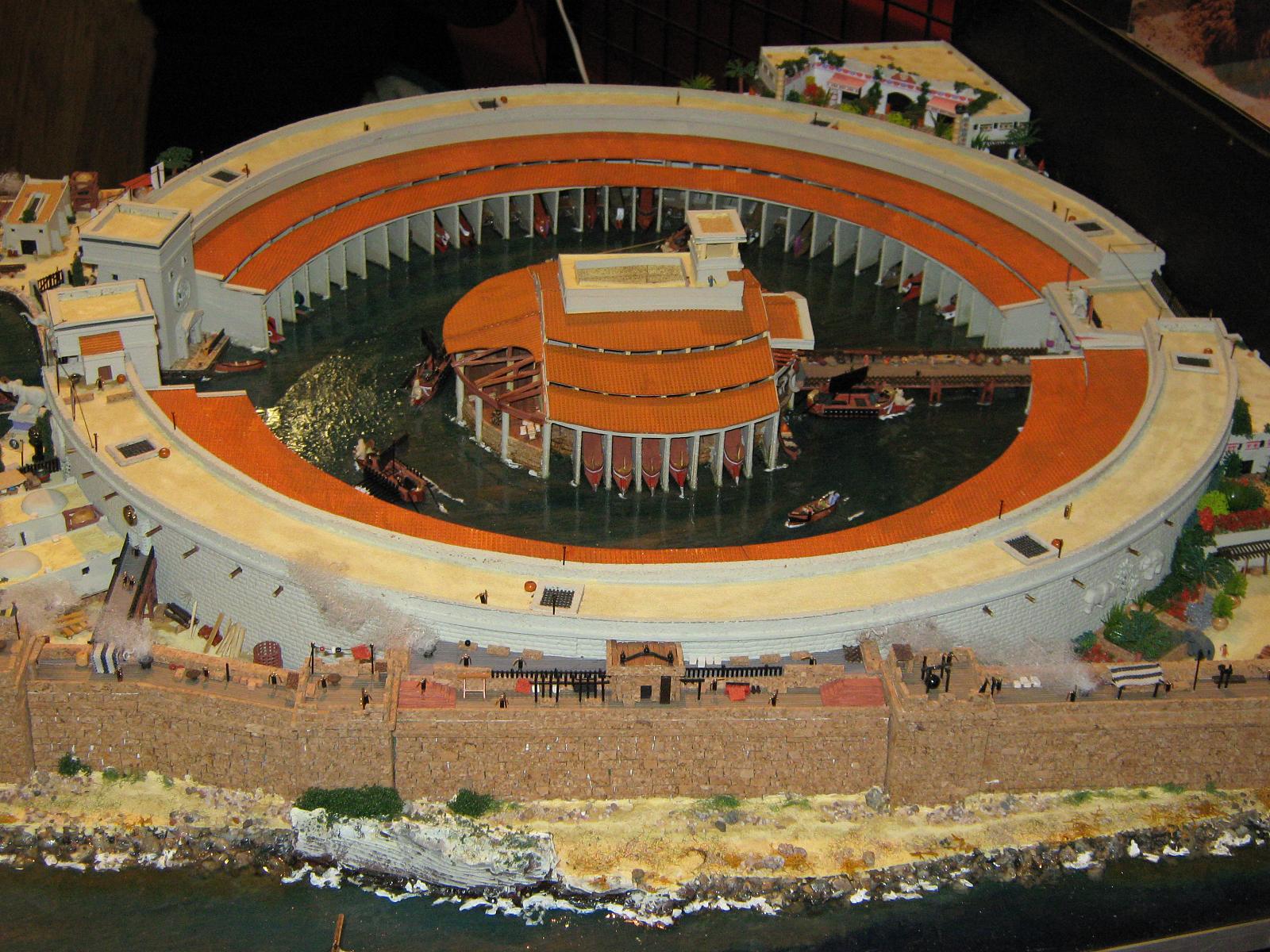
The territorial Carthaginian state that emerged through the sixth and fifth centuries BC comprised, at its peak in the late fifth century BC, the following components: the metropolis of Carthage itself, with the surrounding North African territory (Libya in the Greek terminology) extending approximately 50 to 100 miles inland and approximately 200 miles along the coast; the western half of Sicily (the principal Punic cities of Motya, Panormus and Solunto, plus a fluctuating territory dependent on the war with the Greek cities); Sardinia (the principal Punic cities of Tharros, Nora, Sulci, Karalis/Cagliari, plus the agricultural interior); the Balearic Islands; the southern and south-eastern Iberian coast from approximately modern Almeria to modern Cadiz (the principal Punic centres at Gadir, Sexi, Abdera and Carthago Nova — though the last was a later Barcid foundation); the North African coast east of Carthage as far as the Cyrenaic frontier (the principal cities of Hadrumetum, Leptis Magna, Sabratha); and the Atlantic-Moroccan coast (Lixus, Sala, and the principal Atlantic ports). The territory was governed through a combination of direct civic administration of the principal Punic colonies, treaty relations with the indigenous Berber populations of North Africa (who provided cavalry contingents and infantry levies for the Carthaginian army), and military occupation of the principal commercial outposts in the contested regions.

Hanno and Himilco
The principal Carthaginian exploratory voyages of the period — known to the subsequent Greek and Roman tradition through the periplus accounts that have partly survived — are the voyage of Hanno along the Atlantic-African coast (approximately 470 BC) and the voyage of Himilco along the Atlantic-European coast (approximately the same period). The Hanno voyage, preserved in a Greek translation of the Punic original inscription dedicated at the Temple of Baal Hammon at Carthage, describes a fleet of 60 ships and 30,000 colonists (the numbers are probably exaggerated) sailing south from Carthage through the Pillars of Heracles (the Strait of Gibraltar), establishing colonies at Lixus, Karikon Teichos, Thymiaterion and Acra on the Moroccan coast, and continuing south along the African coast as far as the Senegal or Gambia rivers, with substantial descriptions of the African landscape, populations (including a possible early account of gorillas — the Greek text uses the word gorillai for the apelike beings encountered on a small island in the southern reaches of the voyage, from which the modern English name for the species was derived in 1847), and natural phenomena. The voyage was the longest documented exploration of the African coast in antiquity.
The Himilco voyage, attested only in fragmentary later Latin sources (principally the fourth-century-AD poet Avienus's Ora Maritima), described a voyage north from Gadir along the Atlantic coast of Iberia and Gaul to the British Isles, with the principal commercial objective of securing direct Carthaginian access to the Cornish tin trade that had previously been mediated through the Atlantic Iberian network. The voyage's historicity has been argued about; the most credited reconstruction is that Himilco reached at least the Atlantic-Breton coast and possibly Britain itself, and that the voyage was followed by Carthaginian commercial contact with the British tin sources on a continuing basis through the fifth and fourth centuries BC.
The political constitution
The Carthaginian political constitution, as described by Aristotle in the late fourth century BC (Politics II.11) and as evidenced by inscriptions and external accounts, comprised the following principal institutions at the period in question. The two annually-elected suffetes were the chief civil magistrates, with judicial and ceremonial functions but no direct military command. The council of elders (adirim) of approximately 300 members, drawn from the principal mercantile and aristocratic families, was the principal deliberative body, deciding on war and peace, foreign policy, and the principal administrative matters. The popular assembly ('am), comprising the adult male citizens of Carthage, could act in matters on which the council was divided. The tribunal of 104, drawn from the council, oversaw the conduct of generals and magistrates after their terms, with the substantial power of execution and confiscation. The generals (strategoi in Greek sources, rb mhnt in Punic) were elected by the council and held their commands on a continuing basis (as distinct from the annual-rotation system of Rome), which permitted the development of substantial military experience but also produced the substantial political weight of successful generals that would, in the later period, produce the Barcid dominance of Carthaginian politics.
The social structure comprised: the citizen population of Carthage (approximately 200,000 by the late fifth century BC), drawn principally from the descendants of the original Tyrian settlers and from subsequent Phoenician immigration; the Libyo-Phoenician population of the surrounding North African territory, comprising mixed Punic-Berber descendants who held inferior civic status; the Berber agricultural population of the interior, providing tribute and military levies; the substantial slave population, employed in agriculture, craft production and domestic service; and the resident non-citizen merchant communities (Greeks, Etruscans, Iberians) of the principal commercial quarters.
The economic basis of the city was overwhelmingly commercial: the trade in metals, agricultural products, textiles, slaves and manufactured goods that the territorial empire facilitated. The principal commercial families — the Barcids, the Magonids, the Hannonids — dominated the political institutions of the city, with the trade networks providing both the wealth and the patronage that sustained their position. The Carthaginian state was, in the language of modern political analysis, an oligarchic-republican commercial empire, ruled by approximately 50 principal families through the council institutions.
The principal external challenge through the fifth century BC was the war with the Greek cities of Sicily — a recurrent conflict over the principal cities and trade routes of the island that would, between 480 BC and 270 BC, occupy substantial portions of Carthaginian military and political energy. The Sicilian wars are the subject of chapter IV.
End of Chapter III