Carthage itself
The city stood on a promontory north-east of modern Tunis, and is now an affluent suburb of it with archaeological parks between the villas. A single ticket covers all the sites; the metro line from Tunis runs through the middle of them.
Carthage · Tunisia
Byrsa Hill
The citadel, and the highest ground in the city. Byrsa is where Carthage held out for the final six days of the siege in the spring of 146 BC, after the Romans had fought their way up from the harbour through streets of six-storey houses, throwing planks between the rooftops as they went. Appian says 50,000 survivors surrendered here and were sold.
What survives on the hill is mostly Roman — the colony Augustus founded on the site is what the visible platform belongs to — but on the southern slope a block of Punic housing from the second century BC was found beneath the Roman fill, and it is the best evidence anywhere of how the city actually lived: narrow streets, cisterns under every house, mosaic-chip flooring.
The museum at the top is closed for reconstruction more often than not. The view over the Gulf of Tunis is the reason to come regardless.
Carthage · Tunisia
The circular harbour

Two basins survive as lagoons in a residential district: a rectangular commercial harbour, and behind it a circular naval one with an artificial island at the centre where the admiral's headquarters stood. Appian describes covered ship-sheds for 220 warships, with the entrance closable by iron chains, and colonnades built so that the fleet could not be counted from outside.
Excavation in the 1970s found the slipways, and the count comes out closer to 170 than 220 — which is one of the rare cases where an ancient literary source can be checked against the ground and turns out to have been only somewhat exaggerated.
The scale is intimate and rather beautiful, and locals fish in it. It is easy to walk past without realising what it is.
Carthage · Tunisia
The Tophet
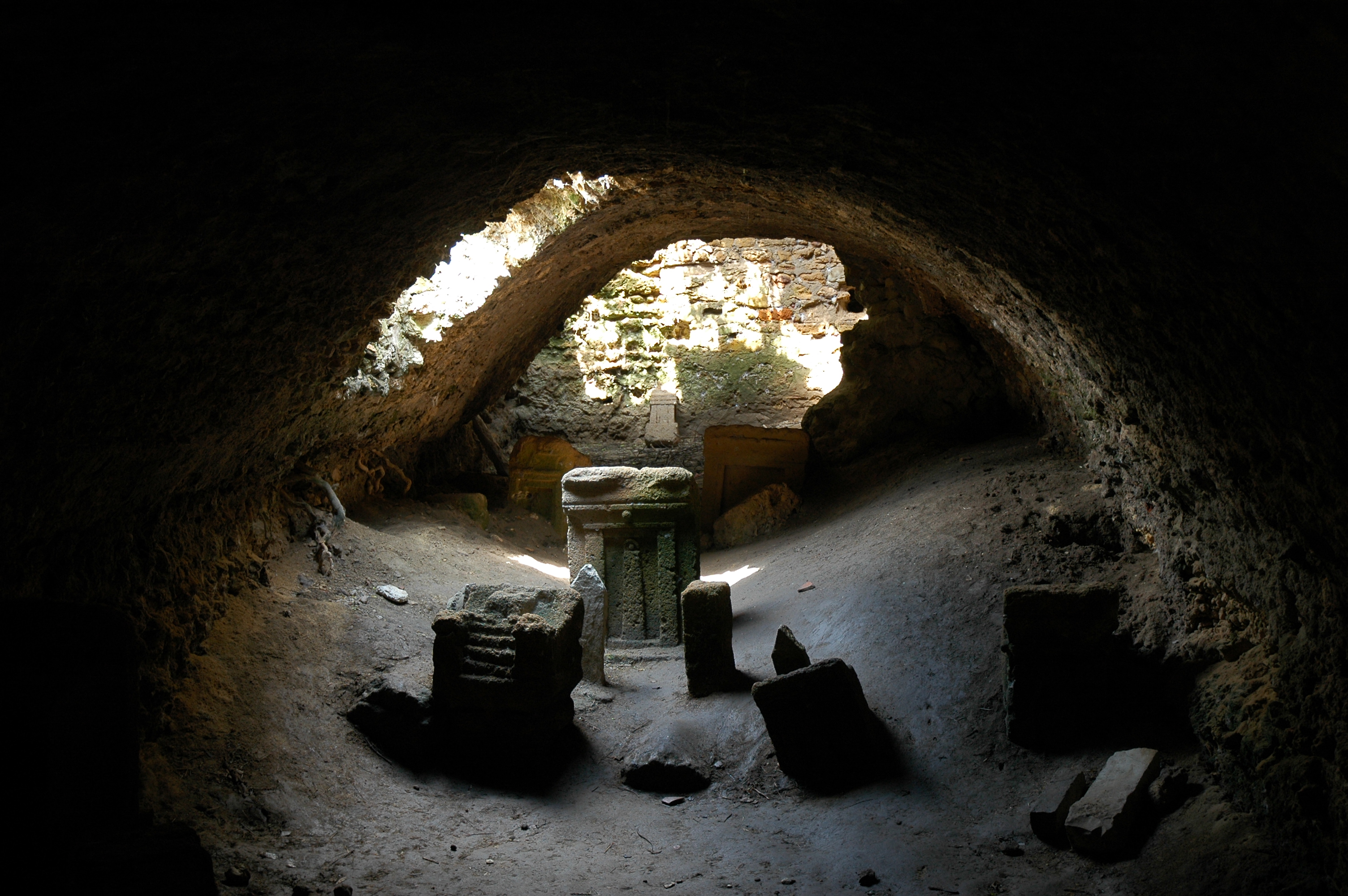
A sunken precinct crowded with limestone stelae, beneath which excavators found thousands of urns containing the cremated remains of infants and young animals, deposited over roughly six centuries from about 730 BC.
What it means is the longest-running argument in the field. Roman and Greek writers described Carthaginians burning children to Baal Hammon in times of crisis, and one school reads the urns as confirmation. Another reads them as a cemetery for infants who died naturally — infant mortality in the ancient world being what it was — with the classical accounts as enemy propaganda. Dental and skeletal analyses have been published supporting both readings.
The current balance of opinion accepts that some sacrifice occurred, and rejects the idea that it was routine or on the scale claimed. Stand in it and make up your own mind; almost everyone does.
Carthage · Tunisia
The Antonine Baths

The largest baths in Roman Africa and the third largest in the empire, built under Antoninus Pius in the second century AD and standing directly on the shore. Only the basement level survives at any height, but a single reconstructed column gives the original scale, and it is enormous.
It belongs to the wrong city, which is exactly why it is worth including. The Rome that ploughed Carthage under in 146 BC refounded it a century later, and by the second century AD Roman Carthage was the second city of the western empire. Tertullian, Cyprian and Augustine all worked here.
The site is on the water below the presidential palace, so photography in some directions is discouraged. Go early; there is no shade.
Tunis · Tunisia
The Bardo

Housed in a Beylical palace on the edge of Tunis, and holding the finest collection of Roman mosaics anywhere — the great sea-god pavements, the Virgil portrait, whole floors lifted from villas across the province.
For this volume the Punic rooms matter more: stelae from the Tophet, funerary masks, razors, the bearded terracottas, and the small everyday objects that are almost the only direct Carthaginian voice we have. The Punic language is attested in inscriptions and almost nothing else; not one Carthaginian book survives.
The museum was attacked by gunmen in March 2015, with twenty-two people killed. It reopened within weeks and has been a point of national pride since. Security is thorough and unobtrusive.
Cap Bon and the Tunisian interior
The peninsula east of Tunis holds the one Punic town that Rome never built over, and the hinterland holds the cities that grew rich on the same African grain the Carthaginians farmed.
Kerkouane · Tunisia
The town Rome forgot

This is the reason to come to Tunisia. Kerkouane was abandoned during the First Punic War, around 250 BC, and nobody ever built on it again — no Roman colony, no Byzantine fort, no medieval village. What survives is a Punic town as Punic towns were: a street grid, a perimeter wall, workshops for the murex-purple dye industry, and house after house with its own bathroom.
The bathtubs are the detail that stays with people. Almost every house has a red-plastered hip-bath with a shaped seat, set beside the entrance. This is domestic comfort in the fourth century BC, and it is not what Roman propaganda about Carthaginian character would lead you to expect.
A UNESCO site since 1985, on a beautiful stretch of coast, and usually almost empty.
Dougga · Tunisia
Thugga

The best-preserved Roman town in North Africa, spread over a hillside with a theatre, a capitol and a spectacular set of latrines. But its Punic interest is a single object: the Libyco-Punic mausoleum of the second century BC, a three-storey tower tomb built for a Numidian nobleman, and the finest surviving piece of Punic-influenced architecture anywhere.
Its bilingual inscription, in Punic and Numidian, was removed by a British consul in 1842 — he dismantled part of the tomb to get it — and is in the British Museum. It provided the key to deciphering the Numidian alphabet.
Dougga is a reminder that Carthage ruled a hinterland of Berber kingdoms which had their own kings, their own language and their own view of the war, and which changed sides at Zama.
Utique · Tunisia
Utica

Founded by Tyre before Carthage was — traditionally in 1101 BC — and for centuries the senior Phoenician settlement in Africa, until its neighbour outgrew it. Utica remained an ally rather than a subject, with its own treaty rights.
In 149 BC, when Rome moved against Carthage, Utica went over to Rome at once and was rewarded with Carthaginian territory and the capital of the new province. Its reward was temporary: Augustus refounded Carthage, and Utica declined into a provincial town, then silted up as the Medjerda river changed course. The sea is now ten kilometres away.
The visible remains are Roman houses with fine mosaics still in place. It is rarely busy, and the site guardian will usually show you the best of them.
Sousse · Tunisia
Hadrumetum

Founded by Tyre in the ninth century BC and one of the oldest continuously inhabited places in the Punic world. Hadrumetum sided with Rome in 146 BC, kept its status, and became the second city of the Roman province.
The Punic city is entirely beneath the modern one, but its catacombs and a Tophet were found under the medina, and the archaeological museum in the kasbah has the mosaics and the Punic material together.
Sousse is also where Hannibal came ashore after Zama, and where he sat out the years of the indemnity before his flight east. The medina is a UNESCO site, the ribat is ninth-century and climbable, and the beach is the reason most visitors are here at all.
El Djem · Tunisia
Thysdrus
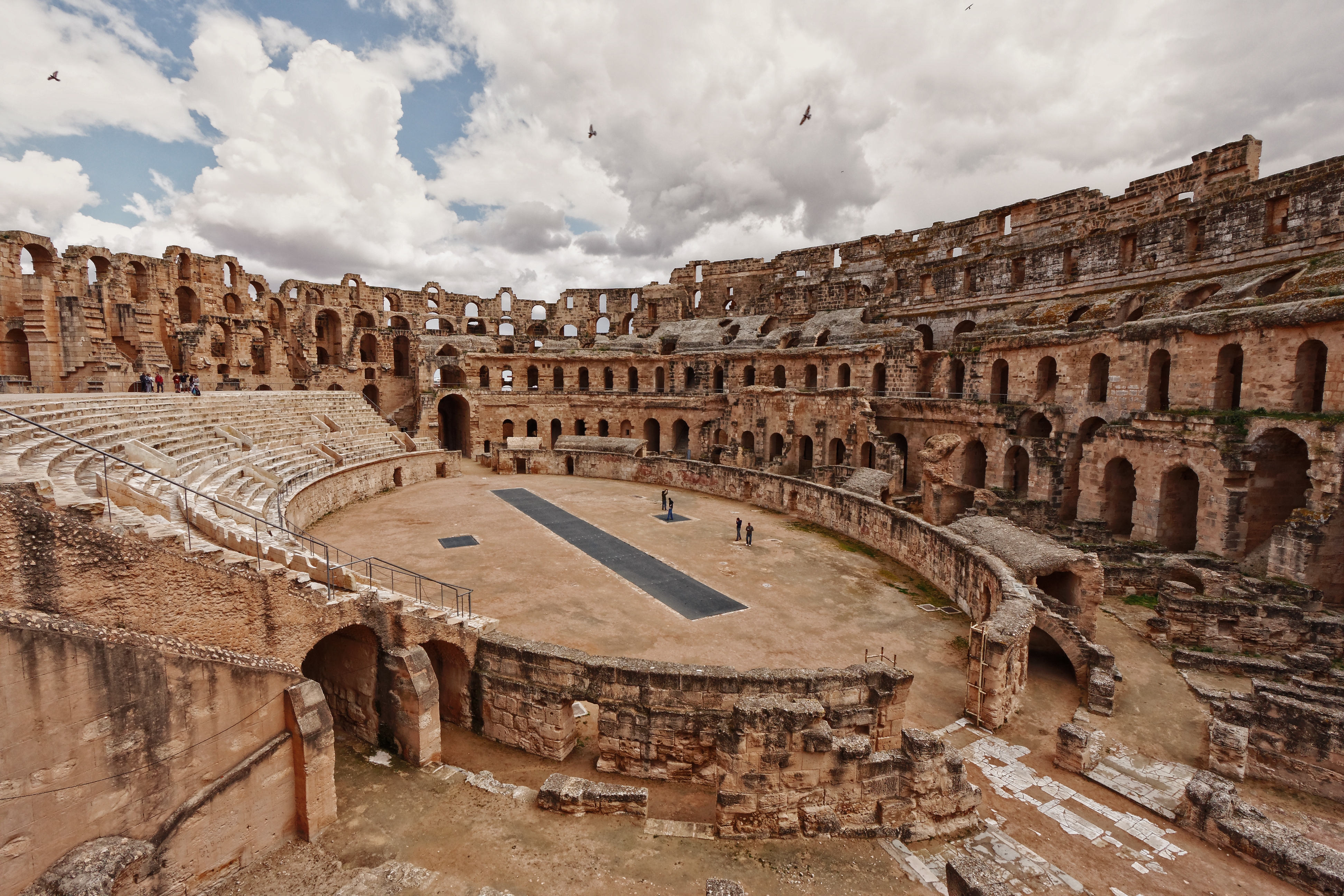
Not a Punic site, and included deliberately. Thysdrus was a modest Punic-Numidian settlement that became, under Rome, the centre of the North African olive oil trade — and got rich enough in the third century AD to build the third-largest amphitheatre in the Roman world, seating 35,000 in a town of perhaps 20,000.
It stands almost intact in the middle of a small, dusty modern town, with no ruins around it and nothing to prepare you as you drive in. The underground galleries where the animals were held are open.
Its inclusion here is an argument: the agricultural wealth Rome extracted from Africa for six centuries was Carthaginian in origin. Carthage taught the region to farm at scale, and Mago's twenty-eight-volume treatise on agriculture was the one Carthaginian book the Senate ordered translated rather than burned.
Sicily and Sardinia
The islands were the empire's first real possessions and the reason for the first war with Rome. Sicily's Punic towns are in the far west; Sardinia's are on the coasts.
Mozia · Sicily, Italy
Motya

A small island in the Stagnone lagoon north of Marsala, settled by Phoenicians in the eighth century BC and one of the three Punic strongholds in Sicily. Dionysius I of Syracuse took it by siege in 397 BC, using catapults for what may be the first time in history, and massacred the population. It was never fully resettled.
The island is now owned by a wine family, farmed for grapes, and reached by a small boat. It has a Tophet, a walled harbour, a causeway that runs just under the water to the mainland, and the Whitaker Museum, which holds the Motya Charioteer — a Greek marble youth of about 460 BC found here in 1979, and one of the finest surviving classical sculptures.
Salt pans, windmills and flamingos surround it. It is the most pleasant afternoon in this guide.
Solunto · Sicily, Italy
Soluntum

One of the three Punic towns of western Sicily, with Motya and Panormus — modern Palermo, which is buried under a city and cannot be visited as a Punic site. Solunto sits on a terraced headland above the sea, and what is visible is the fourth-century BC rebuilding on a strict Hippodamian grid, with cisterns, a small theatre and houses with painted plaster.
The interest is in what it shows about the empire. Punic Solunto used Greek town planning, Greek architectural orders and Greek pottery, while worshipping Baal and writing in Punic. The Carthaginian west was not a sealed civilisation defending itself against Hellenism; it borrowed constantly.
Steep, unshaded and with an extraordinary view along the coast to Cefalù.
Pula · Sardinia, Italy
Nora

On a low peninsula an hour south of Cagliari, and traditionally the oldest Phoenician settlement on Sardinia. The Nora Stone, found here in 1773 and now in Cagliari, carries a ninth-century BC Phoenician inscription — the oldest written record of the island's name, and one of the oldest Phoenician inscriptions in the western Mediterranean.
Sardinia mattered to Carthage for metal and grain, and it was held harder than Sicily. Rome seized it in 238 BC while Carthage was distracted by the revolt of its own unpaid mercenaries — an act Polybius, no friend of Carthage, called indefensible, and which did as much as anything to make the second war certain.
The visible ruins are mostly Roman, the setting is superb, and part of the site is underwater and visible from a boat.
Cabras · Sardinia, Italy
Tharros

Founded in the eighth century BC on the Sinis peninsula, with the sea on three sides and a Tophet on the northern headland above it. Tharros was continuously occupied for eighteen centuries before being abandoned around AD 1070 for the safer inland site of Oristano.
The Punic layers gave up a very large quantity of jewellery, scarabs and amulets in the nineteenth century, much of it dispersed to collectors before any record was made; a good deal is in the British Museum and a good deal is simply lost.
The site is beautiful and battered — white stone, blue water, a constant wind — and the small museum at Cabras nearby holds the Mont'e Prama giants, which are Nuragic and older than any of it.
Spain, and Hannibal's Italy
Spain was the empire the Barcids built after losing Sicily, and its silver paid for the invasion of Italy. The Italian sites are battlefields, and mostly look like farmland.
Cartagena · Spain
New Carthage

Hasdrubal founded this about 227 BC and gave it the same name as the mother city — Qart Hadasht, the new city — as the capital of a Spanish empire built to replace what had been lost in Sicily. It had the best harbour on the coast and the silver mines of the interior behind it, worked, Polybius says, by 40,000 men.
Scipio took it in 209 BC in a single day, by sending a party wading across the lagoon on the landward side at low water while the assault went in at the gates. The loss of the silver ended Carthage's ability to pay for the war.
The Punic Wall Interpretation Centre preserves a stretch of the third-century BC defences in a basement. The Roman theatre, found in 1988 under the old cathedral, is the city's showpiece and worth the visit on its own.
Sagunto · Spain
Saguntum

An Iberian town allied to Rome, and inside the sphere Carthage regarded as its own. Hannibal besieged it for eight months in 219 BC and took it. Rome sent an embassy to Carthage demanding he be handed over; the Senate refused; the ambassador Fabius gathered up a fold of his toga and said he carried peace and war in it, and let them choose. They chose war.
Whether Hannibal was in breach of the Ebro treaty is still argued, and turns on whether Saguntum lay north or south of the river — it lay well south, which is awkward for the Roman version.
The hill above the town carries a kilometre of fortification from every period since, Iberian to Napoleonic, and a Roman theatre restored in the 1990s so controversially that the case reached Spain's supreme court.
Ibiza · Spain
Ibossim

Founded by Carthage about 654 BC and prosperous on salt, dye and the absence of dangerous animals — Punic sources make much of the island having no snakes, which made its soil valuable as an export.
The necropolis of Puig des Molins holds something like three thousand hypogea cut into a hillside above the modern town, the largest Punic cemetery known, and it produced the terracotta bust of the goddess Tanit that has become the island's emblem. The site museum is small, well done and almost entirely ignored by the four million people who come here every summer for other reasons.
Ibiza's old town, the Dalt Vila, sits on the Punic acropolis behind Renaissance walls, and is a UNESCO site.
Barletta · Apulia, Italy
Cannae

Farmland above the Ofanto river, and the site of the double envelopment that every staff college since has taught. Hannibal, outnumbered by perhaps 86,000 to 50,000, thinned his centre deliberately so it would give ground, let the Roman mass press into the bulge, and closed his African infantry in from both flanks while the Numidian and Spanish cavalry came round behind.
Between 50,000 and 70,000 Romans were killed in an afternoon — the highest single-day loss any European army has ever suffered, and Rome did not raise another field army to face him for over a decade.
There is an antiquarium and a hilltop with an orientation table. The rest is a plain, and the plain is the point: nothing about the ground explains what happened, which is why the battle is Hannibal's and not the terrain's.
Tuoro sul Trasimeno · Umbria, Italy
Lake Trasimene

The largest ambush in military history. Hannibal drew the consul Flaminius along the northern shore of the lake into a defile between the water and the hills, with his army hidden on the slopes in morning mist. About 15,000 Romans died, many drowned in the shallows under the weight of their armour; Flaminius was killed. Livy says the fighting was so absorbed that neither side noticed an earthquake that destroyed towns across central Italy.
Unlike Cannae, this battlefield is legible: the lake is where it was, the hills are where they were, and a signed route of about seven kilometres runs the ground with interpretation boards at each phase.
Do it in the early morning, in June if possible, when the mist off the lake is exactly as described.
Siliana Governorate · Tunisia
The country of Zama

We do not know where Zama was. Three or four locations in the hill country south-west of Tunis have been proposed, the sources disagree with each other and with the topography, and no battlefield archaeology has settled it.
What happened is clearer. Scipio had spent the campaign detaching the Numidian cavalry from Carthage to Rome, and at Zama the horsemen who had won Cannae for Hannibal were on the other side. Hannibal's elephants were turned by trumpets and gaps opened deliberately in the Roman line; his cavalry was drawn off the field; and when it returned, it returned as Masinissa's, into his rear.
Drive out through Siliana and Le Kef anyway. This is the country the war was fought over, it is beautiful, and the honest answer to where the battle was is somewhere here.