The eastern Roman empire that survived the disappearance of the western office in 476 is generally known to modern Western scholarship as the Byzantine Empire, after the Greek name (Byzantion) of the city Constantine renamed Constantinople. The convention is recent and the inhabitants of the empire never used the word. They called themselves Romaioi — Romans — and they called their state the Roman Empire (Basileia ton Rhomaion). The Greek-speaking population of Anatolia and the southern Balkans was still referring to itself as Roman well into the modern period; the rural population of central Anatolia called itself Roman (Rum) when the Ottoman state took it over in the fifteenth century, and the term Rumi still designates Greek-speaking communities of Asia Minor and the Levant in some Turkish and Arabic usages. This volume uses the convenient modern shorthand "Byzantine" where it is helpful, but the convention is a Western imposition and the empire's own self-understanding should be borne in mind.

Justinian (527–565)
Justinian I, who reigned for thirty-eight years from Constantinople, is the eastern empire's defining figure. He came from a Latin-speaking peasant family in the Balkans (his uncle Justin I had risen through the army to become emperor in 518; Justinian inherited the throne from him). His reign attempted, with notable boldness, to reverse the previous century: to recover the western provinces, to codify the entire Roman legal inheritance, to enforce Christian orthodoxy on the recalcitrant eastern monophysite churches, and to rebuild Constantinople as a city worthy of the renewed empire. The attempt was partly successful, partly disastrous, and entirely consequential.
The legal codification — completed in 534 under the supervision of the jurist Tribonian — is the single most lasting achievement of the reign. The Corpus Iuris Civilis consolidated the entirety of post-classical Roman legal literature into a working code (the Codex Justinianus), a digest of classical juristic opinion (the Digesta), a textbook for students (the Institutes), and an ongoing series of new imperial laws (the Novellae). It is the work that has carried Roman law into the modern world. Every continental European legal system descends, with intermediate steps, from Justinian's codification. So does much of Scottish, South African, Quebec, and Louisiana law. The civil-law tradition that governs the legal systems of about 150 countries today is, in a direct genealogical sense, a Justinianic inheritance.
The reconquest of the western provinces was largely the work of Justinian's commander Belisarius. The Vandal kingdom of Africa was destroyed in a ten-month campaign in 533–534. The Ostrogothic kingdom of Italy took twenty years to subdue (535–554), in a series of campaigns that ruined the Italian agricultural economy and depopulated the country (Rome itself, repeatedly besieged and recaptured, declined from perhaps half a million to perhaps thirty thousand inhabitants by the end of the war). A foothold was established in southern Spain. The empire briefly recovered most of the Mediterranean rim. But the reconquest stretched the eastern imperial budget to breaking point, and the gains were largely lost in the following generation: Italy fell to the Lombard invasion of 568, southern Spain to the Visigoths in the 620s. The North African and Egyptian provinces would fall to the Arabs in the 640s.
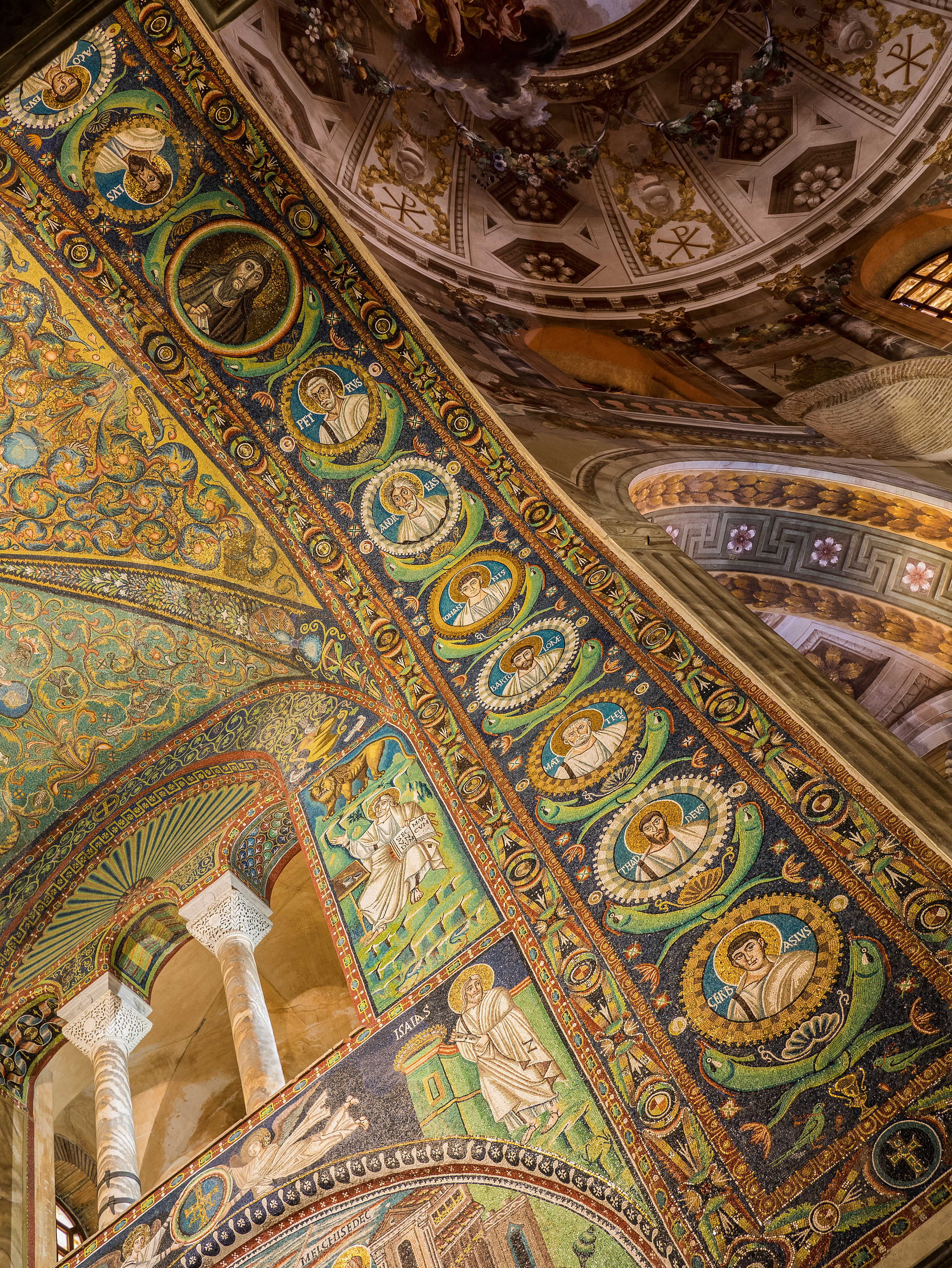
In Constantinople itself, Justinian's rebuilding programme after the Nika Riot of 532 (in which half the city was burned by chariot-faction rioters and thirty thousand people were killed when Belisarius's troops cleared the Hippodrome) included the new Hagia Sophia — the Church of Holy Wisdom — dedicated on the 27th of December 537 and completed in the form we still see (with the addition of Ottoman minarets and modifications) in 562. The 31.5-metre dome was the largest in the world until the completion of the Florence Duomo in 1436. Justinian also rebuilt the imperial palace, the Sacred Palace, and constructed thirty-four other churches in Constantinople. He died in November 565, aged eighty-three, after the longest reign in eastern Roman history to date.
The Persian and Arab wars
The 60-year period after Justinian's death is dominated by two events: the long final war with Sasanian Persia (602–628), in which Khosrow II briefly conquered Syria, Palestine, Egypt, and reached the Bosphorus, before being thrown back by the eastern emperor Heraclius (the war is covered from the Persian side in Volume V Chapter III); and the Arab Muslim conquests (634 onward), which followed the mutual exhaustion of Persia and the eastern empire and resulted in the permanent loss of Syria (636), Egypt (642), the Persian empire itself (651), and the North African provinces (697-705).
The eastern empire that emerged from these losses was a different state. It had lost three-quarters of its territory and perhaps half its population. Its remaining provinces were Anatolia, the Balkans (partly), Sicily, and southern Italy. Its capital was now besieged twice (674–678 and 717–718) by Arab armies that nearly took the city. It survived chiefly because of Constantinople's walls, the chain across the Golden Horn, and the recently invented incendiary weapon known as Greek fire — the precise composition of which is still not entirely known.
The empire reorganised itself, in this crisis, on a more militarised footing. The new system of themes — provincial military commands in which the local soldiers were also smallholding peasants paid in land rather than coin — replaced the late-Roman provincial structure. The empire became substantially less monetised, less urbanised, and more rural. Its high culture continued, but on a smaller scale.
The iconoclast controversy
From 726 to 843, the eastern empire was convulsed by an internal theological dispute over the legitimacy of religious images. The emperor Leo III, in 726, ordered the removal of images of Christ from public buildings; his son Constantine V (741-775) prosecuted iconoclasm aggressively, destroying images and persecuting their defenders. The policy was reversed at the Second Council of Nicaea in 787, reversed again under Leo V (815-820), and finally settled by the Empress Theodora's restoration of icons in 843, an event still celebrated as the "Triumph of Orthodoxy" by the Eastern Orthodox church. The iconoclast period damaged the empire's relations with the western papacy (which never accepted iconoclasm) and contributed to the slow estrangement that would culminate in the Great Schism of 1054.
The Macedonian high-water mark
The high point of the eastern empire's post-Roman recovery is the Macedonian dynasty (867–1056), in particular the long reign of Basil II "Bulgar-slayer" (976–1025). Basil reconquered the Balkans from the First Bulgarian Empire in a thirty-year war ending in 1014 with the capture and blinding of fifteen thousand Bulgarian prisoners (a piece of strategic terror that earned him his epithet and effectively ended Bulgarian resistance). He extended the eastern frontier through Armenia and Georgia to the Caspian Sea. He reformed the tax administration, ran a budget surplus, and left the imperial treasury full. The empire at his death in December 1025 ran from southern Italy to the Caucasus, controlled the Balkans up to the Danube, and had a population of perhaps eighteen million subjects. It was the most powerful state in the Mediterranean basin.
Basil II did not marry and had no direct heir. His brother Constantine VIII (1025-1028) succeeded him without difficulty, but the dynasty was effectively extinct in the male line and the succession passed to a series of court favourites of Constantine VIII's daughters Zoe and Theodora. The dynastic instability of the next generation, combined with strategic decisions to demilitarise the eastern frontier provinces in favour of court favourites, would, in 1071, produce the catastrophic defeat at Manzikert that opened the Anatolian plateau to Turkic settlement. That is the subject of the next chapter.
End of Chapter VIII