The fifty years between the assassination of Severus Alexander on the Rhine frontier in March 235 and the accession of Diocletian in November 284 are, by general historical agreement, the worst sustained period in Roman history before the fifth century. Modern scholars call them the Crisis of the Third Century. The contemporaries did not have a name for them; for the people who lived through them, the events were simply how things now were. Most adults did not, in this period, have a memory of a stable empire.
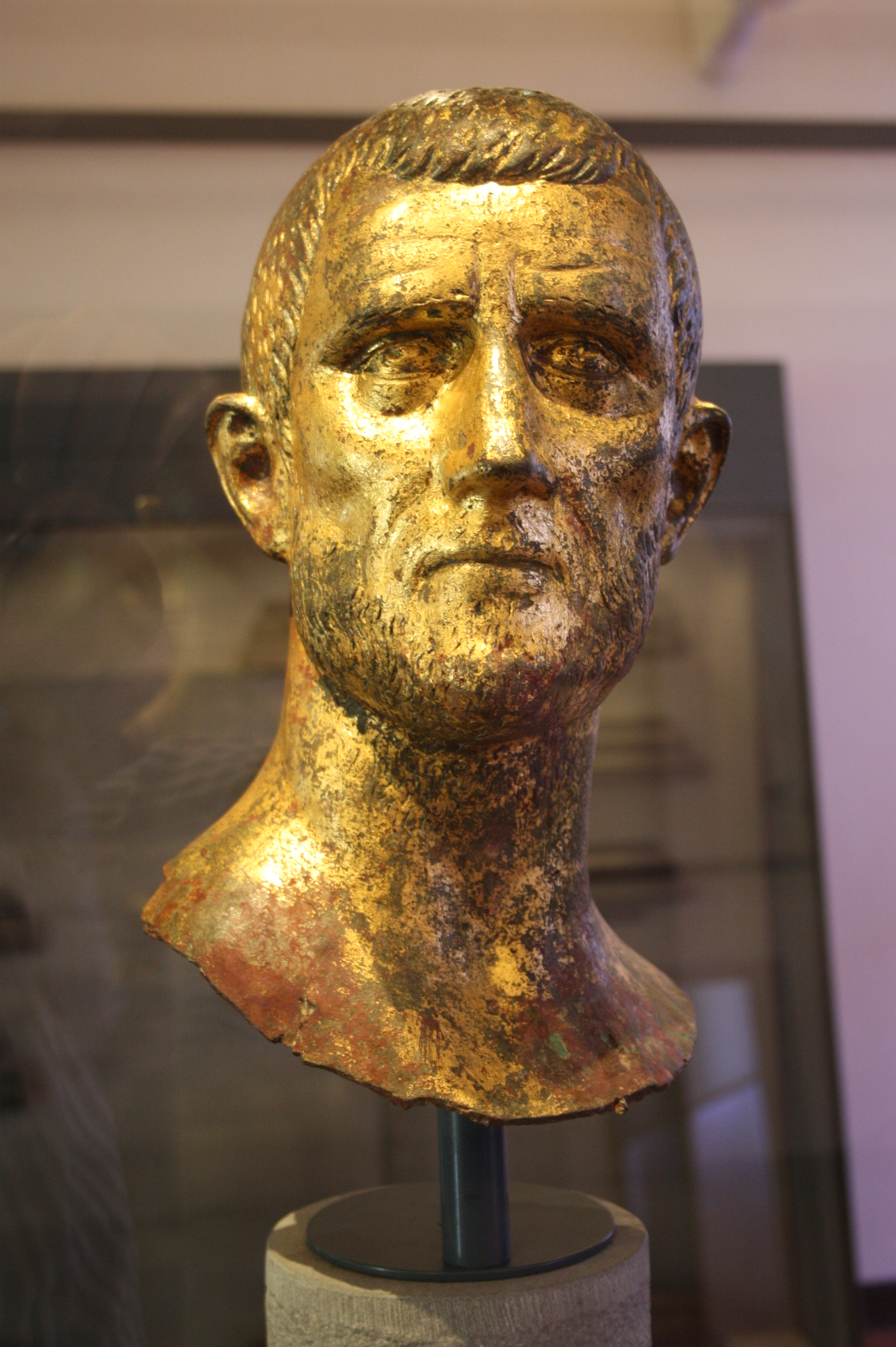
The numerical statistics are striking. In the fifty years 235–284, the Roman empire had at least 26 men who held the imperial title at Rome with some plausible claim to legitimacy. Almost all of them were proclaimed by their soldiers; almost all of them were killed by their soldiers. In addition, the empire contained between 235 and 274 at least two breakaway regional empires: the Gallic Empire (260–274) under a sequence of usurpers based at Trier, and the Palmyrene Empire (270–273) under the queen Zenobia of Palmyra. There were perhaps thirty further usurpers in particular provinces. The economy was in collapse: the silver content of the standard imperial coin (the denarius, later the antoninianus) fell from about 90% in 220 to about 2% in 270, producing the first sustained inflation in Roman history. The plague (the so-called Plague of Cyprian, c. 250–270, of unknown microbiological identity) is estimated to have killed up to a quarter of the population in some areas. The empire's external enemies — the new Sasanian dynasty in Persia from 224, the Goths on the lower Danube from the 230s, the Alamanni and Franks on the Rhine — were stronger, better organised, and more aggressive than any opponents the empire had faced in three centuries.
The political pattern
The chapter cannot summarise fifty years of confusing dynastic history in detail; it sketches the pattern instead. A frontier army, demoralised by defeat or by inadequate pay, would proclaim its commanding general emperor. The new emperor would march on Rome, defeating or assassinating his predecessor. He would attempt to deal with the most immediate frontier crisis. Within months or years, another army on another frontier would proclaim its commander. The pattern would repeat. The result was that the most senior Roman generals — almost all of them now risen through the ranks rather than drawn from the senatorial aristocracy, and most of them of provincial Balkan origin — spent their reigns fighting either external enemies or each other. The longest reign of the period (twelve years) was Gallienus's (253–268), and it took place under the simultaneous breakaway of Gaul and the east.
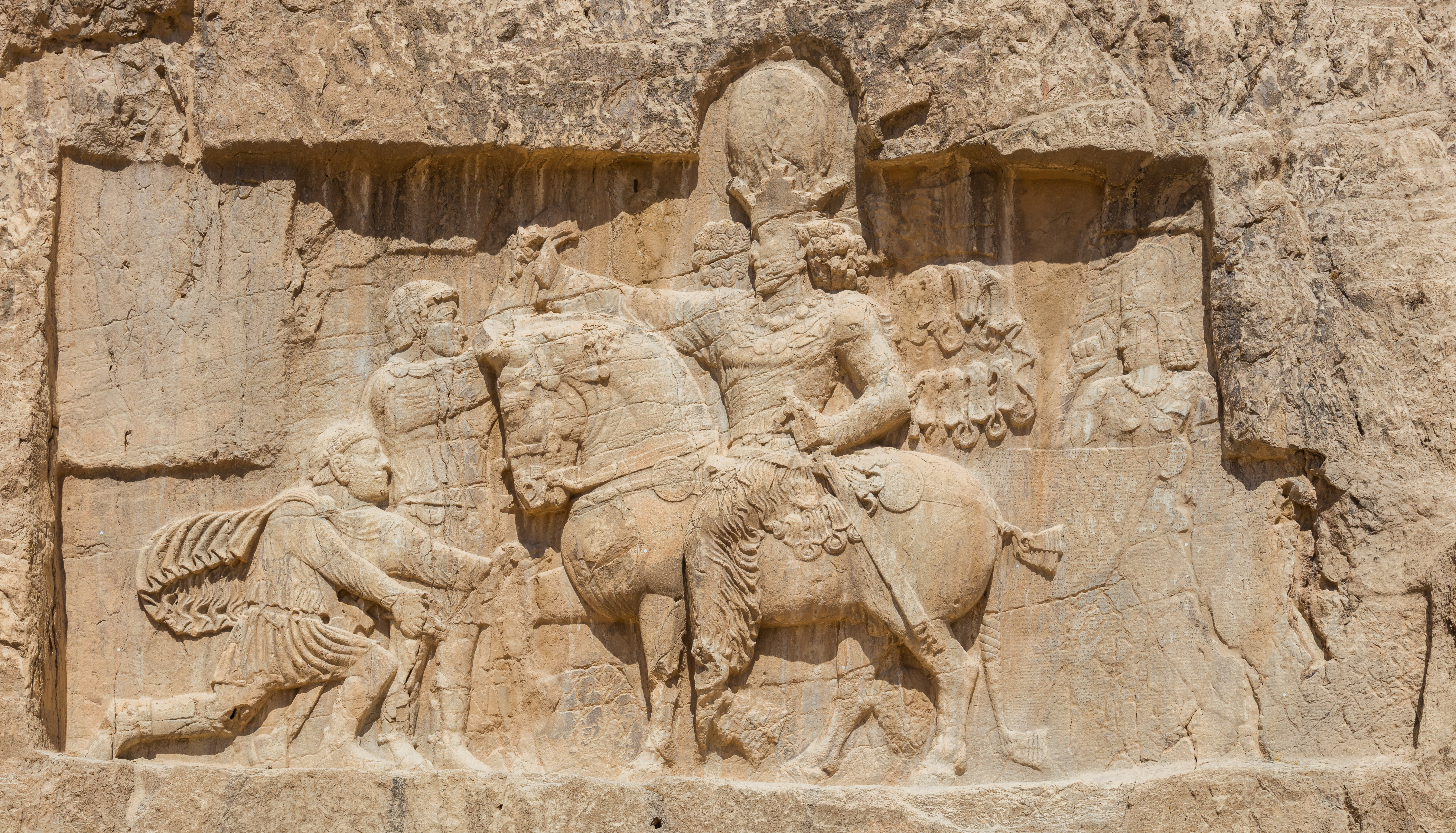
The two genuine catastrophes of the period happened to the same emperor, Valerian (253–260). In 260 a Sasanian army under Shapur I, having captured Antioch and devastated Syria, met the Roman army of Valerian in the field at Edessa and captured the emperor alive. Valerian was the only Roman emperor in history to die as a foreign captive. (The story preserved in later Christian tradition — that Shapur used him as a footstool to mount his horse, then had him flayed and his stuffed skin displayed in a Persian temple — may or may not be true; the basic fact of his capture is not in dispute.) The simultaneous collapse of the imperial response on the Rhine and Danube frontiers produced the secession of the Gallic and Palmyrene empires.
The Illyrian recovery
The reconstruction began under a sequence of able emperors of Balkan provincial origin known to modern historians as the Illyrian emperors: Claudius II Gothicus (268–270), Aurelian (270–275), Probus (276–282), and Diocletian (284–305). They were almost all professional soldiers from Pannonia and Moesia — men of obscure birth who had risen through the army's command structure during the crisis — and they ruthlessly applied military force to the problem. Claudius defeated the Goths at Naissus in 268 (one of the largest battles in Roman history; the Gothic army was effectively destroyed and the Danube frontier was reset). Aurelian, in five years, reconquered the breakaway Palmyrene Empire (defeating Zenobia at Emesa in 272 and taking Palmyra itself in 273) and the Gallic Empire (defeating the last Gallic emperor Tetricus at Châlons in 274). The empire was, by 275, formally reunified.
Aurelian also took two further measures that are worth noting. He built the great brick wall around the city of Rome (the Aurelian Walls, completed by his successor Probus, 19 km long, eight metres high; portions still stand) — an admission that even the imperial capital was no longer safe from invasion. And he reformed the imperial monetary system, introducing a new coin and attempting to restore the silver content; the attempt was partly successful but did not fully reverse the inflation. He was assassinated by his own secretary in 275 over a dispute about embezzlement; his death set off another period of brief reigns, ending with the proclamation of Diocletian by his soldiers at Nicomedia on the 20th of November 284.
The damage
The empire that emerged from the crisis was not the empire that had entered it. The senatorial aristocracy of Italy had been politically eclipsed; the army's commanding class was now drawn almost entirely from the provincial Balkans. The economy was less monetised; the empire was moving back to a partly in-kind tax system. The army was larger, better paid, less disciplined, and more politically powerful. The cities of the empire's interior provinces, which in the second century had been undefended because they did not need defending, were now walling themselves; the visible archaeological signature of a third-century city is a circuit of new fortifications enclosing a smaller area than the city had previously occupied. Christianity — a small minority sect at the start of the century — had grown substantially during the period, partly because its mutual-aid networks proved useful during the plagues, partly because traditional polytheism appeared less able to protect the empire than it had done. The state had survived. But almost everything about it had changed.
The reconstruction was completed by Diocletian. The next chapter is his.
End of Chapter IV