Rome and central Italy
Rome · Italy
The capital
Allow four days at the absolute minimum. The Forum and the Palatine occupy a full day; the Colosseum and the Domus Aurea another half-day; the Pantheon and the Largo Argentina (where Caesar was murdered) and the Ara Pacis a third day; the Capitoline Museums (the bronze Marcus Aurelius, the Capitoline Wolf, the Dying Gaul) a fourth. The Baths of Caracalla and the Appian Way (Tomb of Cecilia Metella, Catacombs) are an excellent fifth day if you have it. The Vatican Museums are a sixth. The Aurelian Walls are walkable in sections — the Porta San Sebastiano and the small Museum of the Walls there are worth an hour.
Ostia Antica · Italy
The Roman port

Half an hour from central Rome by train. The harbour town of the imperial capital, abandoned after the silting of the Tiber mouth in late antiquity, preserves an entire Roman commercial city — its insulae (apartment blocks), its baths, its forum, its theatre, its temples, its Mithraic shrines, its taverns with their painted menu signs still legible. Substantially less crowded than central Rome. The single best place in the world to walk through a Roman city as a Roman would have known it.
Tivoli · Italy
Hadrian's Villa
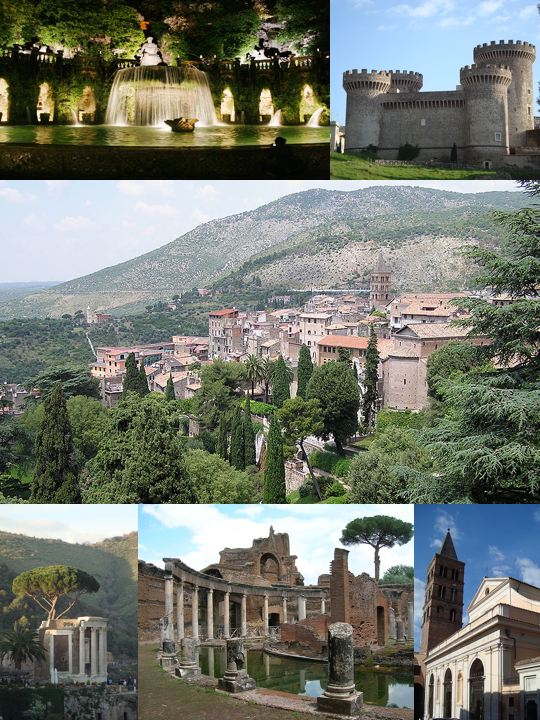
Twenty-eight kilometres east of Rome. Hadrian's enormous country retreat (begun 117, used 121-138), with half-scale reproductions of monuments he had admired on his travels: the Canopus (a pool with Egyptian sculpture), the Maritime Theatre (his private island in a circular moat), the Imperial Palace, the libraries, the Praetorium. UNESCO World Heritage. Combine with the Renaissance Villa d'Este in the modern town, which used Hadrianic ruins as a sculptural quarry.
Pompeii and Herculaneum · Italy
The buried cities

Buried by Vesuvius on the 24th of August 79 (the conventional date; recent epigraphic evidence suggests October). Pompeii is the better-known and larger site; Herculaneum, smaller, is significantly better-preserved (the pyroclastic flows that destroyed it carbonised rather than burned the wooden architecture, so the upper storeys, doors, furniture, and parchments survive). Allow a full day for each. Many of the best portable finds — including the famous Villa of the Mysteries frescoes and the bronze sculpture from the Villa of the Papyri — are in the Naples National Archaeological Museum.
The eastern capital
Istanbul · Turkey
Constantinople

Allow at least three full days for the Byzantine-Roman heritage (separate from the Ottoman, which deserves its own time). The Theodosian Walls (begun 413; the Topkapı section is easily walkable). The Hagia Sophia (still a working mosque since 2020; visitable outside prayer times). The Hippodrome, now the open square of Sultanahmet (the Walled Obelisk, the Serpent Column from Delphi, the Egyptian Obelisk of Theodosius all in their original positions). The Basilica Cistern. The Church of St Saviour in Chora (Kariye Mosque), famous for its fourteenth-century mosaics. The Archaeological Museums. The submarine excavations at Yenikapı (Byzantine wrecks).
Ravenna · Italy
The fifth-century capital

Capital of the western empire after 402, then of Theodoric's Ostrogothic kingdom, then of Byzantine Italy after 540. The early Christian mosaics in eight buildings — the Mausoleum of Galla Placidia, the Baptistery of Neon, the Arian Baptistery, the Basilica of San Vitale (with the famous Justinian and Theodora panels), Sant'Apollinare in Classe, Sant'Apollinare Nuovo, the Mausoleum of Theodoric — are UNESCO World Heritage as a group. The single best surviving ensemble of late antique mosaic anywhere in the world.
The western provinces
Trier · Germany
The northern capital

Constantine's principal residence as Caesar (293-306) and emperor (306-312) before his move east. The single largest concentration of late-Roman imperial monuments north of the Alps. The Porta Nigra (the surviving north gate of the Roman city, c. 170, still standing); the imperial baths; Constantine's Basilica (the throne hall, still in use as a Lutheran church); the amphitheatre; the Trier Cathedral (in its core a Constantinian basilica of c. 320). The Rheinisches Landesmuseum on site is exceptional. UNESCO World Heritage.
Hadrian's Wall · England
The northern frontier

117 km from Bowness-on-Solway in the west to Wallsend on the Tyne. Walkable in eight to ten days (the Hadrian's Wall Path is well marked); the most spectacular central section runs from Birdoswald via Housesteads and Vindolanda to Chesters. Vindolanda — where the writing tablets of the everyday correspondence of the Roman garrison survived in the anaerobic mud — is the single most important finds site. UNESCO World Heritage as part of the Frontiers of the Roman Empire.
Mérida · Spain
Augusta Emerita

Founded by Augustus in 25 BC as a colony for retired veterans of the Cantabrian War, capital of the province of Lusitania. The best-preserved Roman provincial capital in Spain: the theatre (still used for performances every summer), the amphitheatre, the circus, the Roman bridge over the Guadiana (792 metres, still standing), the aqueducts (the Acueducto de los Milagros is particularly striking), the Temple of Diana. The National Museum of Roman Art on site is exceptional. UNESCO World Heritage.
Volubilis · Morocco
The Mauretanian frontier
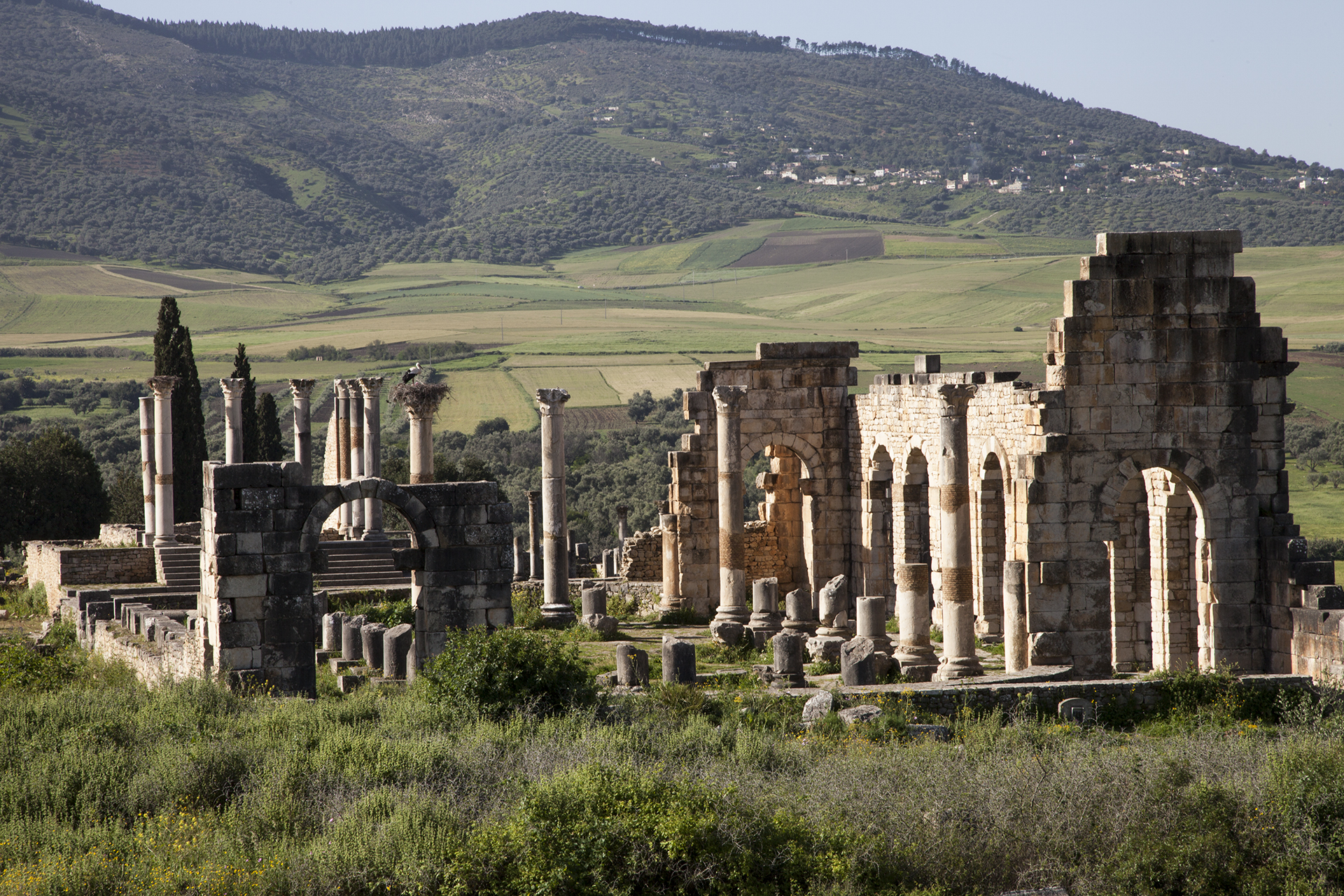
Thirty kilometres north of Meknes, on a plain in the Middle Atlas foothills. Capital of the kingdom of Mauretania, then a Roman provincial city from 44 AD; abandoned after the third-century crisis. The site preserves the basilica, the forum, the triumphal arch of Caracalla (217), the principal residential quarter with its elaborate mosaic floors (the House of Orpheus is the best-preserved), the public baths, and an oil-press complex (Volubilis exported large quantities of olive oil to imperial markets). UNESCO World Heritage.
The eastern provinces
Ephesus · Turkey
The capital of Roman Asia

Near Selçuk on the Aegean coast. The capital of the Roman province of Asia, with a population at peak of perhaps 250,000 — the second-largest city in the eastern empire after Alexandria. The principal monuments: the Library of Celsus (early second century, façade rebuilt 1970-78), the Great Theatre (25,000 seats), the Temple of Hadrian, the terrace houses (the upper-class residential quarter, with mosaic and fresco floors preserved), the Marble Road, the Memmius Monument. The Basilica of St John (sixth-century, said to be over the apostle's grave) is on a nearby hill. UNESCO World Heritage.
Aphrodisias · Turkey
The marble city

Inland from the Aegean coast, about 230 km south-east of Izmir. Famous in antiquity for its sculpture school (Aphrodisian sculpture is in major museums worldwide). The stadium (one of the best-preserved in the ancient world, 270 metres long, seats 30,000), the Tetrapylon (the monumental gateway, restored 1985-91), the Sebasteion (a temple-court dedicated to Augustus, decorated with reliefs of imperial conquest), the theatre, the bouleuterion (council house), the agora, the baths of Hadrian. Less visited than Ephesus and consequently more comfortable. UNESCO World Heritage.
Jerash · Jordan
Gerasa, the Decapolis city

The best-preserved Roman provincial city in the eastern empire. Hellenistic foundation, Roman colony from the first century AD; declined after Sasanian and Arab conquests in the seventh. Preserved monumental architecture: the Oval Plaza (with surrounding Ionic colonnade), the Cardo Maximus (the main north-south colonnaded street, 800 metres long), the Temple of Artemis, the Temple of Zeus, the South Theatre (3,000 seats, still used for the annual Jerash Festival), the Hadrian's Arch (129 AD, marking Hadrian's visit to the city), the Hippodrome.
Baalbek · Lebanon
Heliopolis

In the Beqaa Valley, ninety kilometres east of Beirut. The site of the largest Roman temple complex in the empire, dedicated principally to Jupiter Heliopolitanus and built (in stages) from the first century BC to the third century AD. The Temple of Jupiter contains the famous trilithon — three carved monolithic stone blocks each weighing around 800 tonnes, the largest building blocks ever cut in pre-modern stoneworking. The Temple of Bacchus, adjoining, is the best-preserved large Roman temple anywhere. Security conditions vary; check current advice.
The Greek heartland
Athens · Greece
The Acropolis, the Roman Agora, and the cathedral

Athens was, in the Roman period, a provincial university town (the rhetorical schools were nationally famous), still proud of its classical past but politically secondary. The Roman-period sites: the Library of Hadrian; the Roman Agora (with the Tower of the Winds, a first-century BC water clock); the Arch of Hadrian and the great Temple of Olympian Zeus that he completed in 132; the Odeon of Herodes Atticus (161 AD, still in summer concert use). The cathedral neighbourhood preserves the Byzantine churches of the late empire.
Thessaloniki · Greece
The Tetrarchic capital and the Byzantine second city

Capital of Galerius's tetrarchic quarter (293–311), and after Constantinople the most important city of the Byzantine empire. The Rotunda of Galerius (an enormous early fourth-century circular mausoleum, converted to a church by Theodosius, with extraordinary surviving mosaic), the Arch of Galerius (commemorating the victory over the Sasanians in 297), the Palace of Galerius (under modern Navarino Square), the city walls. The Byzantine churches of the city — Hagia Sophia (eighth century), Saint Demetrios (seventh century, with mosaics), the small fourteenth-century churches of the Vlatadon and Holy Apostles — are collectively UNESCO World Heritage.
The provinces no longer easily visited
Leptis Magna · Libya
The African birthplace of an emperor

The birthplace of Septimius Severus (emperor 193-211), and on his accession the city he most lavishly rebuilt. The result is, for sheer architectural quality, the best Roman provincial city anywhere — the Severan Basilica, the Forum, the Hadrianic Baths, the Hunting Baths, the harbour. UNESCO World Heritage. Current security conditions in Libya make travel difficult; many specialist tour operators have been unable to operate since 2011. Worth knowing about.
Palmyra · Syria
The desert capital

The caravan city in the central Syrian desert, capital of Queen Zenobia's breakaway empire of the 260s and 270s. The Great Colonnade, the Temple of Bel, the Theatre, the Agora, the Funerary Towers — all heavily damaged by the Islamic State in 2015 and 2017 (the Temple of Bel and the Triumphal Arch of Septimius Severus were dynamited; the head archaeologist Khaled al-Asaad was murdered for refusing to disclose the locations of stored finds). Reconstruction is in early stages. The site is closed to visitors at the time of writing. Worth visiting eventually.
Split · Croatia
Diocletian's palace

The retirement palace of Diocletian, built between 295 and 305 on the Dalmatian coast; the modern city of Split is built inside its walls and uses its substructure as a basement. The Peristyle (the palace's central court, now a public square), the Mausoleum of Diocletian (later converted to the cathedral of Saint Domnius), the substructures (a complete underground network of vaulted galleries, on the same plan as the floor above), the Golden Gate. UNESCO World Heritage. A working medieval city built on the most coherent piece of late-Roman monumental architecture in the empire.
Mount Athos · Greece
The monastic survival
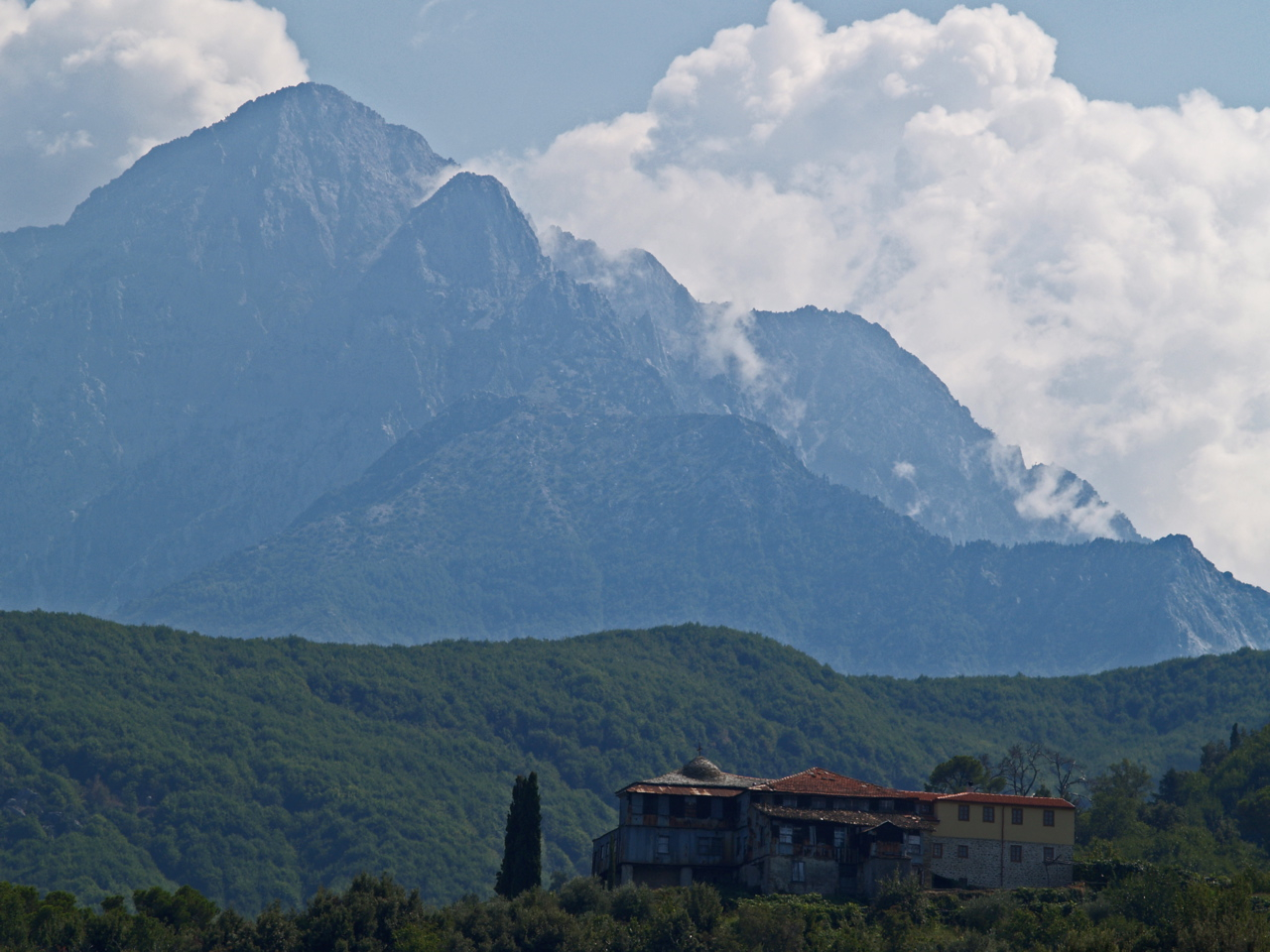
The autonomous monastic republic on the Athos peninsula, recognised as a religious community by Byzantine imperial decree in 883 and continuously functioning ever since — the longest-running political institution descended from the Roman empire. Twenty monasteries (Greek, Russian, Serbian, Bulgarian, Romanian, Georgian), about two thousand monks, the Akathist Hymn sung every day for twelve centuries. Visitors must be male, must obtain a permit (the diamonētērion), and must respect the dress code and the prayer schedule. UNESCO World Heritage. The empire is dead. Mount Athos has not noticed.