Slovenia and Croatia declared independence on the same day — the 25th of June 1991. The Yugoslav People's Army (JNA) responded in Slovenia with a small intervention that turned into the country's only short war: the Ten Days War of late June and early July 1991. The JNA, expecting a brief show of force to restore federal authority, deployed perhaps 2,000 troops to the Slovene border posts. The Slovene Territorial Defence forces — well-organised, well-trained, and operating on home ground — responded with effective resistance. After ten days of fighting, perhaps sixty-five Slovenes and forty-four JNA soldiers had been killed; the JNA had been embarrassed in international media; and the European Community's Brioni Agreement of the 7th of July 1991 effectively conceded Slovenia's de facto independence in exchange for a three-month moratorium on formal declarations.
The Slovenian war was the cheap exception. The wars that followed in Croatia and Bosnia would last for years and produce, between them, over 130,000 dead.
Croatia

The Croatian war was not a federal-Slovene-style border skirmish. It was a complex conflict involving four distinct factions: the JNA (acting in coordination with Milošević's Serbian government); the new army of independent Croatia (the Croatian Army, or HV); the Croatian-Serb militia of the self-declared "Republic of Serbian Krajina" (RSK) in the Krajina region of central and eastern Croatia; and a substantial number of paramilitary groups on all sides. The war lasted from June 1991 to November 1995. About 22,000 people were killed, perhaps 220,000 displaced, and several hundred thousand more became refugees abroad.
The war's iconic events: the three-month siege of the eastern Croatian city of Vukovar by the JNA from August to November 1991, ending in the city's complete destruction and the massacre of around 260 prisoners at the Ovčara farm; the shelling of Dubrovnik's Old Town by JNA artillery in late 1991, which damaged about 60% of the UNESCO-listed buildings (subsequently repaired); the eventual Croatian recovery of all RSK territory in Operation Storm of August 1995, which displaced approximately 200,000 Croatian Serbs westward into Bosnia and Serbia in the largest single forced population movement of the wars. Operation Storm ended the war but is contested at the International Criminal Tribunal for the Former Yugoslavia (the ICTY found the Croatian commander Ante Gotovina guilty of war crimes in 2011, then acquitted him on appeal in 2012; the result remains controversial).
Bosnia
The Bosnian war, which began in April 1992 and lasted until November 1995, was the most destructive of the Yugoslav wars and remains the worst conflict in Europe since the Second World War. Its complexity defies brief summary: a three-way war between the predominantly Bosniak (Bosnian Muslim) government in Sarajevo, the Bosnian Serb forces in the self-declared Republika Srpska under Radovan Karadžić and General Ratko Mladić, and (variably allied with one side or the other) the Bosnian Croat forces of Herzeg-Bosnia. The conflict involved the systematic ethnic cleansing of Bosniaks from territories the Bosnian Serbs intended to incorporate into a Greater Serbia, conducted through what the ICTY would later determine to be a genocide. About 100,000 people were killed; 2.2 million were displaced; tens of thousands of women were systematically raped.
The siege of Sarajevo
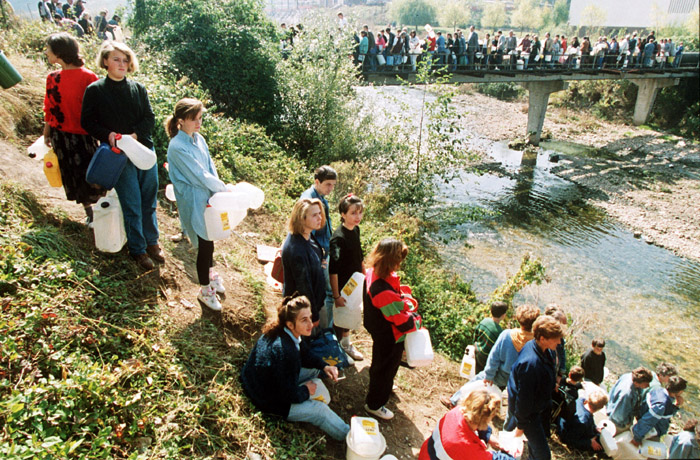
The defining event of the Bosnian war was the siege of Sarajevo. The Bosnian capital, a city of 525,000 with a substantial Bosniak majority but significant Serbian, Croatian, and Jewish minorities, was encircled by Bosnian Serb forces from the 5th of April 1992 to the 29th of February 1996 — 1,425 days, the longest siege of a capital city in modern history. The Bosnian Serbs occupied the surrounding hills and held them with artillery, mortars, and snipers; the Bosnian government held the city centre with a hastily organised army of perhaps 80,000.
The civilian population was subjected to daily artillery and sniper fire for nearly four years. Sniper Alley — the central boulevard of Sarajevo's Zmaja od Bosne — became one of the most-photographed streets of the late twentieth century. At least 5,434 civilians died in the siege, of an estimated 11,541 total deaths. Water, electricity, and gas were intermittent. Food was supplied by an air bridge from a single working tunnel under the airport runway. About 14% of the buildings in the city were destroyed; another 50% were significantly damaged.
The siege ended only with the comprehensive NATO bombing campaign of August-September 1995 (Operation Deliberate Force) that broke the Bosnian Serb military around Sarajevo and forced them to the negotiating table at Dayton, Ohio, in November 1995.
Srebrenica
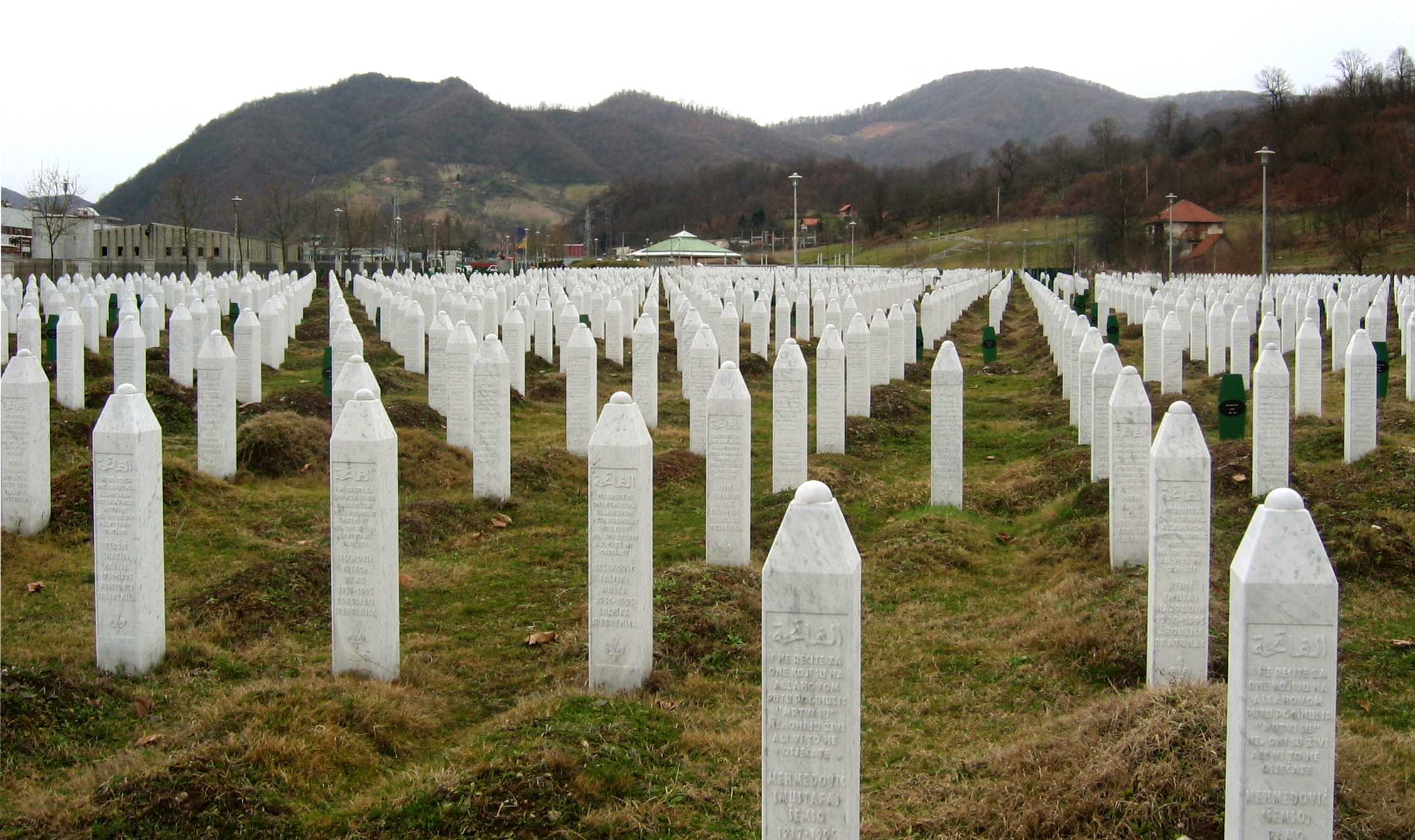
The single worst atrocity of the wars occurred between the 11th and 22nd of July 1995 in the eastern Bosnian town of Srebrenica. The town, formally a UN-designated "safe area" under the protection of a Dutch peacekeeping battalion, was overrun by Bosnian Serb forces under General Ratko Mladić on the 11th of July. The Dutch battalion was overwhelmed and unable to protect the population. Over the following ten days, Mladić's forces systematically separated the male population from the women and children, transported the men in trucks and buses to a series of execution sites in the surrounding hills, and shot at least 8,372 Bosniak men and boys.
The Srebrenica massacre was, the International Court of Justice ruled in 2007, an act of genocide. The ICTY tried and convicted Mladić, Karadžić, and several other Bosnian Serb military and political leaders for the crime. Mladić was sentenced to life imprisonment in 2017; Karadžić in 2016. The Srebrenica massacre is commemorated annually at the Potočari memorial outside the town; the graves of the identified victims (around 6,700, as of 2024) line the memorial in long white-marble rows.
"We are giving you the right not to be killed." — General Ratko Mladić, addressing Bosniak male prisoners at Potočari, 12 July 1995, before sending them to the execution sites
Dayton
The Bosnian war ended with the Dayton Accords, signed on the 14th of December 1995 at Wright-Patterson Air Force Base in Ohio after three weeks of US-mediated negotiations between Tuđman, Milošević, and the Bosniak president Alija Izetbegović. The agreement preserved Bosnia and Herzegovina as a single state but divided it constitutionally into two entities: the Federation of Bosnia and Herzegovina (Bosniak-Croat majority) and the Republika Srpska (Serb majority). The boundary between them, set down at Dayton, has not significantly changed in the thirty years since. The country is administered, in important respects, by a High Representative appointed by the international community; the constitutional arrangements established at Dayton are widely considered dysfunctional but politically unrevisable.
What was lost
By December 1995, Yugoslavia had been reduced to a rump federation of Serbia (now containing Vojvodina and Kosovo as autonomous provinces of doubtful autonomy) and Montenegro. The northern republics — Slovenia, Croatia, Bosnia, Macedonia — were now independent states. About 130,000 people had been killed across the various wars. Several million had been displaced. The economic, cultural, and infrastructural fabric of the former federation had been comprehensively destroyed.
The wars were not yet over. Kosovo was approaching its own crisis, and the rump Yugoslav state still had two NATO interventions ahead of it. The next chapter takes them up.
End of Chapter VIII