King Alexander's royal dictatorship of 1929–1934 was, in its own self-presentation, a temporary expedient: a few years of personal rule during which the new Yugoslav identity would be consolidated, after which constitutional government would be restored on a more stable footing. In practice it was an authoritarian regime modelled loosely on the contemporary Polish and Hungarian models — Pilsudski's Sanacja, Horthy's Hungary — that combined the language of national unity with the suppression of political parties, ethnic activism, and press freedom.
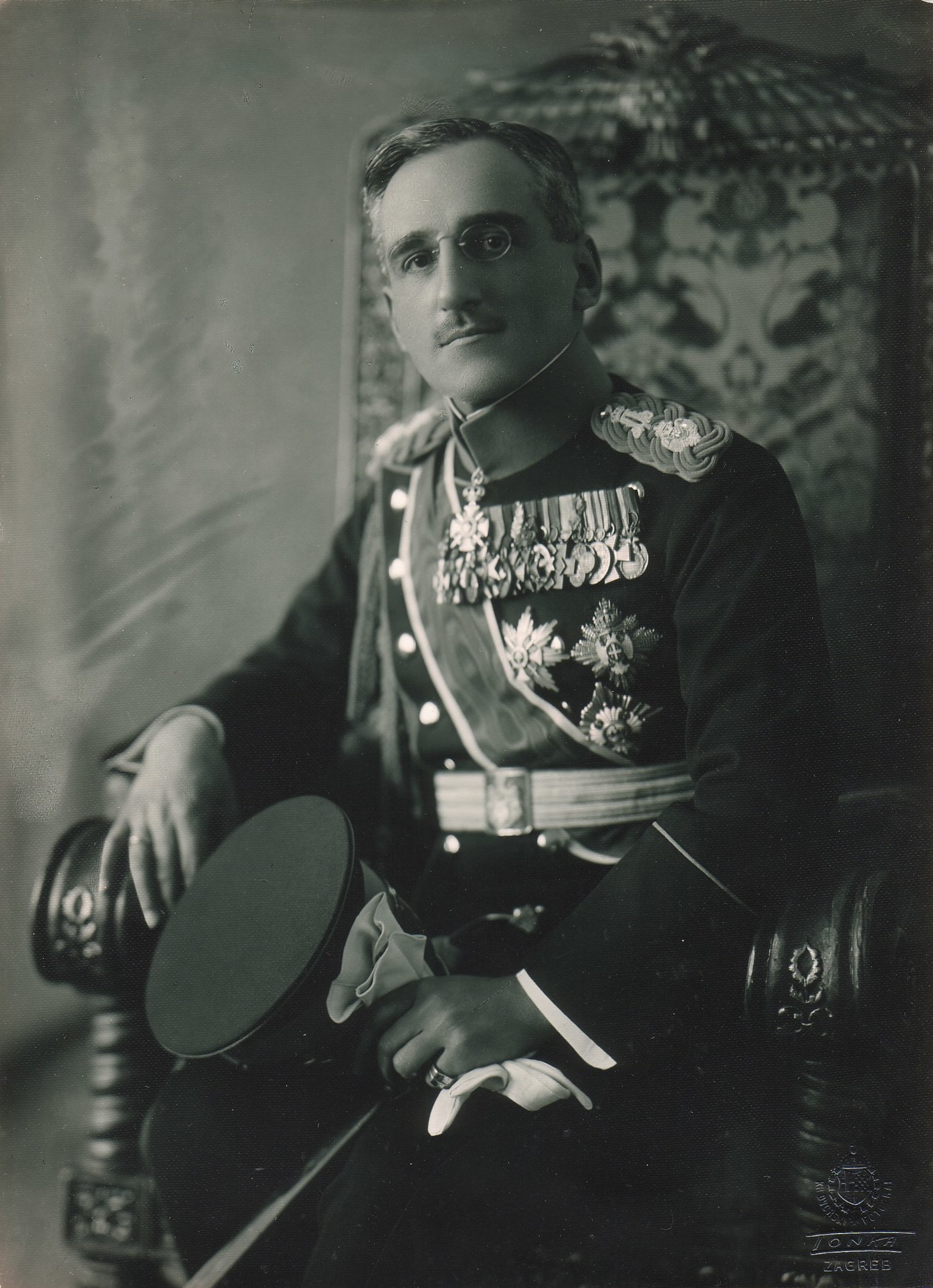
The Croatian Peasant Party was banned; its new leader Vladko Maček was imprisoned. The Slovene Peoples' Party was disbanded. The Communist Party of Yugoslavia, illegal since 1921, was driven further underground. A new state party, the Yugoslav National Party, was created from the ruins of the old Radical Party and a few smaller groups to give the regime a parliamentary façade. The press was censored. Croatian-language schools in some districts were closed in favour of nominally "Yugoslav" curricula. The Cyrillic script was promoted as the equal of the Latin in the new constitutional language ("Serbo-Croato-Slovenian," which no one had ever spoken).
None of this produced a Yugoslav national identity. What it produced, instead, was an increasingly bitter set of underground oppositions: Croatian nationalists, particularly the Ustaše terrorist movement founded by Ante Pavelić in 1929 and based in Italian-controlled territory; Macedonian nationalists, organised as the Internal Macedonian Revolutionary Organisation (IMRO) and based in Bulgaria; Serbian republicans; and the small but disciplined Communist Party under Josip Broz, then a young Croatian-Slovene mechanic who had returned from Soviet exile in 1936 to take over the underground party.
The Marseille assassination

The political contradictions of the dictatorship resolved themselves in violence. On the 9th of October 1934, on a state visit to France intended to consolidate the Yugoslav-French alliance, King Alexander was assassinated in Marseille by a Bulgarian Macedonian named Vlado Chernozemski, working for the Croatian Ustaše under Pavelić's command. The killing was conducted in broad daylight, during the royal motorcade, in front of cameras. It was the first political assassination ever caught on motion-picture film. Alexander died within five minutes of the attack; the French foreign minister Louis Barthou, hit by stray fire, died of his wounds the next day.
The assassination was the most consequential political event in the kingdom's history. Alexander's son Peter was eleven years old. The country was placed under a regency under the late king's cousin Prince Paul, a moderate Anglophile diplomat who had no enthusiasm for the role and limited support within the political class.

The Sporazum
The regency lasted seven years and is conventionally divided into two periods. The first, from 1934 to 1939, was politically experimental: governments were appointed and dismissed at speed; the Yugoslav National Party gave way to a new Yugoslav Radical Union; press freedom was partially restored; political prisoners (including Maček) were released. The second, from 1939, was dominated by the deteriorating European situation.
The major domestic achievement of the regency was the Cvetković-Maček Agreement (Sporazum) of August 1939, which created an autonomous Banovina of Croatia within the Kingdom of Yugoslavia. The new Croatian unit included most of the Croatian-majority territories of the old Habsburg lands and parts of Bosnia, and was given its own assembly, its own administration in Zagreb, and substantial control over education and police. Maček, the Croatian Peasant Party leader, became Deputy Prime Minister of Yugoslavia and effective autonomous head of government in Croatia.
The Sporazum was, in retrospect, a serious political achievement — the closest the inter-war Yugoslav state ever came to a genuine federal compromise between its Serbian and Croatian components. It also, however, infuriated other constituent peoples: Slovenes, who saw a similar deal as plausible for them but were not given one; Bosnian Muslims, who saw their territories split between Croatian and Serbian-administered regions without their input; Macedonians, who saw the agreement as evidence that the kingdom would always rearrange itself by Serb-Croat bargaining over their heads. The Sporazum, in other words, opened a door to federal compromise that the war shut almost immediately.
March 1941
The European war that had broken out in September 1939 reached Yugoslavia in stages. The kingdom was officially neutral. It was also, by 1941, surrounded: the Italians had been in Albania since 1939; the Germans had taken Hungary, Romania, and Bulgaria as Axis allies; the Soviets had taken Bessarabia from Romania in mid-1940. Yugoslavia faced an Axis choice: join, or be invaded.
The regency, under enormous German pressure, signed the Tripartite Pact on the 25th of March 1941, formally aligning the kingdom with Germany, Italy, and Japan. The terms were notably soft — Yugoslavia would not be required to provide troops, would not be subject to military transit, would retain its territorial integrity — and were the best the regency could realistically have obtained. The reaction inside the country, however, was furious. Two days later, on the 27th of March 1941, a group of Yugoslav air force officers led by General Dušan Simović overthrew the regency in a military coup. Prince Paul was deposed. Peter II — seventeen years old, three months short of his majority — was declared of age and proclaimed king. The new government repudiated the Tripartite Pact within forty-eight hours.
Hitler, in Berlin, learned of the coup on the morning of the 28th of March. By that evening he had ordered the invasion of Yugoslavia, which he code-named Operation 25. The invasion began on the 6th of April 1941, with the Luftwaffe bombing of Belgrade — the so-called "Bombing of Easter Sunday" — that killed perhaps 17,000 people in two days and destroyed substantial parts of the city centre, including the National Library. The kingdom's army, demobilised, divided ethnically, and overwhelmed by the Wehrmacht's blitzkrieg, collapsed in eleven days. The royal family fled to London on the 17th of April. The country surrendered the same day.
The end of the kingdom
The Kingdom of Yugoslavia, as a political entity, had lasted twenty-two years and eight months. It had failed to construct a workable internal political settlement; it had failed to develop its economy beyond the pre-war Habsburg-Serbian baseline; it had failed to integrate its various peoples into anything resembling a national consciousness. It had also, however, kept the South Slav project alive in some form, produced — in the Sporazum — a serious template for future federation, and given a generation of intellectuals (Andrić, Krleža, Cesarić, Pirjavec) the experience of a multinational state to write about.
What replaced it, from April 1941 to May 1945, was the most ferocious civil war in Yugoslav history, fought simultaneously with a war of national liberation against the Axis occupation. The next chapter takes up the partisans, the chetniks, and the Ustaše state.
End of Chapter II