The Free State of Prussia — Freistaat Preußen, in German — was the largest constituent unit of the Weimar Republic. It contained almost two-thirds of the country's territory and almost three-fifths of its population. Its capital was Berlin. Its parliament, the Landtag, sat in the same building as the national Reichstag, but on different days. Its head of government, the Minister-President, was a coal-miner's son from East Prussia named Otto Braun.

This is the part of the Prussian story that almost no one outside Germany has heard. The Free State of Prussia between 1920 and 1932 was governed by an unbroken coalition of Social Democrats, the Catholic Centre Party, and the German Democratic Party. The same Minister-President remained in office, with one brief interruption, for twelve years — a record of political stability unmatched in any other German government of the era, and one of the longest unbroken democratic premierships in Europe between the wars. Braun, sober and incorruptible, was nicknamed the Red Tsar of Prussia by his enemies. His administration was the closest thing the Weimar Republic ever produced to a model government.
The reform of an old country
The new Prussia, as drafted in its constitution of November 1920, was an unrecognisable thing to anyone who had known the old kingdom. Its preamble declared it a republic. Its head of state was a Minister-President elected by the Landtag. Its franchise was universal, including for women, who had received the vote in November 1918. The old three-class voting system that had given the rich five times the weight of the poor was gone. The old House of Lords — the Prussian aristocratic chamber that had blocked liberal legislation for sixty years — had been abolished. The Prussian army, which had been the institutional backbone of the old state, no longer existed; the Reichswehr was a federal army, not a Prussian one.
What remained, surprisingly, was the Prussian civil service. The Junker bureaucracy of the empire had been carefully purged of its most reactionary elements and reorganised under Social Democratic ministers. Carl Severing, as Prussian Minister of the Interior from 1920, conducted what amounted to a quiet revolution in the senior civil service. Reactionary officials were retired. Republican officials were promoted. The Prussian police — the largest single police force in Germany, around fifty thousand strong — was professionalised and brought under firm democratic control. By the late 1920s the Prussian police was, in expert assessments at the time, the best-trained and most politically neutral police force in central Europe.
The educational system was reformed. The state churches were separated from the state but kept their endowments. The medical and welfare systems, built on Bismarck's foundations, were extended. The arts were patronised: the new museums of Berlin — the Pergamon Museum, opened in 1930, is the most spectacular survival — were built or extended under Free State funding. Berlin in the 1920s, the cultural capital of the avant-garde of central Europe, was a project of the Free State of Prussia as much as it was a project of the Weimar Republic. The plays of Brecht were premiered in Prussian theatres. The films of Lang and Murnau were produced in Prussian studios. The dancers, the composers, the poets, the architects of the Bauhaus, lived and worked in cities administered by Otto Braun's coalition.
"Prussia is the bulwark of the Republic. As long as Prussia stands, the Republic stands." — attributed to Friedrich Ebert, first President of the Weimar Republic, c. 1924
The lost provinces
The territorial settlement of 1919 had been hard on Prussia. The Treaty of Versailles had taken from the country the entire province of Posen, the western part of West Prussia (now restored to Poland as the Polish Corridor), the city of Danzig (made a Free City under the League of Nations), the eastern part of Upper Silesia (after a contested plebiscite), the district of Eupen-Malmedy (to Belgium), the Memel district (to Lithuania, later), the small district of Hultschin (to Czechoslovakia), and the Saar region (under League administration for fifteen years). In total Prussia had lost perhaps 12% of its pre-war territory and 14% of its pre-war population.
The most painful loss, geopolitically, was the Polish Corridor. The province of East Prussia — the original duchy of Albert of Hohenzollern, with its capital at Königsberg — was now physically separated from the rest of Germany by a strip of Polish territory thirty to sixty miles wide. To travel from Berlin to Königsberg, a Prussian had now to cross either Polish soil with a transit visa or sail across the Baltic on the heavily subsidised East Prussian shipping line. East Prussia became, in the Weimar years, an isolated outpost — heavily subsidised by the federal government, demographically aging, economically declining, and politically the most right-wing province in the entire Republic. By 1932 it was voting Nazi at higher rates than anywhere else in the country.
The Preußenschlag
The end of the Free State, when it came, was not at the hands of the Nazis. It was at the hands of a member of Otto Braun's own former coalition.
By the spring of 1932, the Weimar Republic was in a triple crisis: economic (the unemployment rate had reached six million), constitutional (no Reichstag majority could be assembled), and political (the Nazi Party had just won 230 seats in the July Reichstag election, becoming the largest single party). The Reich Chancellor, the Catholic aristocrat Franz von Papen, had been appointed by President Hindenburg in May without any parliamentary mandate. Papen was a slight, charming, fundamentally unserious man who believed that the only solution to the Republic's problems was to bring the Nazis into a controlled coalition under his own leadership. He had also concluded, by mid-July, that he could not do this while Otto Braun's Prussian government — controlling Germany's largest police force, sitting in Berlin, and led by a Social Democrat who refused to deal with Hitler — was in his way.
On the 20th of July 1932, citing emergency powers under Article 48 of the federal constitution and a pretext that the Prussian government had failed to maintain public order, Papen had President Hindenburg sign a decree removing Otto Braun's government and appointing Papen himself as Reich Commissioner for Prussia. The Prussian ministers, summoned to the Chancellery, were told that they had been dismissed. Severing, the Prussian Minister of the Interior, was asked whether he would resist. He famously said that he would yield only to force. Force was produced: a single colonel and an order to vacate the building. Severing left.
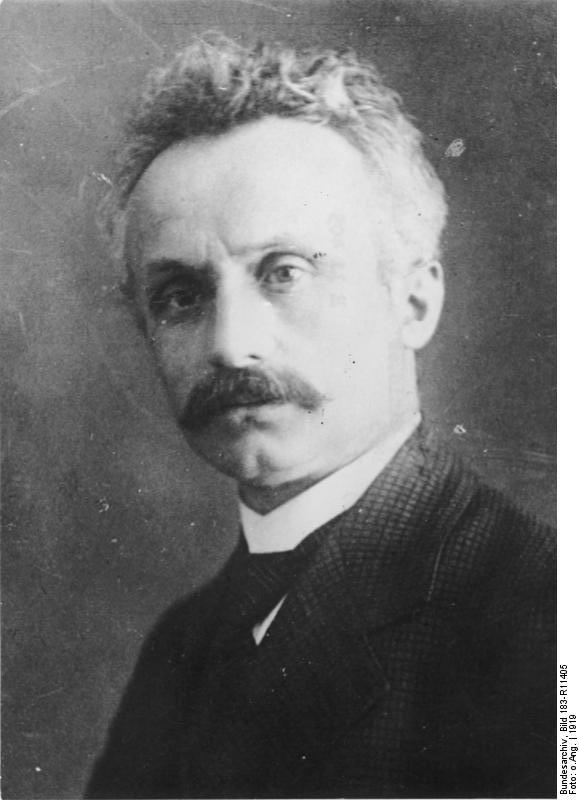
This event — the Preußenschlag, the Prussian Coup — was the decisive moment in the destruction of Weimar democracy. The largest democratic state in Germany had been overthrown by a presidential decree on a pretext nobody believed. The constitutional court, when the case was brought, ruled in October 1932 that the decree had been only partially legal — but by then Papen had been in office for three months. The principle that a Reich government could remove a state government by emergency decree had been established. When Hitler came to power six months later, the precedent was waiting for him.
The Free State of Prussia continued to exist on paper, with a rump cabinet under Papen's commissioner and then under Göring, for another seven months. Then, in March 1933, the new Nazi government dissolved every state parliament in Germany and replaced every state government with a Reichsstatthalter — a Reich governor — directly responsible to the Chancellor. Prussia's last vestige of independent existence was over.
What was lost
It is a strange historical irony, and one of which Prussia's foreign enemies were not aware in 1947 when they signed the Allied Control Council Law abolishing the state, that the Free State of Prussia between 1920 and 1932 had been the most genuinely democratic government Prussia ever had. It had had universal suffrage, female and male, with proportional representation. It had had a free press. It had had an independent judiciary. It had had a professional, politically neutral civil service. It had had, by the standards of the inter-war world, an exemplary policy of religious and minority toleration. It had had — astonishingly, by central European standards — almost no antisemitic legislation, no political violence committed by state institutions, and no significant corruption scandals at ministerial level.
It is the great unwritten counterfactual of European history. If Otto Braun's coalition had been able to hold on for another six months, until the Nazi vote began its decline in the November 1932 elections, the Republic might have survived. The coup of the 20th of July 1932 ended a government that, at the time, was still polling above the Nazis in Prussian state polls. It is one of the moments at which a democratic decade ended not because the voters chose to end it but because a small group of conservatives decided that it was no longer worth defending.
What happened next is the chapter in which a country was, in two stages, deliberately erased.
End of Chapter XI