On the morning of the 18th of January 1701, Frederick III of Brandenburg placed a small crown of pearls and gold on his own head in the chapel of the Königsberg castle. He then anointed himself, on the forehead and the wrists, with consecrated oil. He then walked out of the chapel and proclaimed, in the courtyard, that he was henceforth Frederick I, King in Prussia. It was an extraordinarily peculiar ceremony, not least because no one in Europe — including the new king — was entirely certain that what had just happened was legal.

The peculiarity is encoded in the title itself. He had not been crowned King of Prussia. He had been crowned King in Prussia. The preposition is doing a lot of work. Brandenburg, the elector's principal territory, lay inside the Holy Roman Empire, where there could be no king but the emperor. The Duchy of Prussia, on the other hand, lay outside the Empire — sovereign Hohenzollern territory since the Peace of Oliva in 1660, with no overlord at all. The new king could call himself a king only on Prussian soil, by which he meant the Königsberg castle. Hence the unusual venue. Hence the small, slightly absurd, self-administered ceremony. Hence the careful preposition.
The Hohenzollerns dropped the preposition fifty years later, after the conquest of Silesia, and from then on were Kings of Prussia. But on that January morning in 1701, in front of a small audience of cold courtiers, the title was deliberately and necessarily provincial. The world would, over time, fail to notice the distinction.
The price of a crown
It had cost Frederick I two years of negotiation, six million thalers, and the promise to provide eight thousand Brandenburg troops to the Habsburg cause in the War of the Spanish Succession, then about to break out. The Holy Roman Emperor Leopold I had finally, in November 1700, signed the secret Treaty of the Crown — an instrument by which the emperor agreed, in exchange for the troops and the money, not to object when Frederick proclaimed himself King in Prussia. The other European powers were notified one by one and, with varying degrees of irritation, recognised the new title over the following two years.
The new kingdom, for all its peculiar origin, had genuine consequences. From 1701 onward, the Hohenzollern state ranked among the royal courts of Europe, with the protocol and the marriage market that the rank implied. The army, paid by the new crown, took on royal blue uniforms. The state's official seal, its coinage, and its diplomatic correspondence began to bear the new royal style. And, slowly, the name Prussia — which had previously referred only to the Duchy of Prussia in the east — began to spread westward to cover the whole of the Hohenzollern monarchy. By the middle of the eighteenth century, even Brandenburgers were calling themselves Prussians. By the end of it, the Rhinelanders were too.
The first king and his court
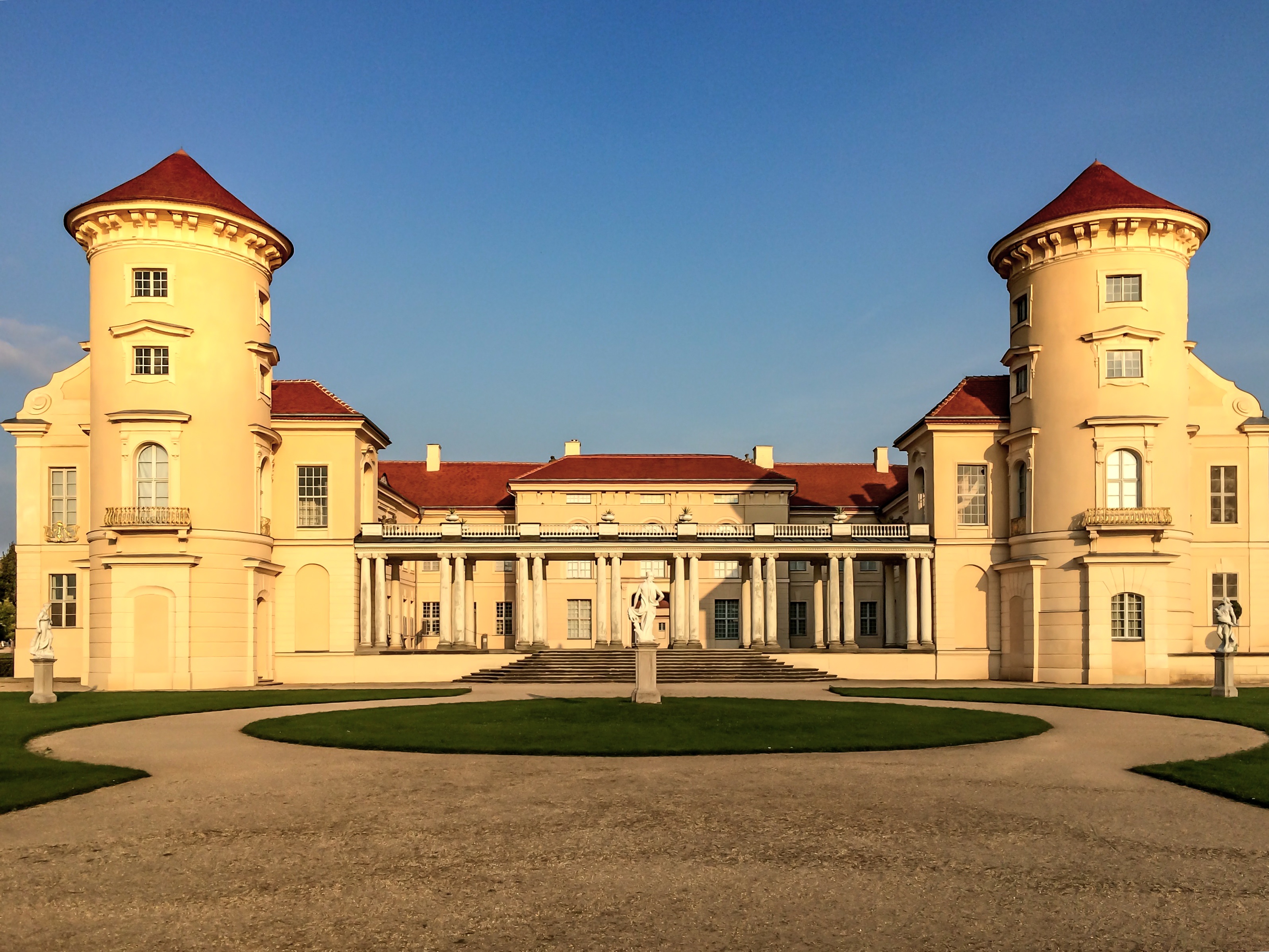
Frederick I, having spent his entire reign acquiring the title that gave him his number, devoted the remaining twelve years to spending money. He commissioned the rebuilding of the Berlin City Palace by Andreas Schlüter. He commissioned Charlottenburg, the summer palace, named for his second wife, Queen Sophie Charlotte, who was the most intellectually serious member of the Hohenzollern family in three generations and a personal friend of Leibniz. He commissioned the Berlin Academy of Sciences, founded in 1700 with Leibniz as its first president. He commissioned the rebuilding of half the centre of Berlin.
The court was expensive. The king liked uniforms, processions, French furniture, gilded coaches, court ballets, and ceremonial dinners served in twenty-eight courses. He had grown up in a Hohenzollern household with all the comforts of a moderately prosperous burgher, and he had spent his royal years trying to make up for it. His funeral, in 1713, cost two hundred thousand thalers.
His son took one look at the bill and fired half the court the next morning.
The Soldier King
Frederick William I, who succeeded his father in February 1713, was twenty-four. He was the strangest man ever to wear the Prussian crown — a king who hated court ceremonial, distrusted French culture, despised his own son for being interested in literature, beat his servants, dressed exclusively in plain blue military uniform, and worked twelve-hour days at his desk on the affairs of his country. He has been called, with some affection by Prussian historians, the Soldier King. The affection is partly retrospective. He was not, at the time, beloved.
What he did, in his twenty-seven years on the throne, was to turn Brandenburg-Prussia from a moderately serious German monarchy into the most efficient state in Europe. He doubled the size of the army, from forty thousand to over eighty thousand men, in a country whose population — perhaps two and a half million — could barely support it. He cut court expenditure by three quarters. He drained the marshes around Berlin and Potsdam, opening tens of thousands of hectares of new arable land. He founded the General Directory, a centralised civil administration that combined the war ministry, the treasury, the post, and the royal estates into a single bureaucracy of around twelve hundred people, all of them salaried, all of them on permanent terms, all of them expected — for the first time in any European monarchy — to write reports in standardised formats and submit them through formal channels of review.
The General Directory is the direct ancestor of every modern professional civil service. Its forms, its hierarchical reporting structure, and its principle that an official could not be dismissed without cause were, by the standards of the day, revolutionary. Other European monarchies governed through patronage networks of personal friends. Frederick William governed through a paid bureaucracy of strangers. The strangers were, on the whole, magnificent at their jobs.
"One must serve the King with body and soul, with goods and blood, with honour and conscience, and surrender everything except salvation. The latter is reserved for God; everything else must be mine." — Frederick William I, 1722
The Potsdam Giants
The Soldier King had one famous eccentricity. He collected tall men. Specifically, he had built up — at enormous expense, since the average European was around five foot five — a regiment of grenadiers, the Grand Grenadiers of Potsdam, every one of whom had to be at least six foot two. Many of them were closer to seven feet. The king kept around twelve hundred of them at any time, paid them double the standard wage, dressed them in tall mitre caps that made them look even taller, and reviewed them personally most mornings outside the Potsdam palace.
The recruitment methods were, by modern standards, criminal. Tall men were paid to come from Sweden, Russia, Ireland, and Bavaria. Tall men were also occasionally kidnapped. A six-foot-six Norwegian carpenter, on holiday in Hamburg, found himself drugged on a wharf and woke up in Prussian uniform. The king of Saxony's tall valet was simply taken off the street one day in Dresden and bundled into a coach. Frederick William paid his foreign agents a bonus per inch.
It is the one note of farce in his reign. The giants were never sent into combat. He could not bear the thought of losing them. When he died, his son disbanded the regiment as one of his first acts.
The two crown princes
One last thing about Frederick William, since it is necessary for the chapter that follows. He hated his son.
The crown prince, also a Frederick, born in 1712, was everything his father was not. He played the flute. He read French literature. He composed verse. He admired Voltaire and corresponded with him from the age of fifteen. He preferred the company of his sister Wilhelmina, who shared his tastes, to that of any of his father's hunting cronies. He had no interest, as far as anyone could tell, in soldiering.
The king tried, repeatedly and brutally, to beat these tendencies out of him. The crown prince, in 1730, tried to flee the country with a friend named Hans Hermann von Katte. They were caught. Katte was beheaded in the courtyard of the fortress of Küstrin, while the eighteen-year-old prince — held at a window by guards — was made to watch. The shock is reported, in some accounts, to have caused him to faint.
The crown prince spent the next eighteen months working as an apprentice in the provincial administration of Küstrin, under his father's order, before being permitted to return to the court. He never spoke afterwards of what he had seen. He did not, then or later, forgive his father.
When Frederick William died on the 31st of May 1740 — slowly and badly, of gout and dropsy, at the age of fifty-one — the crown prince was twenty-eight. He inherited a treasury holding nine million thalers, the largest standing army in the German lands relative to population, the most efficient bureaucracy in Europe, and a position in central European politics that was already beginning to make the Habsburgs nervous. He inherited, in other words, the perfect instrument.
He had spent his entire adolescence and young adulthood preparing, in his head, what he would do with it.
End of Chapter V