On the 1st of July 1569, in the south-eastern Polish city of Lublin, the representatives of the Kingdom of Poland and the Grand Duchy of Lithuania jointly ratified an act of union that converted what had been a personal dynastic linkage between two separate states into a single federated republic. The act ran to seventeen articles. Its preamble began: "The Kingdom of Poland and the Grand Duchy of Lithuania are one indivisible and inseparable body, one inseparable and undifferentiated Republic, which from two states and two nations has merged and joined into one people". From this point until the Third Partition of 1795 — two hundred and twenty-six years, almost exactly the span of the United States to date — the country called the Polish-Lithuanian Commonwealth would be a single, federally structured state with two capitals, two grand councils, one elected monarch, and a single Sejm. Its founders did not invent the federal republic as a constitutional form (the Swiss had been doing it for two centuries), but they invented something that no one else had managed: a multi-confessional, multi-lingual, multi-ethnic federal state, governed by an elected king and a legislature in which the noble equivalent of universal suffrage produced laws.
How they got there
The personal union between the two countries had begun in 1386, when Grand Duke Jogaila of Lithuania converted to Christianity, married the eleven-year-old queen Jadwiga of Poland, and was crowned King Władysław II Jagiełło of Poland. This produced a dynastic alliance — both crowns held by the same king — but the two states remained legally and administratively separate. The Lithuanian boyar elite retained their language (Ruthenian, the chancellery language of the Grand Duchy; with Lithuanian as a spoken vernacular), their Orthodox-and-pagan religious mix (much of the Grand Duchy was still pagan in 1386 and remained partly so for another century), their land tenure customs, and their separate political institutions. The Polish nobility (the szlachta) retained theirs: Polish language, Catholic confession, and an increasingly developed system of constitutional rights — the Privilege of Koszyce of 1374, the Privilege of Nieszawa of 1454, the Nihil novi constitution of 1505 (which forbade the king from issuing any new law without the Sejm's consent).
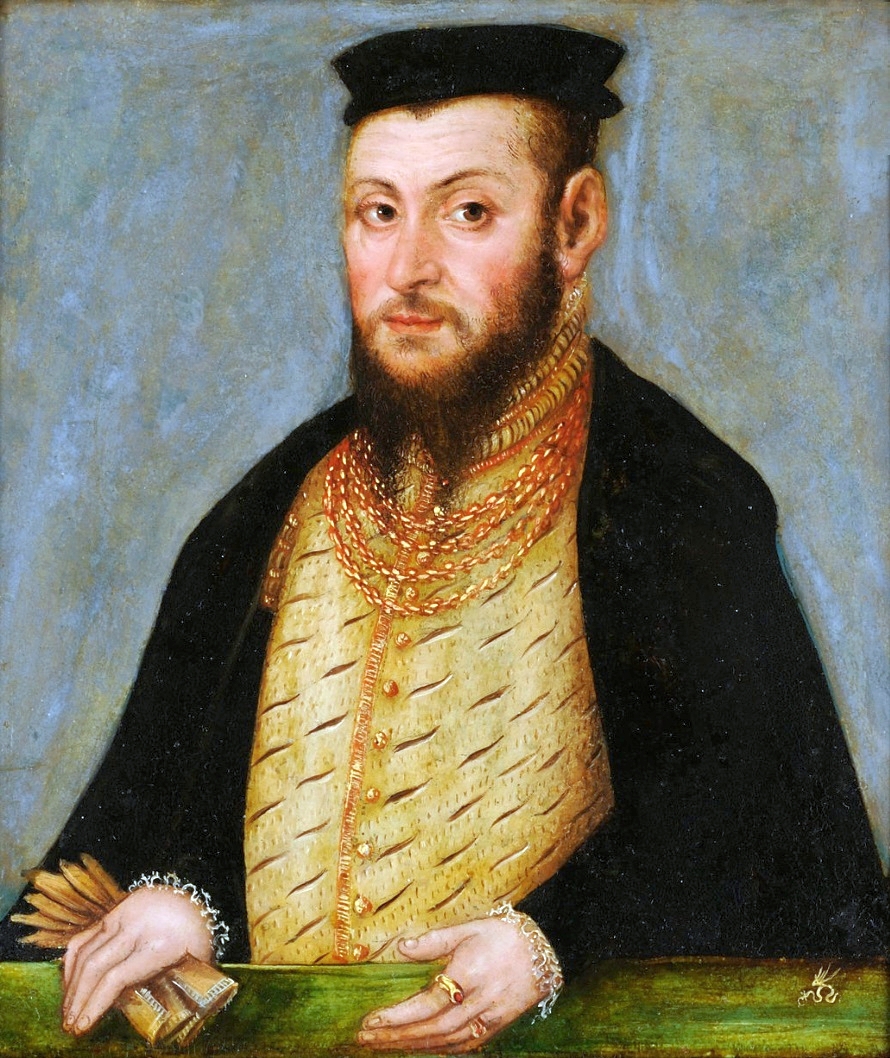
The two states cooperated when convenient, particularly against the Teutonic Order — which they jointly defeated at the Battle of Grunwald in 1410 — and against the Tatars and Muscovy. But they were not a single country. The Jagiellonian dynasty kept the personal union alive for almost two centuries, providing both crowns from the same family in a regularised but not legally formal arrangement. By the 1560s the situation had become urgent. The reigning monarch, Sigismund II Augustus, was childless and had no plausible heir. If the dynasty ended without a written union, the personal connection between the two states might also end. The Polish szlachta wanted a real union — meaning a single legal sovereign with a single Sejm. The Lithuanian boyars, fearing the dilution of their land titles and the influx of Polish nobility into the Lithuanian east, did not. Sigismund Augustus, who had no descendants and substantial financial troubles, did want a real union, because it would consolidate his fragmented inheritance into something durable.
The Sejm at Lublin
The session of the joint Sejm at Lublin lasted from January to July 1569, almost seven months. It was the longest single legislative session in the history of either state. The Lithuanians arrived determined to oppose union; in February, when the Polish delegation pressed too hard, the Lithuanian boyars walked out en masse and left the city. Sigismund Augustus's response was unprecedented and constitutionally questionable: he issued a royal decree, on his sole authority, transferring four large border provinces — Volhynia, Podlachia, Bratslav and Kiev — from the Grand Duchy to the Kingdom. These were the territories whose Ruthenian-Orthodox elites had long preferred Polish to Lithuanian sovereignty; their szlachta, polled informally, supported the move. The territorial transfer reduced the Grand Duchy by roughly a third of its land area, including most of its eastern Slavic-speaking population. The Lithuanian boyars, faced with the prospect of an emaciated rump duchy and the king's apparent willingness to do worse, returned to Lublin and resumed negotiations.
The treaty they eventually signed was a substantial Lithuanian victory in form and a substantial Polish victory in substance. The Grand Duchy preserved its separate legal code, its own treasury, its own army, its own central administration (the Lithuanian chancellery, the Lithuanian Tribunal, the Lithuanian hetman), and a parallel set of central offices that mirrored the Polish ones. But the Sejm, the elected monarch, and foreign policy were shared. The two senate chambers — Polish and Lithuanian — would sit jointly. The Lithuanian elite would have its own seats on the joint Senate (eighteen seats) and the joint Chamber of Deputies (forty-eight seats). The currency would remain dual-issue (Polish złoty and Lithuanian groszy circulated side by side for two centuries). The language of state was, for the Polish Crown and the joint institutions, Polish; for the Grand Duchy's internal administration, Ruthenian (replaced by Polish in 1697 by a Sejm act).

What had been made
The resulting country was, in 1569, the largest state in Europe by population (roughly 7 million) and one of the largest by area (about 815,000 km²). It included almost all of modern Poland, Lithuania and Belarus, large parts of Ukraine, the southern third of Latvia (Inflanty), and several enclaves in modern Russia (the Smolensk area, which would be intermittently disputed with Muscovy for the next century and a half). Its inhabitants spoke, in declining order of administrative weight: Polish (the language of the szlachta and of the western Crown lands), Ruthenian (the chancellery language of the Grand Duchy until 1697; the spoken vernacular of much of modern Belarus and Ukraine), Lithuanian (the spoken vernacular of the ethnic Lithuanian core), German (the trading-city dialects of Danzig, Toruń, Königsberg-not-yet-Prussian and Riga), Yiddish (the language of the world's largest Jewish population, perhaps 200,000 in 1569 and approaching a million by the seventeenth century), Latin (the legal language of the church and the higher administration), and Armenian, Tatar, Italian and Karaite in smaller minority pockets. Its religious composition was almost as varied — Catholic, Orthodox, Lutheran, Calvinist, Anti-Trinitarian, Greek Catholic (from 1596), Jewish, Muslim (the Lipka Tatars of Lithuania), and Karaite.

It was also, by the standards of its century, an extraordinarily decentralised state. The crown's central treasury was small. The royal army was small (a permanent royal force of about 4,000, supplemented by ad hoc levies of noble cavalry and mercenaries when needed). The crown had no standing tax authority outside the crown's own lands; all general taxation required the Sejm's approval. Local government was substantially in the hands of the regional noble councils (the sejmiki), of which there were eventually about seventy across the Commonwealth. This arrangement worked well in peacetime. Its weaknesses — when the country was attacked simultaneously on four fronts — would become very clear by 1655. But that was the future. In the summer of 1569, the men who signed the union of Lublin had built something new, and they were entitled to feel that they had done well.
End of Chapter I