The Pahlavi dynasty produced only two shahs, both named Reza, and both with the family name Pahlavi (a name Reza Shah took for the dynasty in 1925 because it was the name of the pre-Islamic Middle Persian language and therefore evoked the Sasanian past he wished to claim as the model of the new Iran). The first reigned from 1925 to 1941; the second from 1941 to 1979. The dynasty therefore lasted only fifty-four years — far shorter than the Qajars, the Safavids, or any of the major pre-modern Iranian states. What it achieved in that time was the transformation of Iran from a tribal-clerical monarchy into a modern centralised state with a national army, a national bureaucracy, a national education system, a national infrastructure, a national oil industry, and an internationally recognisable national identity. What it failed to achieve was the political legitimacy to sustain that transformation under stress.
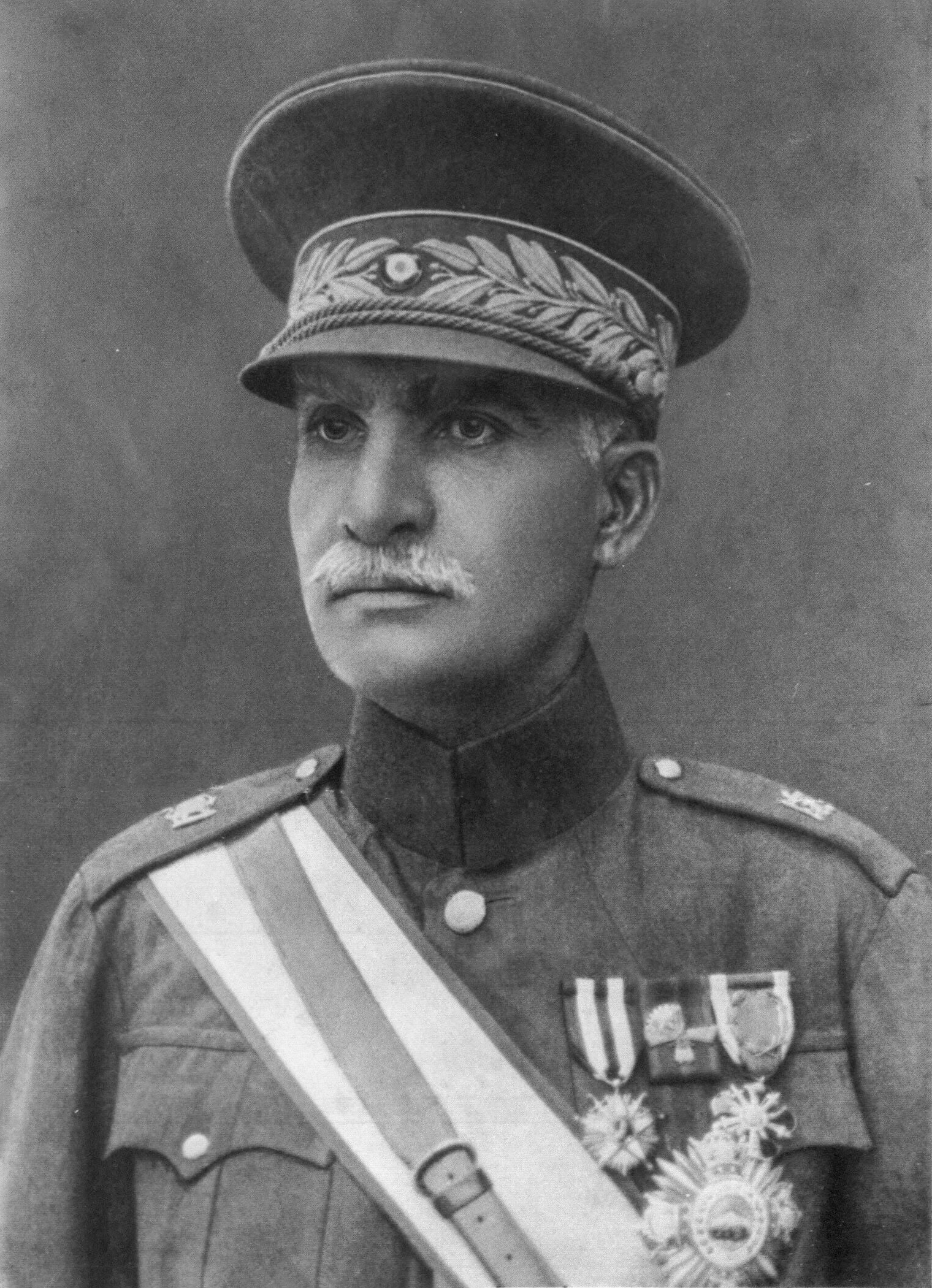
Reza Shah (r. 1925–1941)
Reza Shah Pahlavi (1878-1944) was, in personality and method, an Iranian Atatürk. He came from a military background — a Cossack officer of provincial origin, with no education beyond basic literacy and no aristocratic connections. The reforms he imposed in his fifteen-year reign were comprehensive. The conscript army was built from scratch, doubling in size every few years and reaching 150,000 men by 1941. The judicial system was secularised; the religious courts were stripped of jurisdiction over commercial and family matters. The bureaucratic civil service was reorganised on European lines. A national bank — Bank Melli — was founded in 1928. The Trans-Iranian Railway, financed entirely from internal revenue (chiefly a state tea-and-sugar tax), was built from the Persian Gulf to the Caspian between 1927 and 1938. The University of Tehran was founded in 1934. Women were forbidden to wear the chador in public in 1936 — a decree enforced by police on the street, with predictable consequences for the regime's standing among conservative families. Tribal nomadism was suppressed by force across the south and west of the country.
In 1935 Reza Shah issued a circular note to foreign embassies requesting that the country be referred to, in its international correspondence, as Iran rather than Persia. The change took effect on the 21st of March, the spring equinox and Iranian New Year. The decision was contested at the time and has been re-litigated since (a partial reversion to "Persia" was permitted in 1959 for cultural and tourist purposes, although the official state name remained Iran). The substantive effect was to align international usage with the country's own Persian-language self-description and to declare the post-Qajar state a different country, in name as in fact.
Reza Shah's foreign policy was based on a calculated attempt to use Germany as a counterweight against the British and the Soviets. Iran was officially neutral when the Second World War broke out, but had received large numbers of German technical advisers and traders during the 1930s. In August 1941, in response to perceived German influence and the strategic need to use the Trans-Iranian Railway to supply the Soviet Union, Britain and the USSR jointly invaded Iran. The Iranian army, despite Reza Shah's investment, collapsed in three weeks. The shah was forced to abdicate on the 16th of September 1941 in favour of his twenty-one-year-old son Mohammad Reza, and was exiled to South Africa, where he died in Johannesburg in July 1944.
Mossadegh and the 1953 coup
The young Mohammad Reza Shah inherited a country occupied by foreign troops, with its monarchy weakened by his father's exile and its political system briefly reopened by Allied insistence. The years 1941-1953 were the most politically free in Iranian history before the revolution: parliamentary elections were contested, an opposition press flourished, the Tudeh (Communist) Party was legal, and the new shah was, for most of the period, a constitutional monarch whose authority depended on negotiation with the Majles.
The crisis of this period was over oil. The Anglo-Iranian Oil Company (the renamed Anglo-Persian Oil Company) had been operating the oilfields of Khuzestan since 1908 under a concession that the Iranian government had repeatedly tried, and failed, to renegotiate. Iranian royalties were a small fraction of the company's profits; the company kept its books in London and refused Iranian audit. In April 1951, the new prime minister Mohammad Mossadegh, a seventy-year-old constitutional lawyer of impeccable nationalist credentials, nationalised the company by act of the Majles. The British boycotted Iranian oil, took the dispute to the International Court of Justice (and lost), and finally — after a year of unsuccessful negotiations — agreed, in cooperation with the United States CIA, to a plan to overthrow Mossadegh. The plan (Operation Ajax for the Americans, Operation Boot for the British) was executed on the 19th of August 1953. Mossadegh was arrested, tried for treason, and spent the rest of his life in internal exile. The shah, who had briefly fled to Rome during the operation, was restored to a more authoritarian throne.

The 1953 coup is the single most consequential event in the modern Iran-West relationship. Its existence as a CIA-British operation was officially denied by the United States until 2013, when the CIA released documents acknowledging it. Its memory has shaped, and continues to shape, every subsequent Iranian conversation about the United States, oil, and foreign-backed regime change. The Islamic Republic invokes it routinely; it is part of the school curriculum.
The White Revolution
The shah's reign from 1953 onward was a continuous process of centralisation, modernisation, and the gradual exclusion of any institutional check on royal power. The two chambers of parliament were retained but rendered effectively ceremonial. Political parties were merged in 1975 into a single state party, the Rastakhiz. The secret police, SAVAK, was founded in 1957 with American and Israeli assistance; by the 1970s it employed perhaps five thousand officers and an extensive informer network, and its detention facilities at Evin and elsewhere were widely understood to use torture.
The substantive reforms — known collectively as the White Revolution, launched in January 1963 — included a large-scale land reform that redistributed estates from absentee landlords to peasant smallholders; the nationalisation of forests; a comprehensive literacy campaign that sent military conscripts to teach in rural villages; the extension of the vote to women; and a programme of state-led industrialisation financed by oil revenue. The oil revenue, after the 1973 OPEC price quadrupling, became a torrent: from $1 billion a year in 1968 to $20 billion a year by 1976. The country acquired a new middle class, new universities, new four-lane highways, a new arms-industry partnership with the United States, and the largest hovercraft fleet in the world.
The political costs of the modernisation were severe. The land reform alienated the senior clergy, many of whom had been the largest non-royal landowners; the secularisation of education and law alienated the religious middle class; the conspicuous wealth of the court and the new urban elite alienated the urban poor; the cultural Westernisation alienated the bazaar merchants and the traditional middle class. The 1971 celebrations at Persepolis for the supposed 2,500th anniversary of the founding of the Persian Empire — at a reputed cost of $100 million, with French chefs catering for a guest list of foreign heads of state — became, in popular memory, the moment at which the regime had lost touch with the country it ruled.

The Revolution
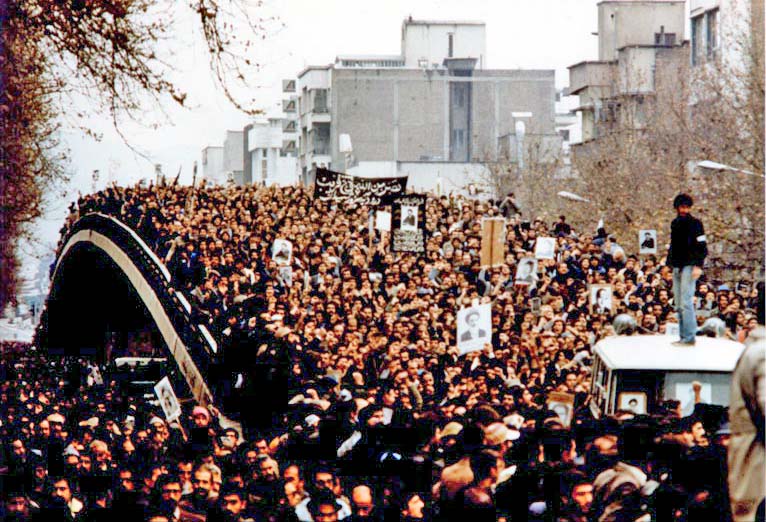
The revolution of 1978-1979 began with a small, specific event: an article in the semi-official newspaper Ettela'at on the 7th of January 1978, attacking the exiled Shi'a cleric Ayatollah Ruhollah Khomeini in personal and insulting terms. The article triggered a protest in the religious city of Qom in which several seminary students were killed by the police. A forty-day mourning cycle began; each forty-day cycle produced a new protest, in a new city, with new casualties, and a new mourning cycle. By the autumn the protests were nationwide and the casualties in the hundreds. On the 8th of September 1978 — Black Friday — the army fired on a demonstration at Tehran's Zhaleh Square, killing perhaps 85 to 200 people depending on the source. The protests grew. The bazaar shut. The oil workers struck. By the end of December 1978, the shah's government had effectively lost control of the country.
On the 16th of January 1979, Mohammad Reza Shah Pahlavi left Iran with his immediate family for what was officially a vacation in Egypt. He never returned. Ayatollah Khomeini, who had been in exile since 1964 (in Najaf, and from October 1978 in a Paris suburb), arrived at Tehran's Mehrabad Airport on the 1st of February 1979 to crowds estimated at five million. The shah's last prime minister, Shapour Bakhtiar, resigned on the 11th of February after the army declared neutrality. The Imperial Iranian armed forces were disbanded by Khomeini's revolutionary council on the same day. The monarchy was abolished by referendum on the 30th of March. The Pahlavi dynasty, after fifty-four years, was over. So was the long tradition of Iranian dynastic kingship that had begun, in some recognisable form, two and a half thousand years before. Iran was about to enter its first experiment with a republic — and a particular kind of republic, governed by Shi'a clerical authority, that no country had attempted before. That is the subject of the final chapter.
End of Chapter IX