Foreword
A country
and a name.
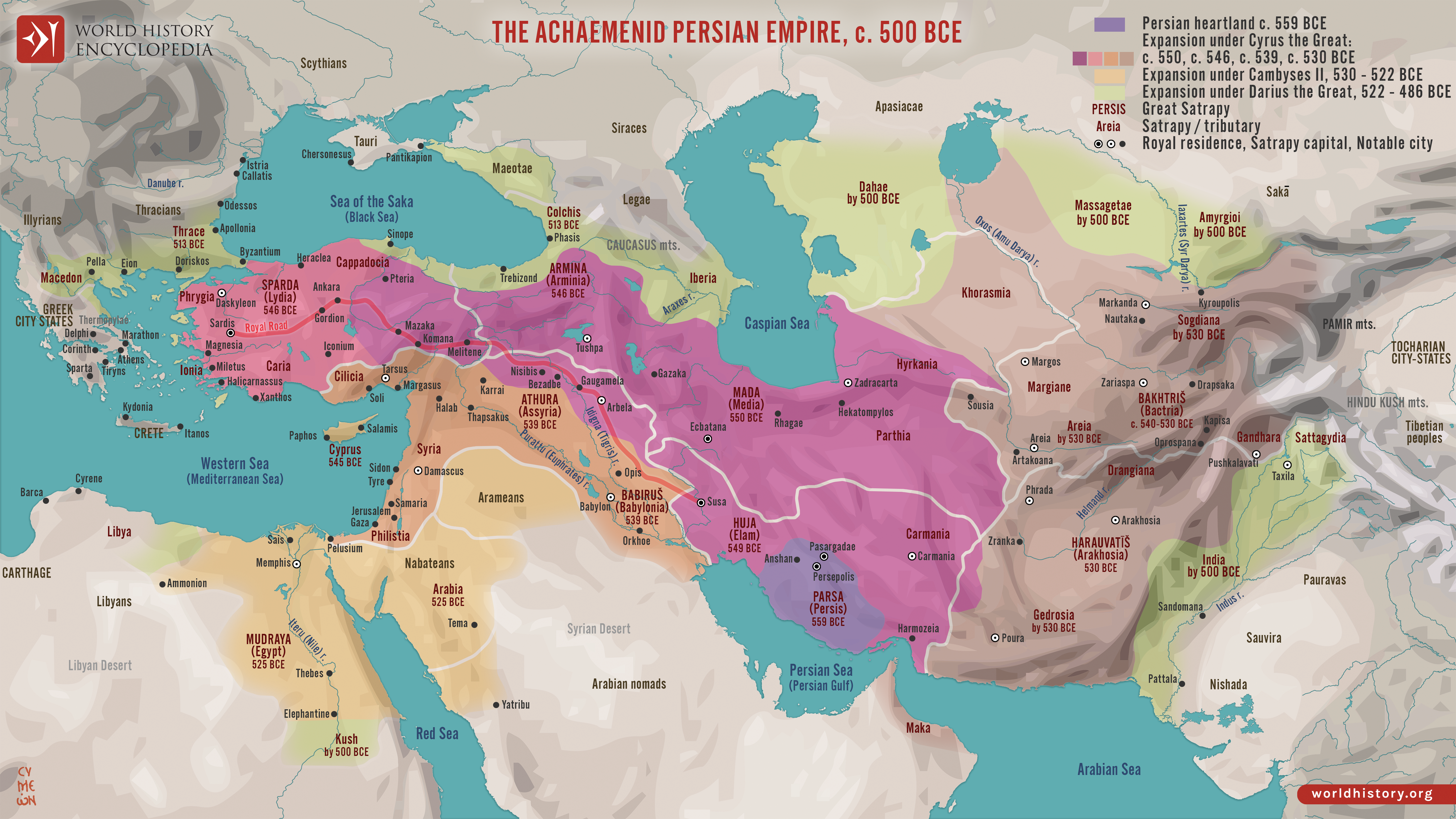
In Persian, the country has always been called Iran — the land of the Aryans. In Greek, it was always called Persis, after the southern province of Fars where the Achaemenid kings had their first capital. In English, until 1935, it was called Persia. The decision to change is a small one. The history behind it is not.
This volume is about Persia in the sense that English speakers used to use the word: the long, continuous, dynastic civilisation of the Iranian plateau, from the rise of Cyrus the Great around 550 BC to the abdication of Muhammad Reza Shah on the 16th of January 1979. That is two and a half thousand years of more or less unbroken political history. There is no other country in the world that can claim the same. China is older, but has been reset by foreign conquest more times. India is older, but did not become a single state until the British made it one. Egypt is older, but lost its language. Persia, alone among the ancient empires, kept its language, kept its territory, and kept producing new ruling dynasties that styled themselves the successors of the ones before.
The Lost Lands volume on Persia is therefore not the obituary of a country — the country is still there, with eighty-five million people and a seat at the United Nations — but the obituary of a name and an idea. "Persia" was the word the West used to refer to a civilisation it could only half-see: a civilisation that produced Cyrus's edict on religious tolerance in 538 BC, the most sophisticated administrative system of the ancient world, the highway system Alexander used to conquer it, the chess game, the windmill, the qanat, the rose, the Shahnameh, the world's first international postal service, and the only Islamic state that took Shi'a Islam as its official creed. We tell the story under the name the West used. We acknowledge throughout that the Iranians themselves never stopped calling it Iran.
What the volume does not try to do is settle the questions that current politics turns on. Was the 1953 coup CIA-led? (Yes, with British encouragement and a great deal of local Iranian help.) Was the Shah a moderniser or a tyrant? (Both, in proportions readers may judge for themselves.) Was the Islamic Revolution inevitable? (No revolution is inevitable; it became overwhelmingly likely after the events of 1977-78.) These questions belong to the chapters where they arise. The point of the foreword is to set the timescale: any conversation about Iran that begins in 1979, or 1953, or even 1925, is a conversation about a country one percent of whose history it covers.
"I am Cyrus, king of the world, great king, mighty king, king of Babylon, king of Sumer and Akkad, king of the four corners of the earth." — The Cyrus Cylinder, c. 538 BC