The Achaemenid heartland — Fars
Persepolis · Fars Province · Iran
Takht-e Jamshid — the Throne of Jamshid

The ceremonial capital of the Achaemenid empire, built by Darius I from 518 BC and burned by Alexander in 330 BC. The site sits on a high stone terrace at the foot of the Kuh-e Rahmat, about sixty kilometres north-east of Shiraz, and contains the ruins of the Apadana audience hall (whose stairway reliefs — the famous tribute-bearing delegations — are preserved in extraordinary condition), the Hall of a Hundred Columns, the Palace of Darius, the Treasury, and the royal tombs of Artaxerxes II and III cut into the cliff face. UNESCO World Heritage. Allow four to five hours; carry a sun hat in summer.
Naqsh-e Rostam · Fars Province · Iran
The rock tombs of the Achaemenid and Sasanian kings
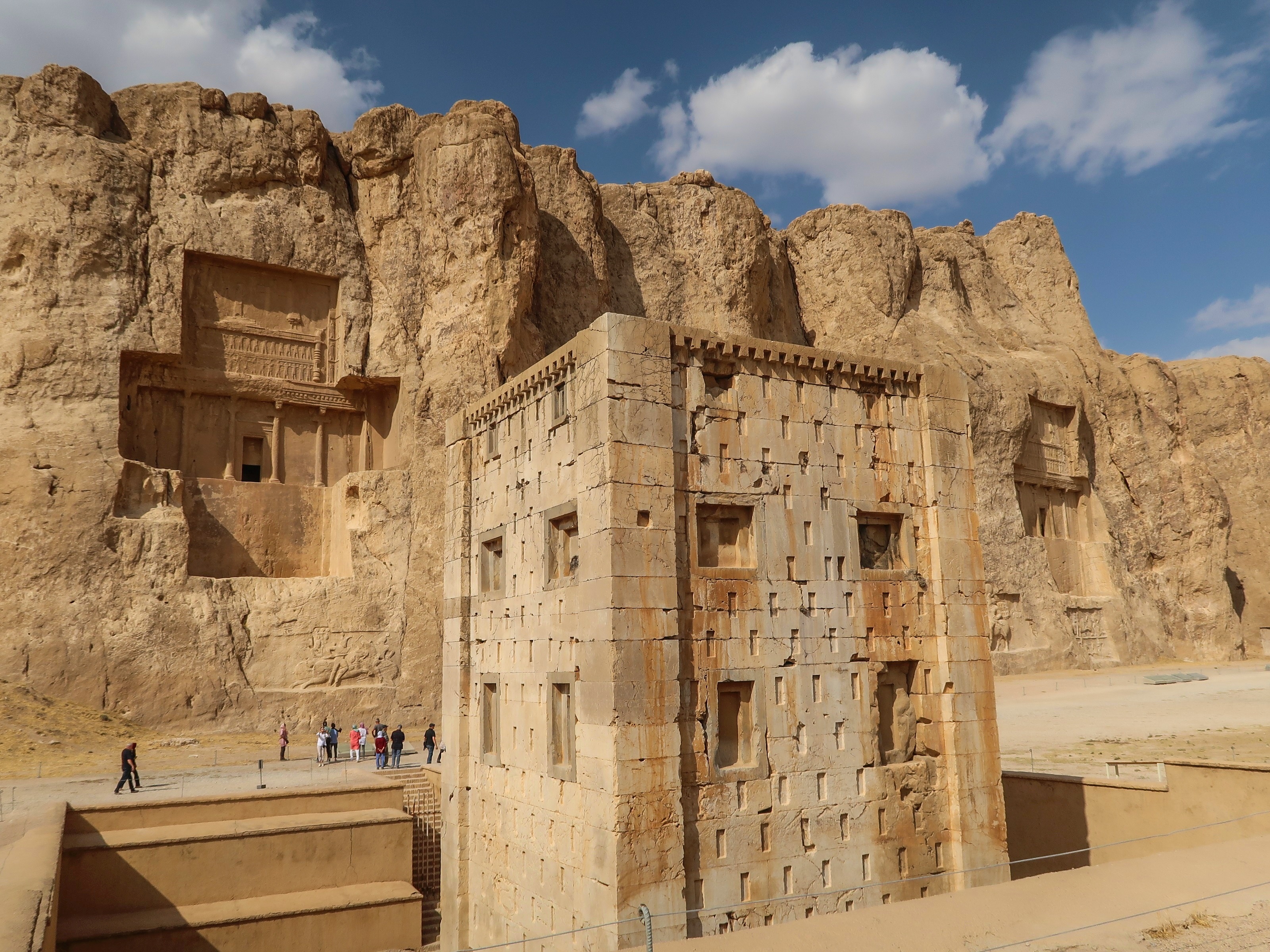
Ten kilometres north-west of Persepolis. The cliff face contains the four cruciform rock tombs of Darius I, Xerxes I, Artaxerxes I, and Darius II, each carved at a height of about twenty metres. Below them are seven monumental Sasanian rock reliefs from the third and fourth centuries AD, including the famous panel of Shapur I receiving the surrender of the captured Roman emperor Valerian. A single visit takes in fifteen hundred years of Iranian royal iconography.
Pasargadae · Fars Province · Iran
The tomb of Cyrus the Great
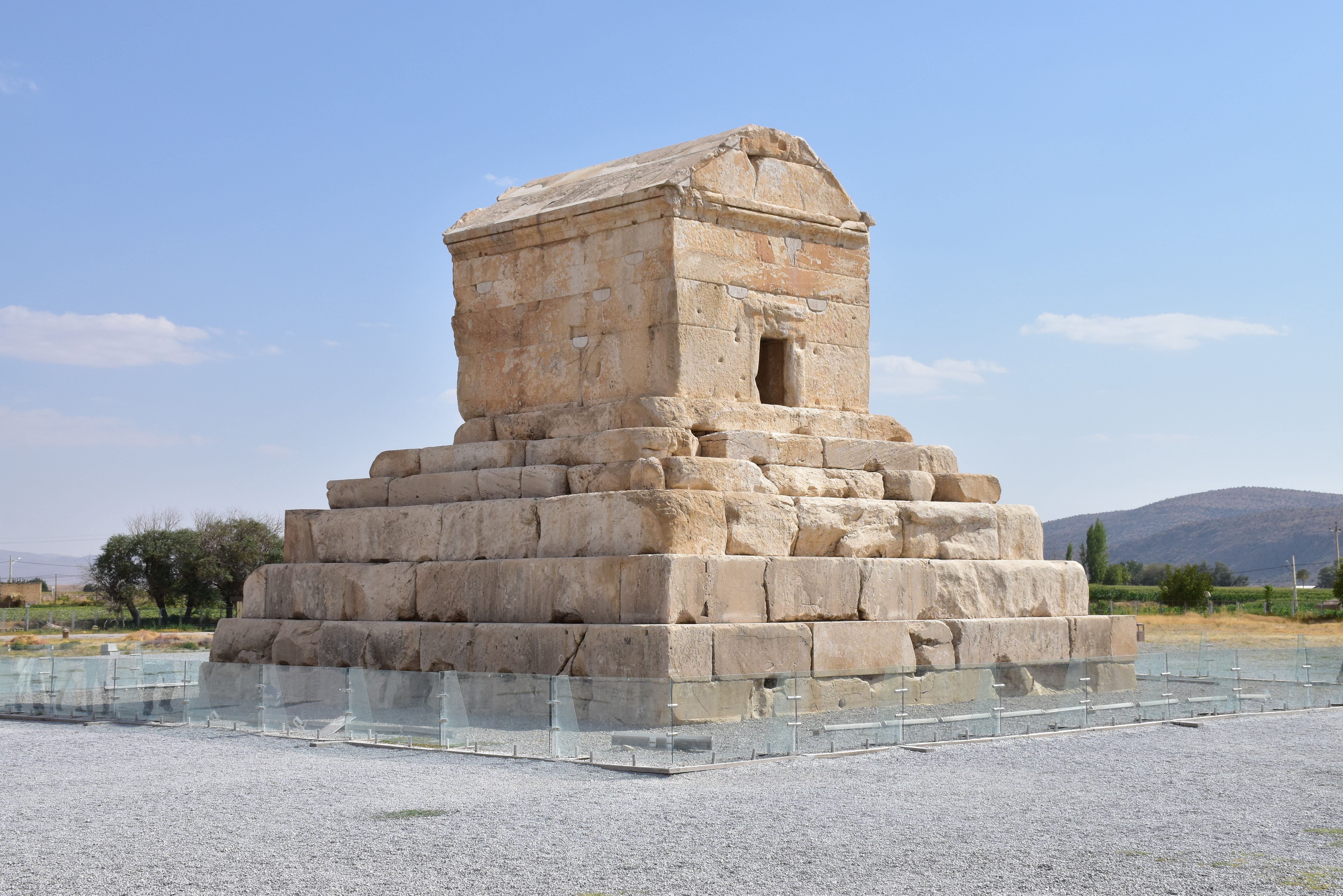
Ninety kilometres north-east of Persepolis, on the Murghab plain. The first Achaemenid capital, founded by Cyrus in the 540s BC. The single most evocative structure is the freestanding limestone tomb of Cyrus himself, a six-stepped plinth supporting a small gabled chamber. Alexander the Great visited the tomb in 324 BC and found it had been plundered; he ordered the looters executed and the tomb restored. The site also includes the ruins of two royal palaces, a sacred precinct, and the so-called Zendan-e Soleyman tower.
Shiraz · Iran
The city of poets and roses

Capital of Fars Province; the cultural capital of the south. Eighteenth-century Zand-era core (the Vakil Bazaar, the Karim Khan citadel, the Vakil mosque), the great Pink Mosque (Nasir al-Molk) of the late nineteenth century, and the two principal pilgrimage tombs of medieval Persian literature: the mausoleum of Saadi (d. 1291) in the north of the city and the mausoleum of Hafez (d. 1390) in a quiet garden in the centre. Iranians on their honeymoon read Hafez aloud at his tomb.
The Safavid centre — Isfahan
Isfahan · Iran
Nesf-e Jahan — half the world
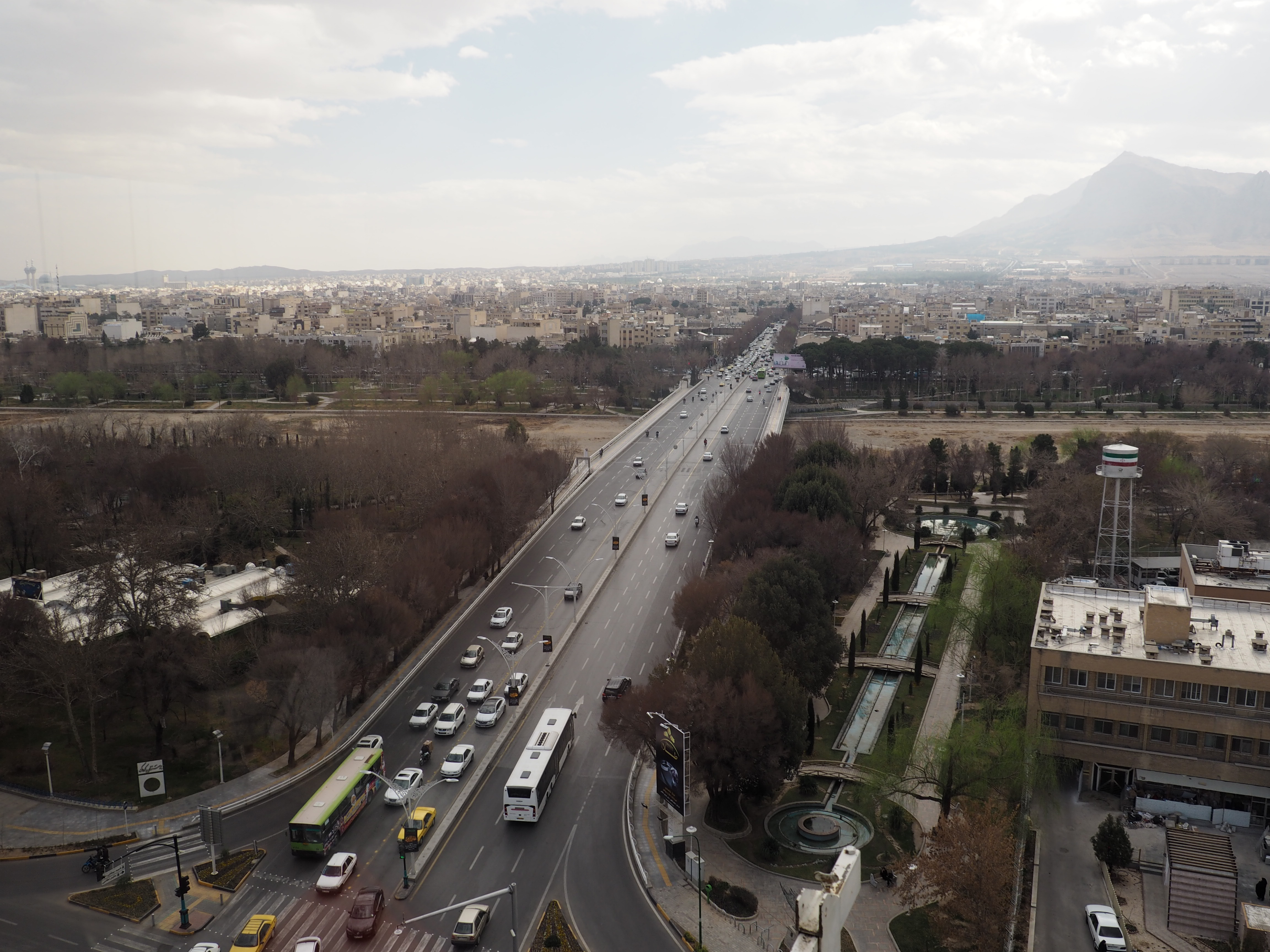
The capital of Shah Abbas (r. 1587-1629) and the most architecturally coherent city in Iran. The Naqsh-e Jahan Square — built between 1598 and 1629, second only to Tiananmen in size among historic plazas — is the centre of any visit; on its sides are the Imam (Shah) Mosque, the Sheikh Lutfullah Mosque, the Ali Qapu palace, and the entrance to the bazaar. Allow two days for the square alone. Beyond it: the Chehel Sotoun pavilion, the Vank Cathedral in the Armenian quarter of Julfa, the Friday Mosque (a thousand years of accumulated Iranian architectural styles in one building), the Si-o-Se Pol and Khaju bridges over the Zayandeh river. UNESCO World Heritage.
Kashan · Iran
The merchant houses and the Fin Garden
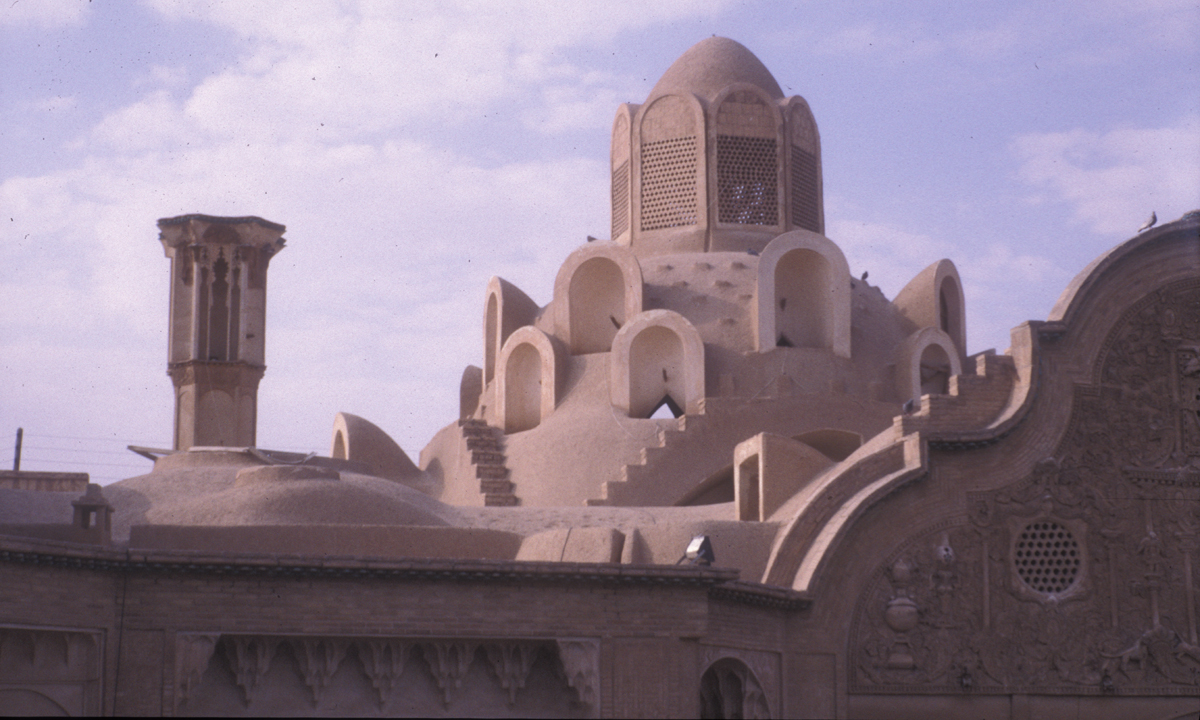
Two hundred kilometres south of Tehran, en route to Isfahan. A medieval and early modern trading city famous for two things: the great Qajar-era courtyard merchant houses of the nineteenth century (Khan-e Tabatabai, Khan-e Borujerdi, Khan-e Abbasian — all visitable, all immaculately restored) and the Fin Garden, a sixteenth-century formal Persian garden with running water in stone channels, where the reforming Qajar chief minister Amir Kabir was assassinated in the bath-house in January 1852. UNESCO World Heritage.
Yazd · Iran
The desert city and the fire temple

A mud-brick city of three hundred thousand on the edge of the central desert. The historic core, walking-friendly, contains the surviving badgir wind-tower architecture (used for natural cooling), the twelfth-century Friday Mosque with its towering twin minarets, and the Atashkadeh — the Zoroastrian fire temple, which has kept a sacred fire continuously alight since 470 AD, transferred from temple to temple as needed. The fire is visible through a glass window. Yazd is one of the few cities in Iran with a substantial active Zoroastrian community.
Tehran and the north
Tehran · Iran
The capital
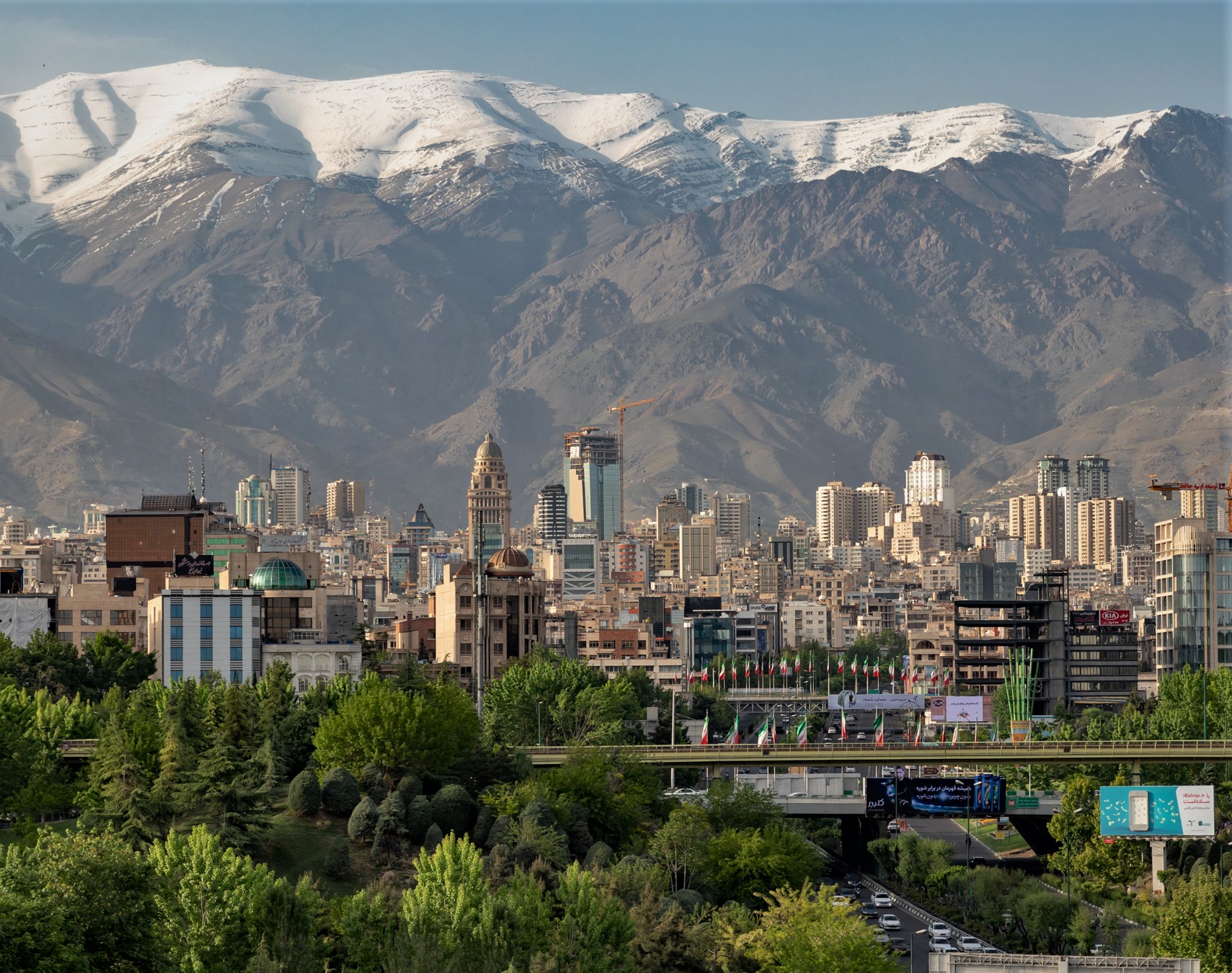
A nine-million-person megacity that has been the country's capital only since Agha Muhammad Khan moved the court there in 1786. Key Persia-related sites: the National Museum of Iran (Achaemenid, Sasanian, and Islamic-era objects on Tehran's central avenue); the Golestan Palace complex (the Qajar royal residence, UNESCO World Heritage); the Sa'dabad Palace complex (the Pahlavi summer residence, in the foothills); the Niavaran Palace (where Mohammad Reza Shah lived and which he left for the last time in January 1979); the Carpet Museum; the National Jewellery Treasury (where Nader Shah's Peacock Throne plunder is on display in a bank vault).
Qom · Iran
The Shi'a seminary city
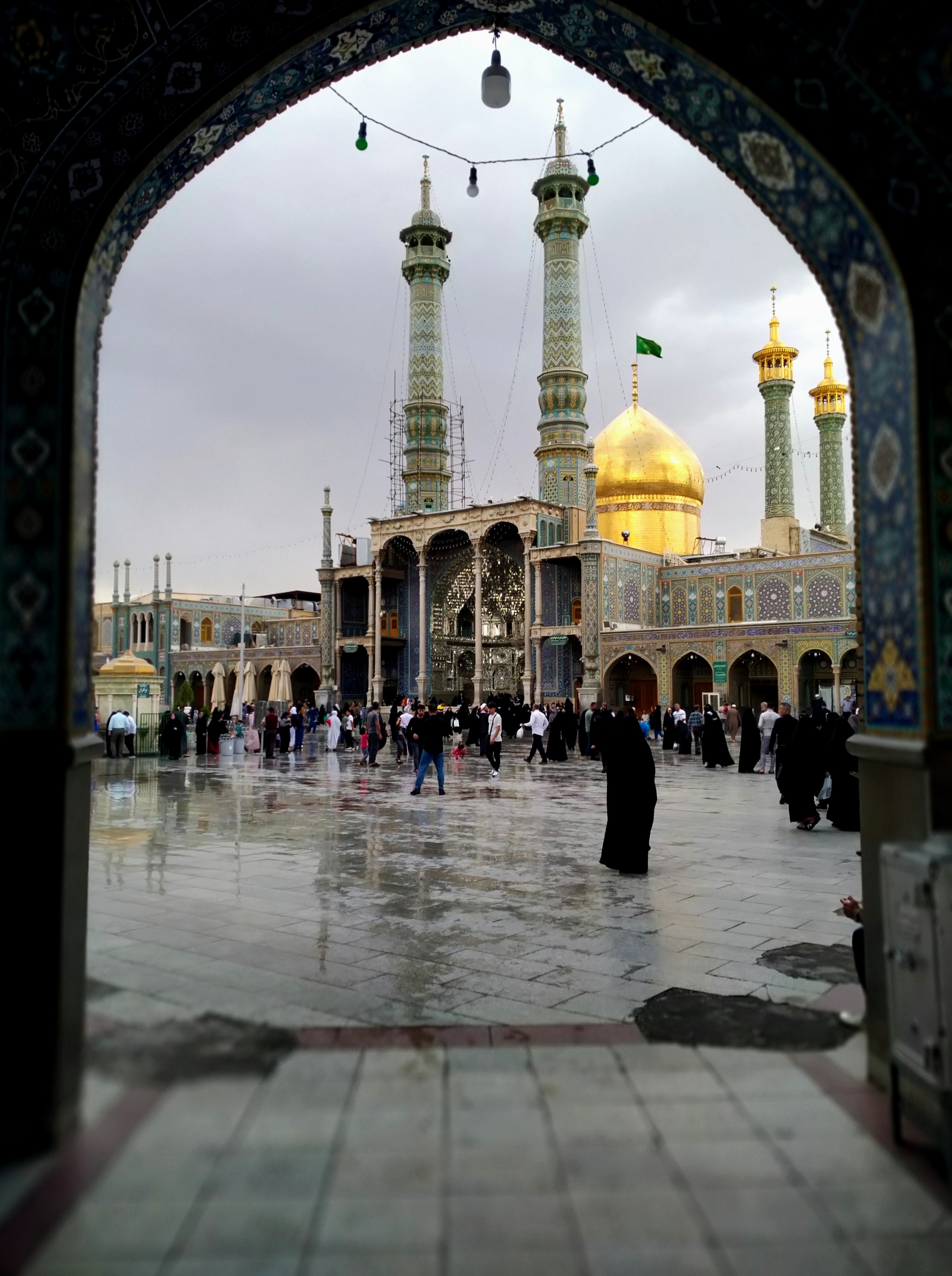
One hundred and fifty kilometres south of Tehran. The principal Shi'a religious centre in Iran (its rival is Najaf in Iraq) and the largest seminary city in the Shi'a world. The shrine of Fatima Masumeh — sister of the eighth imam Reza, who died in Qom in 816 — is the focal point of the city. Non-Muslims are not permitted into the inner sanctuary but may enter the courtyards. The city is also the headquarters of the Howzeh, the network of Shi'a seminaries; the present Supreme Leader Khamenei and his predecessor Khomeini both trained here.
Hamadan · Iran
Ecbatana, the Median capital

The summer capital of the Achaemenids (the modern city is built directly on top of the ancient one, which is therefore mostly inaccessible). Hamadan is also the location of the tomb of Esther and Mordecai — the only major Jewish pilgrimage site in modern Iran, associated with the Book of Esther — and the tomb of Avicenna (Ibn Sina, d. 1037), the Persian polymath and physician whose Canon of Medicine remained the standard European medical textbook into the seventeenth century.
Tabriz · East Azerbaijan Province · Iran
The Safavid and Ilkhanid capital

The largest city of north-western Iran, capital of the Ilkhanate, of the Aq Qoyunlu, of the early Safavids, of the Qajar crown prince's province; also the place where Iran's constitutional revolution was reignited by Sattar Khan in 1909. The Blue Mosque (Masjed-e Kabud) is the principal surviving fifteenth-century building. The Tabriz Historic Bazaar — the largest covered bazaar in the world, 5.5 km of vaulted brick corridors — is UNESCO World Heritage in its own right. The city is the capital of Iranian Azerbaijani culture.
The south-west — Khuzestan
Susa · Khuzestan Province · Iran
Shush — the Achaemenid administrative capital

One of the oldest continuously inhabited cities in the world; capital of the Elamites in the third and second millennia BC, then of the Achaemenids (Darius I built the palace where the biblical Book of Esther is set), then a Hellenistic city under the Seleucids. The Apadana of Darius — partly excavated in the nineteenth century by French archaeologists, who took much of the material to the Louvre — is open to visitors. The crusader-style "Castle of Shush" on the site is a nineteenth-century French archaeological lodging house. The tomb of the prophet Daniel is in the centre of the modern town.
Choqa Zanbil · Khuzestan Province · Iran
The Elamite ziggurat

Forty kilometres south-east of Susa. The best-preserved Mesopotamian-style ziggurat in the world, built in the thirteenth century BC by the Elamite king Untash-Napirisha; it was the first site in Iran to be added to the UNESCO World Heritage list (1979). Five stepped levels of mud brick, originally rising to about fifty metres; the upper portions are eroded but the base and the surrounding temple complex are extensively preserved.
The east — Khurasan
Mashhad · Razavi Khorasan Province · Iran
The shrine of Imam Reza

Iran's largest Shi'a pilgrimage site and the second-largest city in the country. The shrine complex of the eighth imam Reza — who died here in 818 AD — has been continuously expanded since the ninth century and now covers nearly six hundred thousand square metres. Twenty-five to thirty million pilgrims a year. Non-Muslims may enter the outer courtyards but not the inner sanctuary. The complex includes the great Goharshad Mosque, a fifteenth-century Timurid foundation funded by the wife of Shah Rukh.
Tus · Razavi Khorasan Province · Iran
The tomb of Ferdowsi

Twenty kilometres north of Mashhad. The medieval city of Tus is largely ruined, but the modern mausoleum of Ferdowsi — built in 1934, in deliberate echo of the Achaemenid style of the tomb of Cyrus, by order of Reza Shah — is a major literary pilgrimage. Ferdowsi (940-1020) completed the Shahnameh, the Persian national epic, in Tus and was buried in his own garden after the Sunni clergy of the city refused him a Muslim funeral on account of his Shi'a sympathies. The site includes a museum and is set in a substantial public park.
Beyond Iran — the Persianate world
Samarkand · Uzbekistan
The Timurid capital

The capital of Timur and his successors (1370-1500). The Registan complex — three madrasas around a single square, all faced in glazed tile — is the most spectacular Persianate monumental architecture outside Iran. Also: the Gur-e Amir (Timur's tomb), the Bibi-Khanym mosque, the Shah-i-Zinda necropolis. The city was Persian-speaking until the twentieth century; the surviving Tajik (Persian) community is now small. The Ulugh Beg Observatory (1420s), where the most accurate pre-telescope astronomical tables were produced, is in the suburbs.
Bukhara · Uzbekistan
The Samanid capital

The capital of the Samanid dynasty (819-999), the first major independent Iranian state of the Islamic period, and the early literary capital of the Persian language. The ninth-century Samanid mausoleum — small, square, brick-lattice — is among the oldest standing buildings in Central Asia. The Kalyan minaret (1127) survived the Mongol conquest because Genghis Khan was reportedly so impressed that he ordered it spared. The old city, dense with caravanserais and trading domes, is UNESCO World Heritage.
Herat · Afghanistan
The Timurid second capital
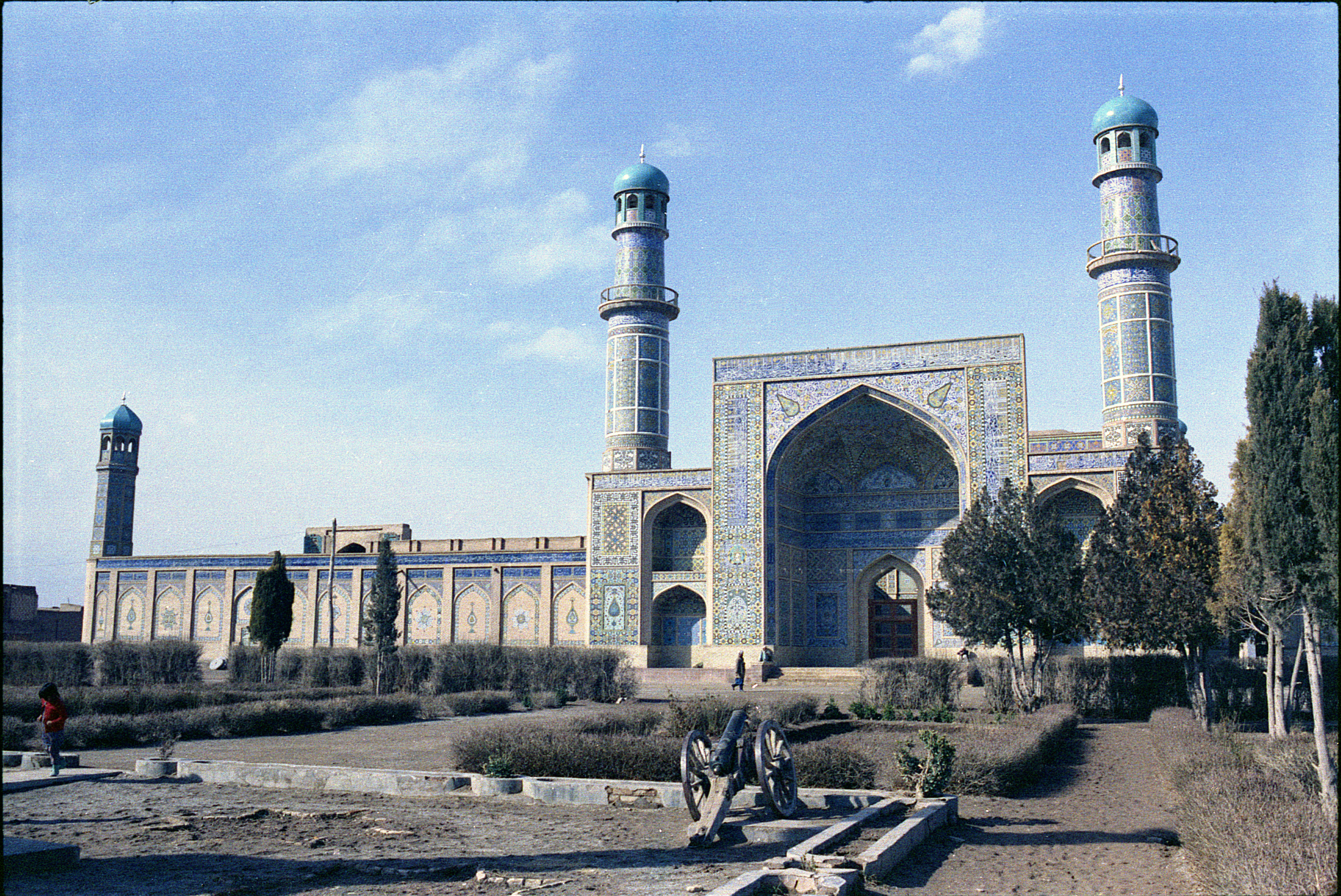
The cultural capital of the later Timurid empire under Shah Rukh and Baysunghur (1409-1447), and the cradle of the Herat school of miniature painting under Bihzad. The Friday Mosque is the principal surviving Timurid monument; the Musalla complex (now largely ruined, four minarets standing in a public park) was originally a vast religious-educational ensemble built by Gawhar Shad, the wife of Shah Rukh. Conditions for visitors are difficult and change; check current advice. Persian is the city's dominant language.
Mumbai · Maharashtra · India
The Parsi quarter and the fire temples

The Parsis — Persian Zoroastrians who emigrated to Gujarat in the seventh to tenth centuries to escape Islamicisation — are now concentrated mostly in Mumbai. The community numbers about fifty thousand, but its commercial and philanthropic footprint is enormous (the Tata Group). Several fire temples (agiaries) in the Fort and Colaba areas are still in continuous use; entry is restricted to Parsis only, but the surrounding neighbourhoods and the Zoroastrian dakhmas (towers of silence) on Malabar Hill are visible from the outside. The Parsi General Hospital and the K. R. Cama Oriental Institute hold significant manuscript collections.
Westwood Boulevard · Los Angeles · California
Tehrangeles

The largest Iranian community outside Iran (perhaps half a million in greater Los Angeles), centred on a stretch of Westwood Boulevard between Wilshire and Pico. Persian restaurants, Persian bookstores, Persian-language television studios broadcasting back into Iran by satellite, and the offices of the pre-revolution diaspora elite. The community has, in cultural terms, preserved the urban Iran of the 1970s in fairly complete form. Worth visiting for the contrast with the Islamic Republic.