The reign of al-Ma'mun (813–833) was the intellectually most consequential of the dynasty. The Greek-to-Arabic translation movement that he sponsored at the Bayt al-Hikma (the House of Wisdom) at Baghdad produced the principal mechanism by which the classical scientific and philosophical inheritance was preserved into the medieval world, returned to the Latin West in the twelfth-century European recovery of classical learning, and integrated into the Islamic intellectual tradition. The reign's political and religious record was more mixed: the civil war that produced his accession destroyed substantial parts of Baghdad; the religious inquisition (the mihna) that he initiated to enforce the Mu'tazilite doctrine of the createdness of the Qur'an produced lasting damage to the relationship between the caliphate and the religious scholars; the shift of administrative authority eastward to the Khurasani regiments would, within a generation, produce the institutional crisis of the Samarra interregnum.
The Fourth Fitna
The civil war of 809–813 between al-Amin and al-Ma'mun was the fourth in the sequence of major Muslim civil wars (after the first under Ali in 656–661, the second under Yazid in 680–692, and the third under the late Umayyads in 744–747). It was prosecuted across the empire as a conflict between Iraqi and Khurasani military and political establishments, between Arab and Persian cultural-administrative traditions, and between two princes of equal birth and similar capabilities. The campaigns were conducted by their respective generals: al-Amin's principal commander was Ali ibn Isa ibn Mahan; al-Ma'mun's was the Khurasani general Tahir ibn al-Husayn, founder of the Tahirid family of Khurasan governors.
The principal military event was the siege of Baghdad by Tahir in 812–813. The defence of the city by al-Amin's troops and the population, the siege artillery on both sides, and the eventual storming of the western quarter in August 813 produced substantial damage to the new capital — most particularly to the Round City itself, the inner citadel of the dynasty, which was substantially destroyed in the fighting. Al-Amin was captured attempting to escape across the Tigris on the 25th of September 813 and executed without ceremony. The capital that al-Mansur had built half a century earlier emerged from the siege with a substantial fraction of its building stock destroyed and its political prestige damaged.
Al-Ma'mun did not enter Baghdad until 819 — six years after his victory — having spent the intervening period at Merv in Khurasan attempting to govern the empire as a whole from the eastern capital. The substantial political failure of this attempt — the empire was substantially ungovernable from Merv, particularly the western provinces — produced the eventual return to Baghdad and the substantial accommodation of the eastern Iraqi and Iranian political-administrative establishments that the rest of the reign would attempt.
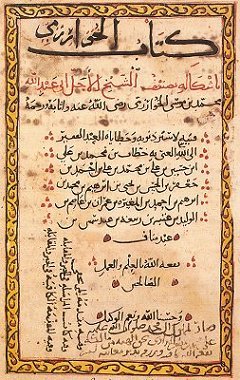
The Bayt al-Hikma
The Bayt al-Hikma (House of Wisdom) was a translation institute and library that al-Ma'mun established at Baghdad in the 820s, building on the earlier private translation patronage of the late Umayyads, of al-Mansur, of Harun al-Rashid and of the Barmakid family. The institute was directed by Hunayn ibn Ishaq (809–873), a Nestorian Christian Arab from al-Hira who was the principal Greek-to-Arabic translator of the period, with a substantial staff of subordinate translators — Christians of the Syriac tradition, Jewish translators, Persian astronomers and physicians, Indian mathematicians.
The translation programme covered the principal Greek scientific and philosophical corpora: the Aristotelian works (the Organon, the Physics, the Metaphysics, the Nicomachean Ethics, the biological works, and the spurious works such as the Theology of Aristotle that the period also translated); the Platonic dialogues; the medical corpus of Hippocrates and Galen; the mathematical works of Euclid, Archimedes, Apollonius and Diophantus; the astronomical works of Ptolemy (the Almagest in particular, whose Arabic title al-majisti "the Greatest" gave the work its Latin medieval name); the geographical works; the alchemical literature of the Hellenistic period. The Indian mathematical and astronomical literature (the Siddhantas, including the work that introduced the decimal positional number system) was translated in parallel. The Persian works (the Khwaday-Namag, the Sasanian historical chronicles, the wisdom literature) were translated, often through Pahlavi-to-Arabic intermediation.
The translation work was the substantial single intellectual achievement of the period and had three principal consequences. First, it provided the Islamic intellectual tradition with the classical Greek scientific and philosophical foundation on which the Arab scholars of the ninth, tenth and eleventh centuries (al-Kindi, al-Razi, al-Farabi, Ibn Sina/Avicenna, Ibn Rushd/Averroes) would develop their original contributions to medicine, philosophy, mathematics, astronomy and the natural sciences. Second, it preserved the Greek classical corpus through the period when the Greek world itself substantially abandoned active engagement with most of it — the Greek manuscripts of many of these works survived only because they had been copied for translation at Baghdad. Third, it provided the source from which the twelfth-century Latin Christendom, through the Sicilian and Iberian translators (Gerard of Cremona, Adelard of Bath, the Toledo school), would recover the Aristotelian and scientific corpus that would reshape European intellectual culture.

The mihna
The religious inquisition of the late reign — the mihna ("ordeal", a term sometimes translated as "the inquisition") — was instituted by al-Ma'mun in 833 with the purpose of compelling the religious scholars to assent to the Mu'tazilite doctrine that the Qur'an was created (rather than eternal and uncreated). The Mu'tazilite theology — a rationalist, Greek-philosophy-influenced theological school that al-Ma'mun had personally adopted — held that the eternal uncreated character of the Qur'an conflicted with the Islamic doctrine of strict monotheism (which would imply two uncreated principles, God and his Word). The Sunni religious establishment, particularly the school around the Baghdad scholar Ahmad ibn Hanbal (780–855), held that the Qur'an was uncreated and resisted the inquisition.
The mihna was administered as a loyalty test: judges and senior religious scholars were summoned and required to declare publicly that the Qur'an was created. Those who refused were imprisoned, beaten, dismissed from office. Ibn Hanbal, the principal resister, was beaten and imprisoned but never executed — partly because of his substantial popular following at Baghdad. The mihna continued under al-Ma'mun's successors al-Mu'tasim (833–842) and al-Wathiq (842–847) but was substantially abandoned by al-Mutawakkil (847–861) and formally rescinded with the restoration of the uncreated-Qur'an doctrine in 851.
The substantial long-term effect was the substantial damage to the relationship between the caliphate and the religious scholars (the ulama). The Sunni tradition that emerged from the mihna — substantially under the influence of Ibn Hanbal and his school — was substantially more autonomous from caliphal religious authority than the pre-mihna tradition had been. The political consequence was that the caliphate's religious legitimacy after the mihna was substantially more conditional on its conformity with the ulama's doctrinal positions than on its own personal religious authority. The institutional dyarchy of caliph and ulama that defined Sunni political theology from the ninth century forward was substantially the product of the mihna.
Al-Ma'mun died on the 9th of August 833 on campaign at Tarsus against the Byzantines, aged forty-seven. The succession to his brother al-Mu'tasim (833–842) — whose Turkish slave-soldier guards would shortly produce the institutional crisis of the next chapter — was uncontested.
End of Chapter IV