Foreword
What was the Abbasid
caliphate, really?
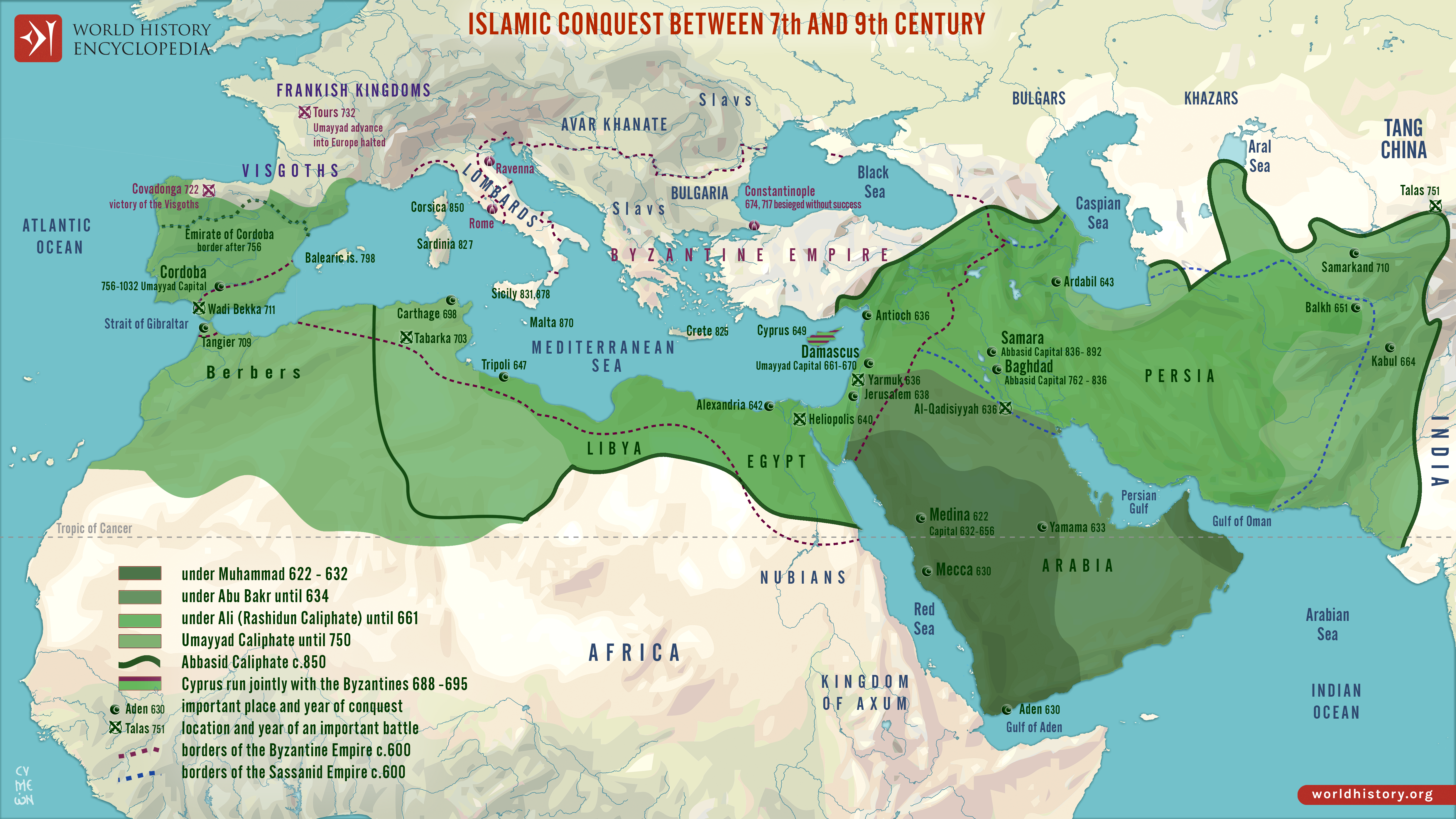
A dynasty descended (or so it claimed) from the Prophet's uncle al-Abbas, which seized the leadership of the Muslim community from the Umayyads in 750, ruled in fact for about a century and in name for another four, and presided over the period in which what we now call the medieval Islamic world acquired most of its institutional, scholarly and architectural personality.
The volume distinguishes between two phases. The early Abbasid period (750–945) is the caliphate at its actual political height: the dynasty's first hundred and ninety-five years, when the caliph in Baghdad was the genuine sovereign of a territory stretching from Tunisia to the Indus. This is the period of the foundation of Baghdad in 762, the translation movement of the Bayt al-Hikma in the early ninth century, the literary and astronomical golden age under Harun al-Rashid (786–809) and al-Ma'mun (813–833), and the mihna controversy over the createdness of the Qur'an.
The later Abbasid period (945–1258) is the caliphate as a religious figurehead: the Buyid amirs of 945 reduced the caliph to a Friday-prayer ceremonial role, the Seljuk Turks took over from the Buyids in 1055 with the same arrangement, and from then until 1258 the Abbasid caliphs were sovereigns in form but not in substance. The exception is the brief restoration of caliphal authority under al-Nasir (1180–1225), which is the last serious attempt by an Abbasid to govern. Then came Hülegü.
This volume covers both phases. We sit in the round city of al-Mansur. We watch al-Ma'mun receive the Greek philosophical manuscripts the Byzantine emperor sent him as ransom payments. We follow the Samarra interregnum (836–892), when the caliphs left Baghdad to escape their own Turkish guard. We watch the Mongol army cross the Tigris on the 11th of January 1258, and the last caliph, al-Musta'sim, rolled in a carpet and trampled to death on the 20th of February. Then we go to what is left — Baghdad's eastern bank, Samarra's spiral minaret, Kufa, Basra, Aleppo, Cairo's Tulunid mosque, the cities the Abbasids built and the ones they only ruled.