No country recognised it. Not the country that had created it. Not the country it most resembled. Not the country that supplied it with oil. Not even South Africa, which would have been its natural ally, ever exchanged ambassadors. And yet it existed.
Rhodesia is the rarest kind of lost country: an internationally unrecognised state that maintained a functioning government, a currency, an air force, a national broadcaster, a postal service, and a fairly mainstream economy for fourteen years, during which time the United Nations imposed the first mandatory sanctions regime in its history against it. The sanctions were intended to take effect in weeks. They lasted fifteen years. The country survived them through a combination of South African back-channels, Portuguese-Mozambican smuggling, ingenious local industry, oil delivered via Lourenço Marques in unmarked tankers, and a deep willingness on the part of the white minority population — three to four percent of the country — to live with a deteriorating quality of life rather than capitulate.
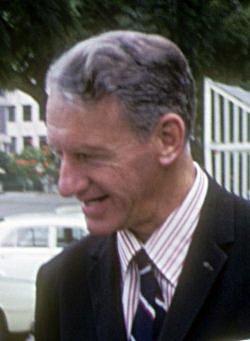
It was also a state founded on a constitutional contradiction. The 1961 Constitution of Southern Rhodesia, accepted by London as a stepping-stone toward eventual majority rule, was the document that Ian Smith's government suspended in 1965 to retain minority rule. The white population numbered about 220,000 at independence. The Black population numbered about 4 million. Throughout the country's fourteen years of existence, a Black Rhodesian could only vote on a parallel register with extremely high property and educational qualifications. The bush war that consumed the country from 1972 to 1979 was, fundamentally, a war over the date at which majority rule would arrive. The Smith government's answer was eventually 1978; the answer the African nationalists demanded was immediately; the answer that emerged from the Lancaster House Agreement in December 1979 was a fully majority election in February 1980, won by Robert Mugabe and ZANU.
This volume tries to tell that story without either of the two distortions that conventionally cling to it: the nostalgia that says Rhodesia was a successful well-governed state ruined by majority rule, and the dismissal that says it was simply colonialism in a hat. Both miss most of what actually happened. We will be in the room when Smith signs the Unilateral Declaration of Independence. We will be in the bush with the ZIPRA and ZANLA guerrillas crossing from Zambia and Mozambique. We will be at Lancaster House with Lord Carrington. And then we will go and walk through what is left.