The thirty-one years between the death of Mehmed II in 1481 and the accession of Selim I in 1512 are, in the Ottoman story, the quietest of the early centuries. Mehmed's son Bayezid II inherited an empire that had absorbed perhaps too much, too quickly. The Conqueror had spent thirty years swallowing territory — central Anatolia, Trebizond, Bosnia, Albania, the Crimean Khanate as a vassal, the southern coast of the Black Sea — and the treasury was, by 1481, exhausted. Bayezid, a careful and pious man with a strong interest in poetry and Sufi mysticism, spent his reign rebuilding fiscal discipline, codifying law, and patronising the great architects who would, in the next generation, give Istanbul its skyline. He concluded important treaties: in 1489 he formally exchanged ambassadors with the rising Safavid dynasty of Persia, in 1492 he sent Ottoman ships to evacuate Jews from the Spanish kingdom of Castile and resettle them in his own territories.

The arrival of the Sephardim — perhaps two hundred thousand of them over the next decade — was a demographic gift that the Ottoman economy never stopped paying interest on. The Jewish refugees brought printing presses, banking expertise, medical training, and Mediterranean trade networks. They settled chiefly in Salonika (Thessalonica), which became, within fifty years, the largest Jewish-majority city in the world; in Istanbul, where the Eminönü and Balat districts filled with Sephardic synagogues; and in Sarajevo, Edirne, and Smyrna. The Ottomans, in welcoming them, gained what Spain had thrown away.
The civil war of succession
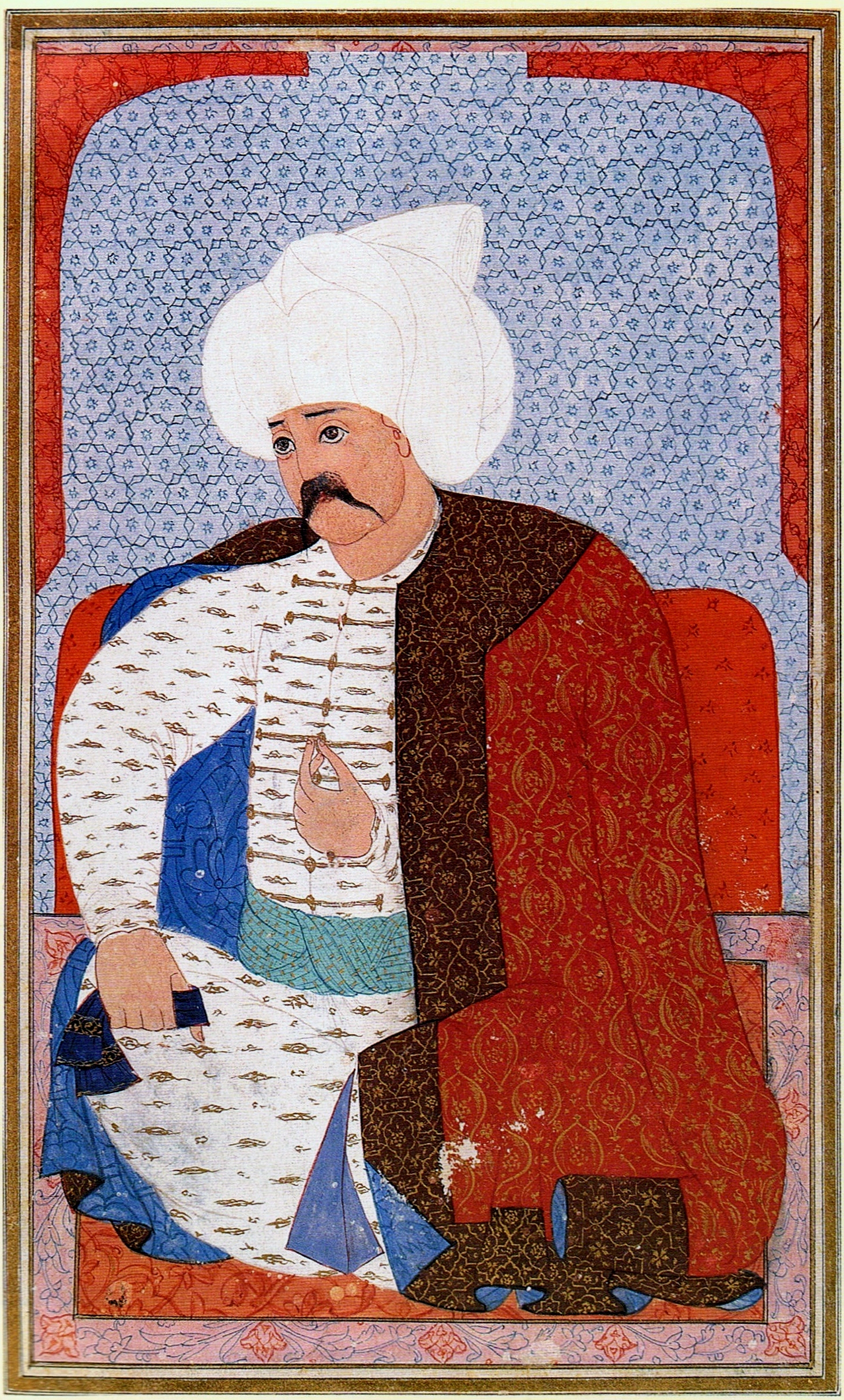
Bayezid's reign ended in a way that was, by Ottoman standards, embarrassing. His three surviving sons — Ahmed, Korkud, and Selim — fought a civil war for the succession in 1511-12. Selim, the youngest, was the most aggressive: he had been the long-serving governor of Trabzon on the eastern frontier and had built up a reputation as a militarily capable, pious, and ruthless administrator. He marched on Istanbul in early 1512. Bayezid, increasingly senile, was persuaded to abdicate. He died, probably of natural causes, while travelling into retirement; rumours that Selim had ordered him poisoned have never been confirmed or refuted.
Selim's first acts as sultan were swift and characteristic of the man. He had his two surviving brothers — both of whom had also claimed the throne — strangled with bowstrings. He had their five sons, his own nephews, strangled with bowstrings the following month. The Ottomans, at this point, practised an institutionalised form of dynastic fratricide: the new sultan, on his accession, customarily had his brothers and their sons executed to prevent civil war. It was, in its way, a stable system, since it kept the dynasty unified — but it was, by any modern standard, a terrible price for political coherence. Mehmed II had codified the practice, in 1478, with the famous line in his kanunname: "Whichsoever of my sons receives the sultanate, it is fitting for him to put his brothers to death, for the order of the world."
The Persian war
The new sultan's first foreign concern was eastern. The Safavid dynasty of Persia, founded in 1501 by Shah Ismail I, had become — within a decade — the most dynamic threat to the Ottomans in Asia. The Safavids were Twelver Shia Muslims; they had imposed Shi'ism on Persia by state policy; they were also, by religious doctrine, calling for the overthrow of the Sunni Ottoman caliphate. Shah Ismail had been sending agents into Anatolia for years, fomenting Shia rebellion among the Qizilbash Turkmen tribes who had once been the Safavids' military backbone and who still had relatives on Ottoman soil.
Selim's response, in the spring of 1514, was characteristic. He marched east with sixty thousand men, including the full Janissary corps. The Safavid army of forty thousand met him at Chaldiran, on the Iranian plateau, on the 23rd of August 1514. The Ottomans had artillery and matchlock-armed Janissaries. The Safavids had Qizilbash cavalry — superb horsemen, but unarmoured against firearms and lacking gunpowder weapons of their own. The result was the first great victory of an Asian gunpowder army over a steppe-cavalry one. The Safavids lost perhaps half their army. Shah Ismail escaped with a wound. The Ottomans took Tabriz, the Safavid capital, for two weeks before the logistical impossibility of holding it forced a withdrawal.
Chaldiran did not end the Safavid threat — the dynasty would last until 1736 — but it confirmed that the Ottomans were the dominant Muslim power in western Asia. It also opened the way for what Selim did next, which was the most consequential conquest of his reign.
The Mamluks and the caliphate
The Mamluk Sultanate of Egypt had ruled Egypt, Syria, the Hejaz (containing Mecca and Medina), and much of the Red Sea coast since 1250. It was the dominant Arab Muslim power. It also nominally hosted, at its court, the Abbasid Caliph al-Mutawakkil III — the last male descendant of the Prophet's uncle and the symbolic religious head of Sunni Islam, whose authority had been ceremonial since the Mongol sack of Baghdad in 1258.
In 1516 Selim turned south. The Mamluk Sultan Qansuh al-Ghawri marched north to meet him near Aleppo. The two armies met at Marj Dabiq on the 24th of August 1516. The result was a faster Chaldiran: the Mamluk cavalry was destroyed by Ottoman artillery in a single afternoon. Qansuh al-Ghawri, who was seventy-five years old, died on the field — of a stroke, by most accounts, not a wound. The Mamluks retreated to Egypt and elected a new sultan, Tuman Bay II. Selim followed them. At Ridaniya, outside Cairo, on the 24th of January 1517, the new Mamluk army was destroyed. Tuman Bay was captured, paraded through Cairo, and hanged at the Zuwayla Gate three months later.
Within five months Selim had taken Aleppo, Damascus, Jerusalem, Cairo, Mecca, and Medina. The Abbasid caliph and the Sharif of Mecca — guardians of the two holy cities — both formally acknowledged Ottoman suzerainty. The Ottomans now controlled the holiest sites of Islam, the trade routes of the Red Sea, the wealth of Egypt (which, even in decline, was the richest province in the Islamic world), and the prestige of the caliphate itself. The Sharif of Mecca sent Selim, as a symbolic act of submission, the keys of the Kaaba.
"He is the servant of the two holy sanctuaries." — The title Selim I adopted on his return to Istanbul, 1518
Selim, on his return to Istanbul in the summer of 1518, also brought with him the symbolic relics of the Prophet — the mantle, the seal, the standard, the swords — which had been kept in Cairo. They are still in the Topkapı Palace today, in a small chamber called the Privy Chamber, displayed under glass, attended around the clock by an imam who recites the Quran without interruption. The relics arrived in Istanbul on the 1st of September 1517. They have not left since.
The empire at 1520
Selim died on the 22nd of September 1520, of an infected boil on his back, at the age of fifty-four. He had reigned for eight years. He had doubled the empire's territory. He had brought the caliphate, the holy cities, the prestige of universal Islamic leadership to Istanbul. He had defeated the only other contemporary Islamic power that mattered. He had, in short, set up his only son — who was just turning twenty-five — to do what no Ottoman sultan would do before or after, which was to rule for forty-six years over the most expansive, the most culturally productive, and the most consequential period in the empire's six centuries.
That son was Süleyman. He is the subject of the next chapter.
End of Chapter III