The cultural inheritance of the Caliphate of Córdoba and the broader al-Andalus tradition is, by any reasonable assessment, substantial enough to constitute one of the principal cultural foundations of medieval European intellectual life. The transmission was largely conducted in the centuries after the caliphate's fall — particularly during the eleventh, twelfth, and thirteenth centuries — through three principal channels: the Toledo School of Translators, the Sicilian translation networks, and the substantial Iberian-North African intellectual continuity through the taifa and Almohad periods. Each transmitted to Latin Christian Europe substantial portions of the Greek, Persian, Indian, and original Andalusian intellectual traditions that the caliphal-period scholarship had preserved and developed.
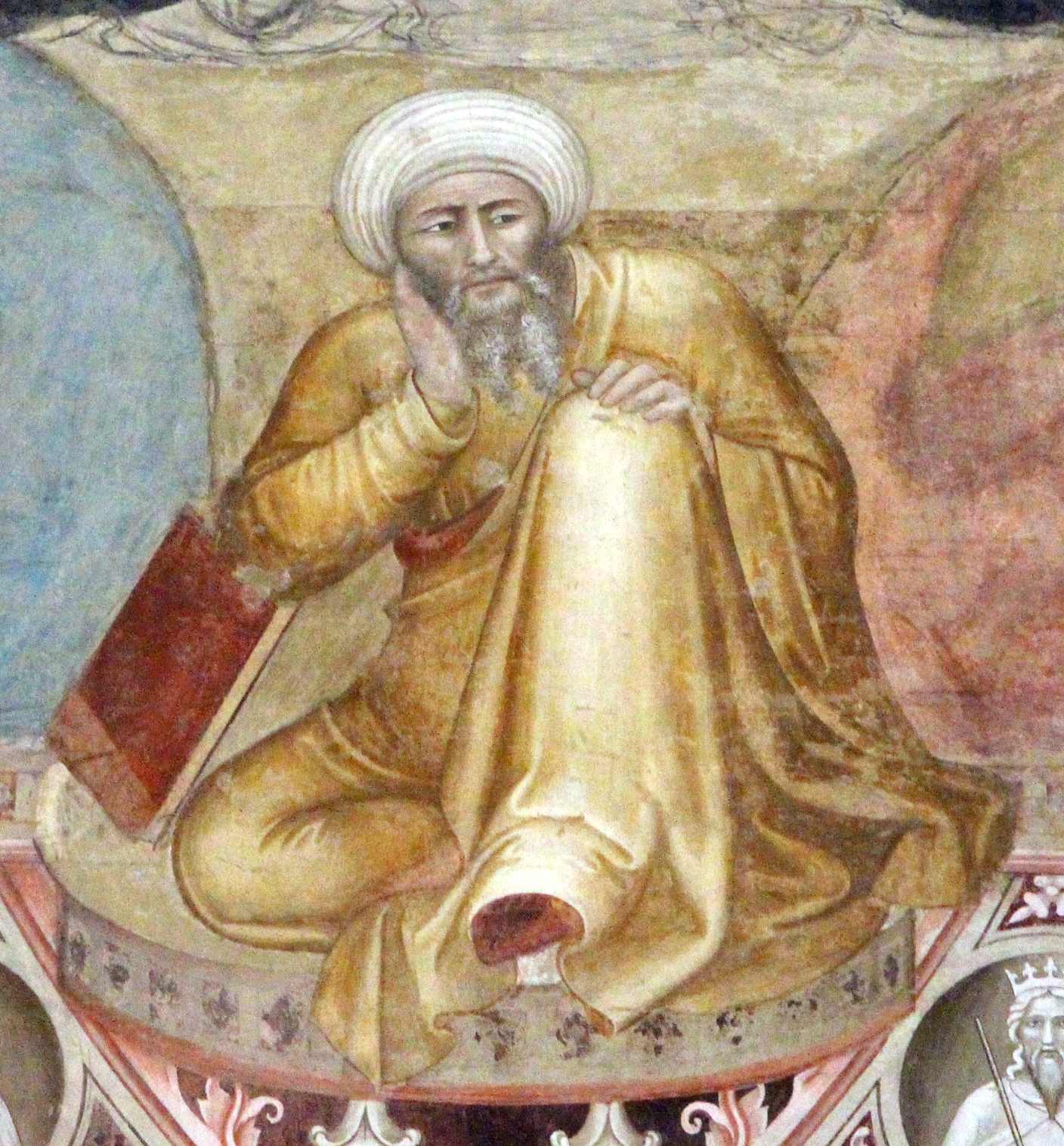
The Toledo School
The Toledo School of Translators (the modern scholarly term; medieval contemporaries did not use this label) was the loose network of Latin, Arabic, Hebrew, and Castilian translators who operated at Toledo between the 1140s and the 1280s, producing Latin translations of the substantial Arabic-language scientific, philosophical, and theological corpus that had accumulated in al-Andalus over the previous three centuries. The school's principal patrons were the archbishops of Toledo (particularly Raymond, who served as archbishop 1125-1152, and Rodrigo Jiménez de Rada, archbishop 1208-1247) and, in the thirteenth century, King Alfonso X of Castile (1252-1284), who substantially expanded the operation and added a substantial Castilian-language translation programme.
The principal individual translators of the Toledo school included Gerard of Cremona (1114-1187, the most prolific of the medieval translators, who produced Latin versions of approximately ninety substantial Arabic works in his Toledo period), Michael Scot (c. 1175-c. 1232, who translated Averroes' commentaries on Aristotle and substantial astronomical material), Adelard of Bath (c. 1080-c. 1152, an English translator who produced the first Latin version of the Arabic version of Euclid's Elements), and the team of Castilian-Jewish-Arabic collaborators of Alfonso X's court (who produced the substantial Castilian-language General estoria and Estoria de España, the first major historical works in any vernacular European language).

The substantive content of the Toledan translations is hard to overstate in its consequence for medieval Europe. The major works that the Toledo school transmitted to Latin Europe — Aristotle's Metaphysics, De Anima, Physics, Nicomachean Ethics (transmitted in Averroes' Arabic versions with Averroes' commentaries); Avicenna's Canon of Medicine; Al-Kindi's mathematical and philosophical works; Al-Khwarizmi's algebra and arithmetic; Al-Battani's astronomy; Galen's medical works (in the Arabic translations that preserved them); Ptolemy's Almagest; Euclid's Elements — constitute, collectively, the substantial intellectual content of the medieval Latin university curriculum of the thirteenth century and after. The European universities of Paris, Oxford, Bologna, and elsewhere built their philosophy and science teaching on the basis of these Toledan translations. The medieval European scientific tradition that emerged in the thirteenth century and developed through the early modern period was substantially built on this Toledan foundation.
The Andalusian poetic tradition
The Caliphal and post-caliphal Andalusian literary tradition produced, in Arabic and Hebrew, a substantial body of poetry that influenced both Iberian and broader European medieval literary developments. The two principal innovations were the muwashshah and the zajal: Andalusian strophic poem forms with refrains, written principally in classical Arabic with closing refrains in either Arabic or Romance vernacular, that introduced rhyme schemes and refrain structures previously unfamiliar in classical Arabic poetry. The Romance-language refrains (the kharjas) of the eleventh- and twelfth-century muwashshahat are, in fact, the earliest substantial documents of any Iberian Romance language — older than any Castilian, Catalan, or Galician-Portuguese literature, and the principal source for reconstructing the spoken Romance of pre-conquest al-Andalus.
The connection between Andalusian poetry and the troubadour tradition of medieval southern France has been debated since the seventeenth century. The contemporary scholarly position is that the troubadour love-poetry of Languedoc and Catalonia in the late eleventh and twelfth centuries was substantially influenced by Andalusian models, transmitted through the substantial cultural exchange across the Pyrenees during the period of Christian-Muslim interaction. The poetic conventions of courtly love that emerged in southern France in this period — and that subsequently spread throughout Latin Christian Europe — are recognisably related to the Andalusian courtly poetic tradition.
The Andalusian musical tradition
The Andalusian musical tradition that had emerged from Ziryab's school at Córdoba in the ninth century survived the fall of the caliphate and was transmitted to the post-caliphal taifa courts and ultimately, after 1492, to North Africa with the Muslim and Morisco emigrants. The contemporary North African Andalusian-music tradition (the nuba repertoires of Morocco, Algeria, and Tunisia) preserves substantial musical material that has direct continuity with the caliphal-period court music. The Andalusian classical music of Morocco — particularly the Fez and Tetouan traditions — has been studied since the early twentieth century and is performed continuously in the contemporary period. UNESCO inscribed the Algerian Andalusi musical tradition on the Representative List of the Intangible Cultural Heritage of Humanity in 2003.
The architectural inheritance
The architectural inheritance of the Caliphate of Córdoba is, in physical terms, the substantial surviving fabric of the Great Mosque of Córdoba (now the Cathedral of Our Lady of the Assumption), the partially-excavated palace-city of Madinat al-Zahra, and substantial fragments preserved in the post-caliphal Andalusian and North African architectural traditions. The ribbed-vault tradition, the multifoil arch tradition, the use of horseshoe arches in monumental architecture, the carved stucco decorative tradition — all of these survived from the caliphal period into the Almoravid and Almohad architectural programmes and, through them, into the Mudejar style of post-Reconquista Christian Iberia (the substantial use of Andalusian Muslim architectural conventions in Christian-built monuments, particularly in the kingdoms of Aragón and Castile in the thirteenth and fourteenth centuries).
The medieval European architectural tradition was also substantially influenced. The ribbed-vault technique that had been developed at Madinat al-Zahra and the Great Mosque of Córdoba in the tenth century — the use of crossed structural ribs to support a vault, allowing larger spans and lighter construction than barrel-vault and groin-vault systems — was transmitted to Christian Spain by the mid-eleventh century and from there into Norman southern Italy and northern Europe over the twelfth century. The Gothic ribbed-vault tradition that emerged in northern French cathedral architecture in the twelfth century has, on the substantial architectural-historical consensus, a substantial debt to the earlier Andalusian Islamic ribbed-vault tradition.
The substantial scholarly consensus of the late twentieth century is that medieval European intellectual, scientific, literary, musical, and architectural traditions all owe substantial debts to the al-Andalus tradition, of which the Caliphate of Córdoba was the brightest single moment. The next and final chapter takes up the survival of these inheritances in the contemporary Mediterranean world and the principal sites where the Caliphate can still be felt.
End of Chapter VIII