The puppet Sapa Inca whom Pizarro had installed in Cuzco in late 1533 — Manco Inca Yupanqui, a son of Huayna Capac brought up in the imperial capital — was not, in his own self-conception, a Spanish collaborator. He had accepted the Spanish protection because the Atahualpa faction's victory in the civil war and the Quito generals' occupation of Cuzco had left him in a politically untenable position; the Spaniards offered him the throne, with himself as the legitimate ruler restored by foreign aid. Once installed, however, Manco found his position progressively constrained by the Spanish demands for tribute, for women, for labour, and for the surrender of the empire's remaining ceremonial treasures. By 1535 his relationship with the senior Spaniards — particularly Hernando and Gonzalo Pizarro, the Pizarro brothers — was deeply hostile. He was repeatedly humiliated; he was, at one point, kept in chains. In April 1536, having secured permission from Hernando Pizarro to leave Cuzco for a hunting trip with the explanation that he was going to retrieve a hidden gold statue, Manco Inca escaped to the countryside, raised his available followers, and launched a major rebellion against the Spanish occupation.
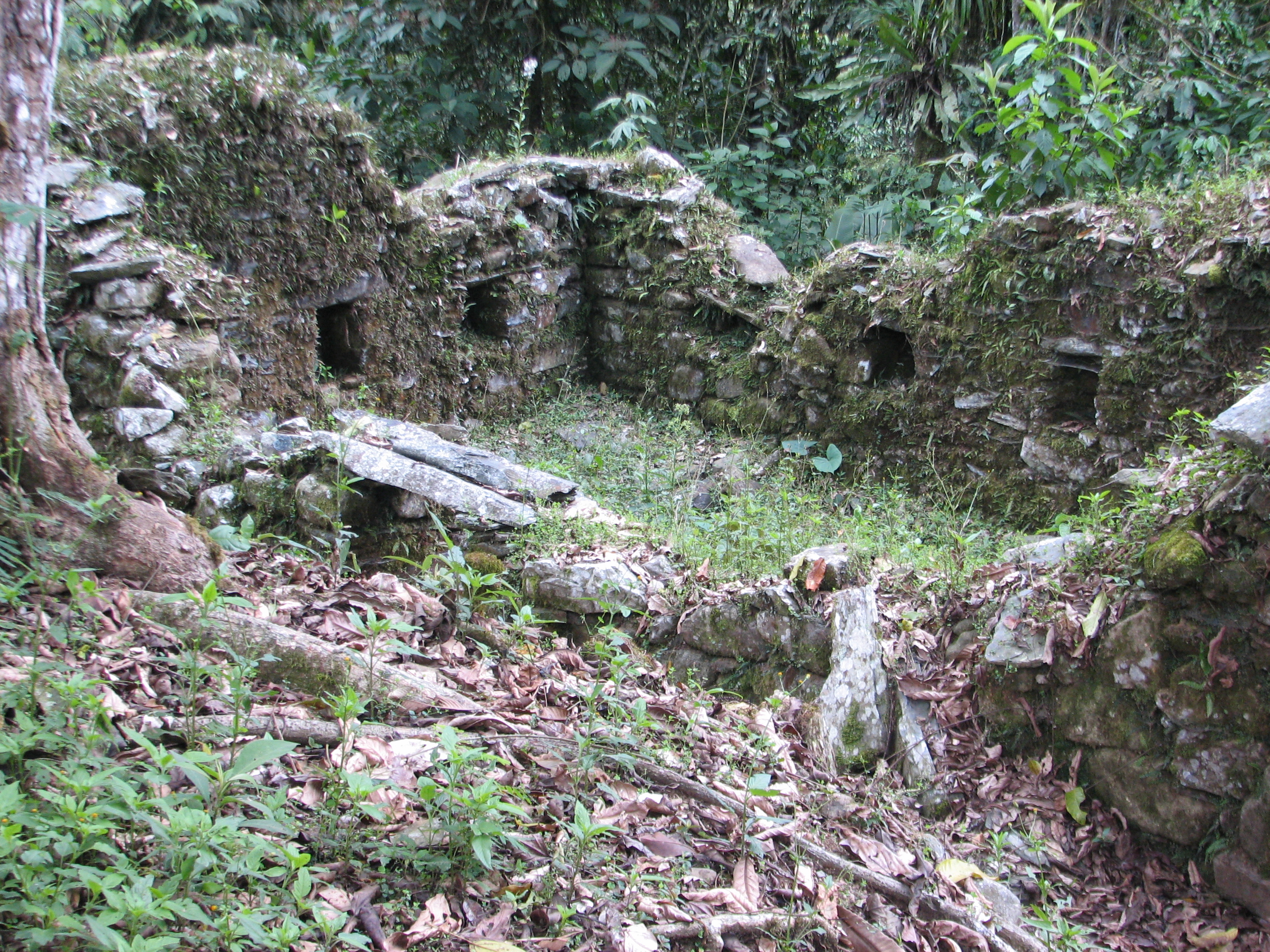

The siege of Cuzco
The 1536-1537 Inca rebellion was the most serious indigenous military challenge to Spanish rule in the Americas at any point in the sixteenth century. Manco mobilised what remained of the Inca administrative apparatus and assembled an army estimated at perhaps 100,000 to 200,000 men (the figures are uncertain). The principal operations targeted simultaneously Cuzco (where about 190 Spaniards were under siege from April 1536 to September 1537, the longest siege in the conquest period) and Lima (which Pizarro had founded as the new Spanish capital in January 1535; the siege of Lima was lifted within weeks after the Spanish cavalry's successful sortie). The siege of Cuzco came close to succeeding: the Inca army took most of the city, set fire to the central buildings (including the cathedral that had been built on the site of the Coricancha), and held the high citadel of Sacsayhuamán for several months. The Spaniards were reduced to a small defensive perimeter around the central square.
The siege was broken in May 1537 by a Spanish cavalry assault on Sacsayhuamán led by Juan Pizarro (who was killed in the action; the only Pizarro brother to die in the conquest). The Inca commander at the citadel, Cahuide, threw himself from the highest tower rather than surrender, and was canonised in subsequent Andean memory as a hero of the resistance. The recapture of Sacsayhuamán broke the Inca siege of Cuzco and led to Manco's withdrawal from the surrounding mountains into the more remote terrain of the eastern Andes.
The retreat to Vilcabamba
The territory Manco retreated to — the Vilcabamba region, in the cloud forest of the eastern Andean slopes north-west of Cuzco — was a strategic choice. The Vilcabamba area was sufficiently remote, mountainous, and forested that the Spanish military advantages (cavalry, artillery, infantry tactics dependent on open terrain) were substantially reduced. The Spaniards mounted several major expeditions into Vilcabamba over the following decades (in 1539 under Gonzalo Pizarro; in 1572 the decisive expedition under Martín Hurtado de Arbieto), none of which succeeded in destroying the residual Inca state until the last.
The Vilcabamba state itself was a substantial polity by sixteenth-century Andean standards. Its territory extended from the Apurímac valley in the south to the upper Urubamba and Vilcabamba river systems in the north. Its capital was the city of Vilcabamba (sometimes called Vitcos in the chronicles, though the two were probably distinct sites — modern archaeology has identified Vilcabamba the Old at the site of Espíritu Pampa, deep in the cloud forest; the smaller site at Vitcos served as a secondary residence). It maintained an army, an administrative system, an active religious life centred on the worship of the white rock of Yurak Rumi at Vitcos, and substantial agricultural production. It conducted limited diplomatic relations with the Spaniards in Cuzco and Lima. It also, periodically, raided the Spanish-occupied territory.
Manco's death and the successor Incas
Manco Inca was murdered at Vitcos in 1544 by a group of Spanish refugees from the Pizarro civil war — Almagrist supporters fleeing the post-1538 Pizarro victory, whom Manco had given asylum. The Spanish refugees, hoping to ingratiate themselves with the Pizarro government, assassinated their host with knives during a game of horseshoes (or, by other accounts, a chess game). They were killed by Manco's followers in the immediate aftermath but had succeeded in their object: Manco was dead.
The Vilcabamba state continued under three more Sapa Incas — Sayri Túpac, Titu Cusi Yupanqui, and Túpac Amaru — all sons of Manco. Sayri Túpac (r. 1544–1558) was a boy at his father's death; he was eventually persuaded to leave Vilcabamba in 1557 and accept a substantial Spanish pension and lands in the Yucay valley near Cuzco. He died in 1561 of unknown causes, possibly poisoned. Titu Cusi Yupanqui (r. 1563-1571) returned to Vilcabamba, succeeded his brother Sayri Túpac in the dynastic succession, dictated a substantial Spanish-language account of the conquest to a friar (the so-called Instrucción al Licenciado Lope García de Castro of 1570, the principal surviving Inca-perspective source on the conquest), and was the principal Vilcabamba ruler during the period of relative coexistence with the Spanish viceroyalty. He died, probably of natural causes, in 1571.
The end of Vilcabamba
The decision to destroy the Vilcabamba state was taken by the new Viceroy of Peru, Francisco de Toledo (in office 1569-1581), as part of his broader programme of consolidating Spanish rule. Toledo regarded the surviving Inca royal lineage as a political and ideological threat — a focus for indigenous resistance and a continuing claim of legitimacy that contested the Spanish settlement. He had also recently put down the so-called Taqui Onqoy movement of 1565-1572 — an indigenous religious revival predicting the return of the Inca and the expulsion of the Spaniards — and concluded that the residual Inca royal presence in Vilcabamba was actively fomenting unrest.
In May 1572, after Titu Cusi's death and the accession of Túpac Amaru (the last son of Manco still in Vilcabamba), Toledo declared war and despatched a substantial military expedition under Martín Hurtado de Arbieto. The expedition fought its way into Vilcabamba through difficult terrain over several months, captured the principal Inca settlements (Vilcabamba the Old was abandoned and burned by the Inca before the Spaniards arrived; the surviving Spaniards' descriptions of finding the city deserted, with smoke rising from the burned buildings, are preserved in their reports), and pursued Túpac Amaru into the deep cloud forest. He was captured in late June 1572 along with his pregnant wife. They were brought back to Cuzco in chains.
Túpac Amaru was tried by Toledo on charges of rebellion against the Spanish crown and idolatry. He was sentenced to death by beheading. The execution was carried out in the main square of Cuzco — the Plaza de Armas, in front of the cathedral that had been built on the site of his ancestors' palaces — on the 24th of September 1572. Túpac Amaru I — the last Sapa Inca in continuous lineage from the imperial period — was about twenty-five. He had accepted Christian baptism (taking the name Felipe) in the hours before his execution. He spoke, by the chronicle accounts, in Quechua to the crowds of indigenous Andean spectators, asking them to remain peaceful and to accept the Spanish rule. The crowd reportedly wept openly. The Spanish historian Sarmiento, who was present, described the scene as one of the saddest events he had witnessed.
The Vilcabamba state was abolished; the residual Inca royal family was dispersed; the imperial mummies that had been preserved continuously since Pachacuti's time were taken to Lima and destroyed (Viceroy Toledo had them publicly burned). The Inca state was, after 1572, completely over. Its institutional inheritance, however, was not.
The colonial and republican aftermath are the subjects of the next two chapters.
End of Chapter VIII