The early history of the Inca polity, before the campaigns of the 1430s, is preserved principally in oral tradition reduced to writing by Spanish chroniclers a century or more after the events. The traditional lineage gives a sequence of eight pre-imperial rulers (Manco Cápac, Sinchi Roca, Lloque Yupanqui, Mayta Cápac, Cápac Yupanqui, Inca Roca, Yáhuar Huácac, Viracocha Inca) before Pachacuti. The dates are uncertain (the lineage list is a stylised genealogy more than a precise chronology), but the broad period is approximately 1200–1430 AD. The territory under early Inca control was small — perhaps the Cuzco valley and immediate surrounding districts, an area of a few thousand square kilometres. The Inca were one Andean polity among many; they were not yet, in any meaningful sense, an imperial power.

The Chanca war
The founding event of the empire — preserved in unusually detailed oral tradition — was the Chanca war of approximately 1438. The Chanca confederation, a group of Quechua-speaking polities centred to the west of Cuzco around the modern town of Andahuaylas, launched a major attack on the Inca capital under their commanders Asto Huaraca and Tomay Huaraca. The reigning Inca, Viracocha, was an aged man whose nominated successor was the senior prince Inca Urco. According to the chronicles, Viracocha and Inca Urco fled the city, leaving the defence to a younger prince named Cusi Yupanqui.
Cusi Yupanqui organised the defence, rallied the population of the Cuzco valley, and defeated the Chanca army in two pitched battles outside the city. The miraculous element in the chronicle traditions — that stones on the battlefield rose up as warriors to fight on the Inca side — has been variously interpreted as a literary embellishment, a memory of the use of allied troops from outside the immediate Inca lineage, or a religious framing of the victory as the work of the deity Viracocha. What is not in dispute is that Cusi Yupanqui's victory restored Inca sovereignty over the Cuzco region and gave him a personal claim to the throne that displaced Inca Urco. He took the throne, by the chronicle traditions, by deposing his father Viracocha and his half-brother Inca Urco. He took the regnal name Pachacuti, "he who shakes the earth" or "earth-shaker," from the Quechua root pacha (world, earth, time) and the verb cuti (to turn over, to overturn).
The imperial programme
Pachacuti's thirty-three years on the throne (approximately 1438–1471, by the standard chronology; the dates are derived from the Spanish chronicles and have been variously adjusted) saw the transformation of the small Cuzco kingdom into a substantial state controlling most of the central and southern Peruvian highlands and the Bolivian altiplano. The principal military campaigns:
The Andahuaylas campaign (immediate aftermath of the Chanca war) absorbed the Chanca territory and extended Inca control westward to the Apurímac valley.
The Lake Titicaca basin campaigns (1440s) brought the Aymara-speaking polities of the Lake Titicaca shore — the Lupaqa, the Colla, the Pacajes, and others — under Inca control. The conquest of the Lake Titicaca region was strategically critical: it gave the Cuzco state access to the high-altitude agricultural and pastoral resources of the altiplano, the Tiwanaku monumental tradition (which the Inca court would adopt for its own architectural programme), and the substantial population base of one of the most demographically dense regions of the pre-Columbian Andes.
The northern campaigns (1450s-1460s) extended Inca control to the central Peruvian highlands as far as the Yaucha valley north of Cuzco.
By the end of Pachacuti's reign in 1471, the Inca state controlled approximately the modern departments of Cuzco, Apurímac, Ayacucho, Junín, Huánuco, Ancash, the Puno region around Lake Titicaca, and parts of the Bolivian altiplano. The state was now a substantial regional power. It was not yet, however, the empire of the next two reigns.
The rebuilding of Cuzco
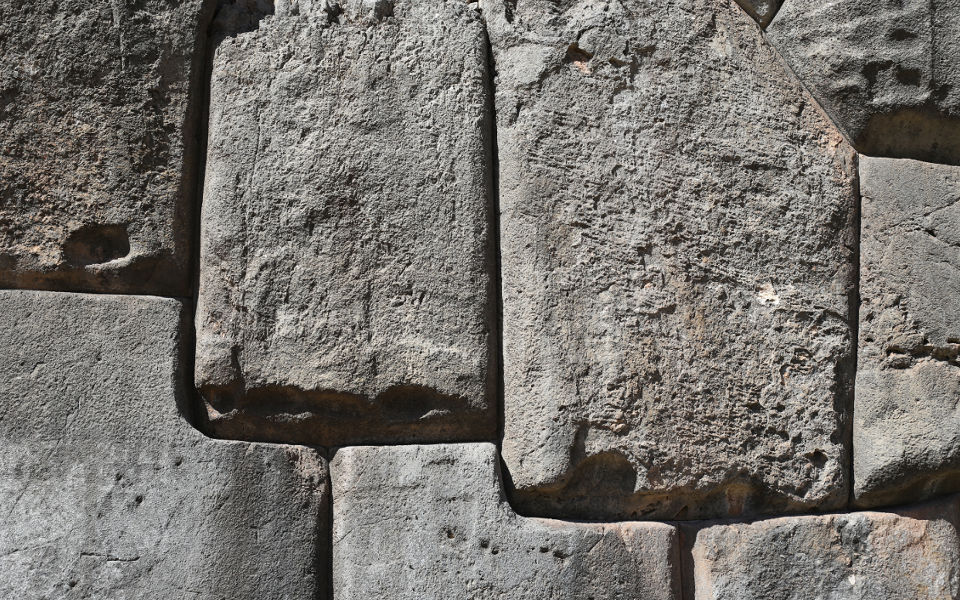
Pachacuti's most visible single achievement was the comprehensive rebuilding of Cuzco as an imperial capital. The pre-Pachacuti city had been (by the chronicle accounts) a substantial Andean town built in adobe and small stone construction. Pachacuti levelled it and rebuilt it in the polygonal cyclopean masonry that has been, ever since, the iconic Inca architectural style. The principal monuments of this rebuilding programme:
The Coricancha (the "Golden Enclosure," in Quechua) — the principal temple of the empire, dedicated to the sun god Inti. The temple complex (the surviving stone substructure of which is preserved beneath the colonial Santo Domingo monastery in central Cuzco) housed the principal Inca religious treasures, including a fully sized garden in solid gold (later melted down by the Spaniards), the mummies of all previous Inca sovereigns, and the principal Sun image. The polygonal masonry of the surviving curved wall is among the best-preserved Inca stonework anywhere.
Sacsayhuamán — the great hilltop complex above Cuzco, whose three tiers of zigzag walls in massive polygonal masonry (some individual blocks weigh over 100 tonnes) was, in pre-conquest form, both a ceremonial complex and a defensive citadel. The construction took, by Spanish chronicle accounts, about fifty years and the labour of approximately 20,000 men.
Ollantaytambo — the great fortress and temple complex 75 km north-west of Cuzco, in the Sacred Valley, with substantial Pachacuti-era construction at the temple sector and the residential terraces.
Machu Picchu — the cloud-forest royal estate, 80 km north-west of Cuzco above the Urubamba river, built during Pachacuti's reign as a private estate for the royal lineage (the Inca royal estate system, the panaqa, is treated in Chapter IV). The site was unknown to the Spaniards and was not occupied after the early colonial period; its preservation has accordingly been substantially better than that of most other Inca sites. The American explorer Hiram Bingham re-introduced it to international scholarship in 1911 (it was always known to the local Quechua-speaking population, as the contemporary records make clear).
The administrative reorganisation
Pachacuti was also, by chronicle tradition, the principal organiser of the Inca administrative system that would govern the empire of his successors. The four-part division of the empire (Tahuantinsuyu — the four suyus: Chinchaysuyu in the north-west, Antisuyu in the north-east, Collasuyu in the south, Contisuyu in the south-west) was instituted by his reign. The Cuzco social organisation by lineage-groups (the Hanan and Hurin moieties) was elaborated. The system of state-controlled storehouses (qollqas) was extended throughout the new territories. The institution of the panaqa — the royal estate of each deceased Inca sovereign, supporting his mummy and the living members of his lineage, with its own properties and personnel — was, in the standard interpretation, institutionalised in Pachacuti's reign as part of the new arrangements.
The political effect of the panaqa system was, in the longer term, to motivate territorial expansion: each Inca sovereign had to acquire new lands to support his own panaqa, since the lands of his predecessors were inalienable to their lineages. The system thereby produced a structural commitment to ongoing conquest that would drive the next two reigns. The first of these — Topa Inca's expansion of the empire to its full extent — is the subject of the next chapter.
Pachacuti formally abdicated in favour of his son Topa Inca around 1471 and died, by the standard chronology, in 1471 or shortly afterwards. He was the founder of the imperial system in everything but name, and the chronicles preserve his name with greater respect than any other Inca figure.
End of Chapter II