Daily life in the GDR was, for most of its citizens for most of its existence, not the grey nightmare of Western Cold War imagination, and not the rosy social experiment of late-Communist propaganda. It was, instead, a recognisable everyday life lived in a tightly-administered society with a small range of consumer goods, secure but limited employment, and an unspoken understanding that political ambition was incompatible with material comfort. A surprisingly large body of survey work conducted after 1990 has found that, by their own retrospective assessment, around 60% of East Germans remember the everyday material conditions of their lives in the 1980s as adequate or good.

Work
An East German left school at fifteen or sixteen (in the case of vocational training) or eighteen (in the case of academic Abitur). Vocational training (the Berufsausbildung) was extensive — about 70% of the workforce held a formal vocational qualification — and was conducted in cooperation between state vocational schools and state enterprises. Skilled workers received good pay relative to white-collar workers; the differential was much narrower than in the West.
The basic unit of working life was the brigade (Brigade) — a team of fifteen to thirty workers under a brigade leader (Brigadier) — which functioned as both the production team and the social unit of the workplace. Brigades held weekly meetings, conducted internal "socialist competitions" against other brigades, organised the workplace social life (the brigade canteen, the brigade outings, the brigade summer party), and were occasionally — particularly in the larger industrial enterprises — granted small subsidised holiday apartments at the Baltic coast for use by their members.
Unemployment was, by constitutional guarantee, zero. The right to a job was secured in law. In practice the country's enterprises were often overstaffed, and the consequence was the famous East German phenomenon of "labour hoarding" — workers held in employment whose marginal productivity was negligible, but who were paid full wages. The system was inefficient but humane.
Shopping
Daily shopping was conducted at one of three kinds of retailer. The HO (Handelsorganisation) chains were state-owned department stores and supermarkets. The Konsum cooperative stores were nominally member-owned but in practice indistinguishable from the HO. Private shopkeepers — particularly bakeries, butchers, hairdressers, and small grocers — survived in significant numbers until the 1972 nationalisation campaign, after which most were converted to state-owned outlets. By 1980 about 5% of the retail workforce was still working in privately owned shops; by 1989, about 2%.
What you could buy depended heavily on what was in stock. Basic goods — bread, milk, butter, beer, sausage, cheese, basic textiles, household linens, basic furniture — were generally available, though sometimes only in two or three varieties. Imported goods, electronics, fashionable clothing, and tropical fruit (oranges, bananas, lemons) were scarce. The queue for bananas at Christmas became a particular national symbol of the country's hierarchy of needs. Coffee was a permanent problem; the regime experimented with several substitutes (the most notorious was the 1977 "Kaffee-Mix," a blend of coffee with roasted grains) which provoked something close to genuine public outrage.
Housing
The Honecker-era Plattenbau housing programme built 1.9 million prefab apartments between 1971 and 1989. Most East Germans, by 1989, lived in one. The flats — typically two or three rooms, with kitchen, bathroom, and balcony — were small by Western standards but well-engineered, well-insulated, and centrally heated. Rents were extremely low (typically 5-10% of household income); the state subsidised all residential heating and utilities. Inner-city housing — particularly the surviving pre-war apartment buildings in Leipzig, Dresden, and Berlin-Mitte — was often in poor repair, neglected by the state in favour of new construction, and increasingly squatted by the late 1980s by artists, students, and the various subcultures of the GDR's quiet bohemia.
Transport
The car of the East German people was the Trabant. The Trabi was a small two-stroke sedan made of cotton-fibre-reinforced plastic (Duroplast) over a steel frame, with a 26-horsepower engine, no fuel pump (gravity-fed), and a top speed of around 100 km/h. Production began in 1958 and continued essentially unchanged until 1990. It cost around 12,000 East German marks new — about two years' average wages — and the waiting list for delivery was, by the late 1980s, fifteen years.
The Trabi was therefore as much an inheritance as a purchase. Families put their newborn children on the waiting list at birth. Used Trabants traded for more than new ones. The car was small, slow, loud, polluting, and structurally fragile, but it was a Trabant, and you had one, and that was the principal item on a citizen's status hierarchy.
Public transport was extensive and cheap. East Germany maintained one of the densest railway networks in Europe (Deutsche Reichsbahn, the country's state railway, kept its pre-1949 name throughout the GDR period). Tram networks ran in every major city. The S-Bahn served Berlin and Halle-Leipzig. A single-fare ticket on Berlin's S-Bahn cost 20 pfennig (about 5 US cents in 1989) and was good for an unlimited transfer.
Holidays
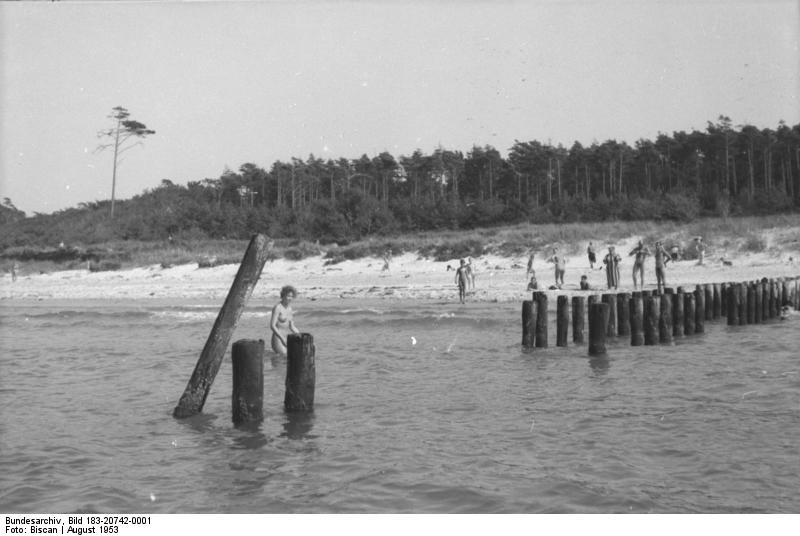
East Germans took, on average, three weeks of paid leave per year, plus public holidays. Tourism was, by 1989, an enormous industry. The Baltic coast — Rügen, Usedom, the Darß peninsula — was the country's principal holiday destination, with state-owned holiday camps (FDGB Ferienheime) handling perhaps two million bookings a year. The Saxon Switzerland (Sächsische Schweiz) national park and the Harz mountains were the inland alternatives. International travel was limited to other Communist countries — Czechoslovakia (the most popular destination), Hungary, Poland, Bulgaria (the Black Sea coast), and occasionally Cuba.
One peculiarity of East German beach culture was FKK — Freikörperkultur, "free body culture" — the German nudist movement, which had flourished since the 1900s and which the GDR endorsed as a form of healthy proletarian recreation. By the 1980s perhaps a third of East German beaches were nudist. The practice continued in unified Germany and is, today, one of the few cultural inheritances of the GDR that East Germans take from the country to the unified state.
Television
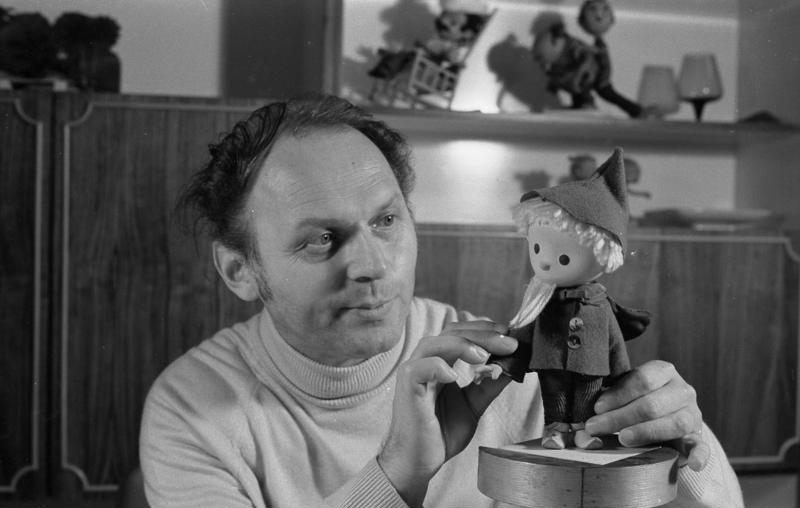
Two state television channels (DDR 1 and DDR 2) broadcast a mixture of news, sport, educational programming, drama, and the children's programme Unser Sandmännchen — the Little Sandman — a stop-motion bedtime fable that ran every evening from 1959 to 1991 (and is still produced, in slightly modified form, today). The Sandman is one of the few elements of GDR popular culture that has survived unification with universal affection.
Western television — ARD and ZDF from West Germany — was technically illegal to watch but, since the signal carried across the inner-German border, was watched by perhaps 80% of East Germans nightly. The state had given up on suppressing reception by the mid-1970s; the SED official position by the 1980s was that watching Western television was an individual choice that the state did not encourage but no longer enforced against. Many small details of late East German life — fashion, music, slang — were imported through Western television.
The Stasi
The single most-discussed feature of GDR daily life, in retrospect, was the Ministry for State Security — the Stasi. By 1989 it employed around 91,000 official staff and an estimated 173,000 informal collaborators (IMs), making it the largest internal security apparatus per capita in any modern state. Its archives, opened to the public after 1990, contained dossiers on around six million individuals. Its surveillance methods — telephone interception, mail opening, hidden cameras and microphones, agent provocateurs, "decomposition" of suspect groups by social manipulation — were extensive and sometimes ingenious. Its impact on daily life was substantial but uneven: most East Germans went their entire lives without direct Stasi attention; perhaps 10-15% were the subject of at least one significant file.
The next chapter takes up the Stasi specifically, and the dissident movement that existed in spite of it.
End of Chapter V