The Soviet Union was the political outcome of two distinct events in the year 1917, separated by eight months, that English-language histories conventionally call the February Revolution and the October Revolution. In the Russian Old Style (Julian) calendar that the empire still used in 1917, the events occurred in February and October; in the Gregorian calendar the rest of Europe used, and that the new Soviet state would adopt in February 1918, they occurred in March and November. Both names are in use; this volume uses the Old Style dates throughout the year 1917, as the contemporary participants did.
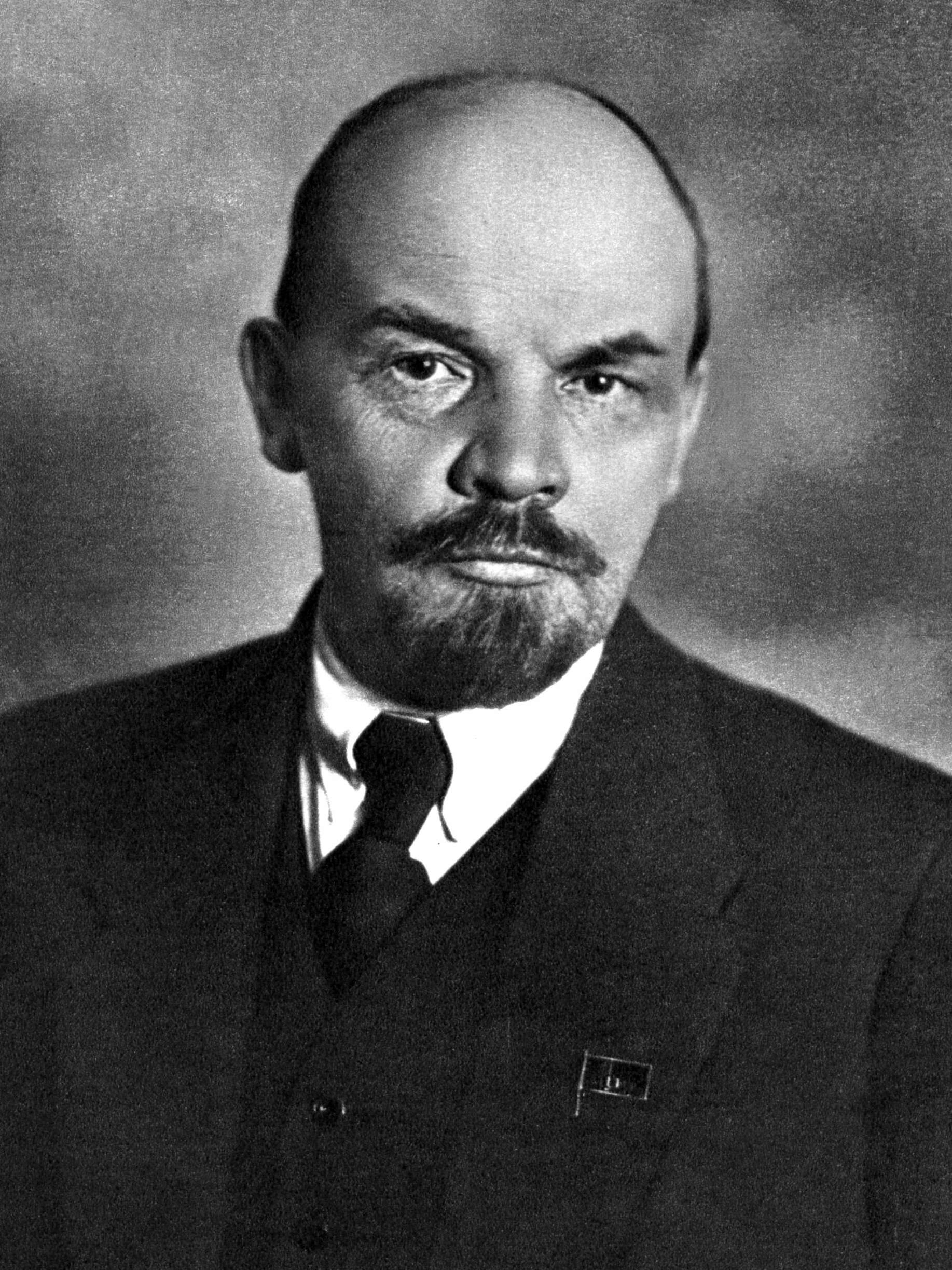
The February Revolution (23 February – 2 March 1917 OS) was a spontaneous urban insurrection in the imperial capital Petrograd, set off by a combination of food shortages, factory strikes, an International Women's Day march, and the refusal of the Petrograd garrison to fire on demonstrators. Within a week, Tsar Nicholas II had abdicated, his brother Mikhail had declined the throne, and the Romanov dynasty was over after three hundred and four years. The political vacuum was filled by a dual authority: a Provisional Government drawn from the State Duma (initially under Prince Lvov, from July under Alexander Kerensky), and a Petrograd Soviet of Workers' and Soldiers' Deputies, with the latter holding the loyalty of the armed forces and the workforce of the capital. The two bodies coexisted in uneasy partnership for eight months.
The Bolshevik return
The Russian Social Democratic Labour Party had split in 1903 into Bolshevik (majority) and Menshevik (minority) factions; the Bolsheviks, led from exile by Vladimir Ilyich Ulyanov (Lenin), were the smaller and more radical group. Lenin returned to Petrograd from his Swiss exile on the 3rd of April 1917, transported by the German imperial government in the famous sealed train across Germany (the German calculation was that a Bolshevik takeover would knock Russia out of the First World War; the calculation was correct, although the consequences were larger than Berlin had anticipated). His arrival at the Finland Station was greeted by a Bolshevik organising committee. His "April Theses," delivered that night, demanded immediate peace, immediate land redistribution, and the transfer of all power to the soviets — positions the Provisional Government would not adopt and that the Mensheviks considered premature. Over the next six months the Bolsheviks gained majorities in the Petrograd and Moscow soviets and steadily prepared an insurrection.
October
The October Revolution (24–25 October 1917 OS; 6–7 November in the new calendar) was the Bolshevik insurrection in Petrograd, carried out by the Military Revolutionary Committee of the Petrograd Soviet under Leon Trotsky's organisation. The operation was, in immediate military terms, almost bloodless: Bolshevik troops occupied the telegraph offices, the railway stations, the state bank, and the bridges across the Neva on the evening of the 24th, and stormed the Winter Palace — where the Provisional Government was meeting — at 2 a.m. on the 26th. Kerensky escaped to the south; the other ministers were arrested. The Second All-Russian Congress of Soviets, which had opened the same evening at the Smolny Institute with a Bolshevik majority, ratified the takeover and issued the new government's first decrees: the Decree on Peace (calling for an immediate armistice), the Decree on Land (transferring all landed estates to the peasants), and the formation of the Council of People's Commissars (the Sovnarkom) under Lenin's chairmanship.

The Civil War
The Bolshevik regime's first eighteen months were a sequence of progressively larger crises that produced the Russian Civil War of 1918–1922 — a multi-sided armed conflict that, taken broadly, killed between seven and twelve million people through fighting, terror, famine, and disease (the figure is contested), made the Bolshevik state into a dictatorial and militarised regime, and laid the geographical and institutional foundation of the Soviet Union.
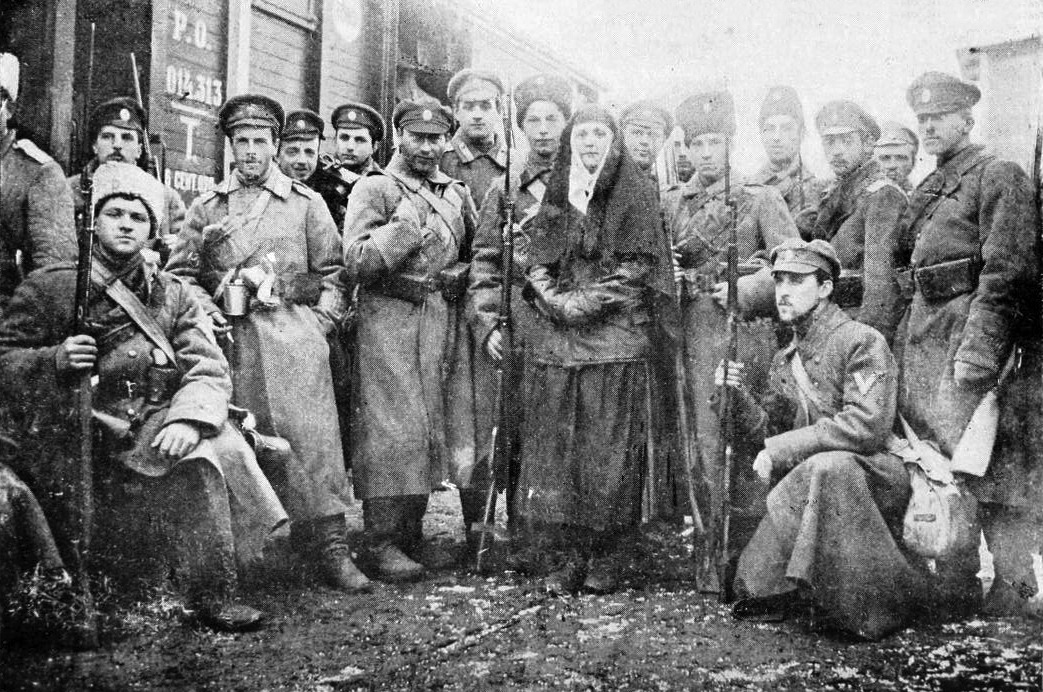
The principal opponents were the so-called Whites — a coalition of monarchists, conservative liberals, military officers, and former tsarist officials, under regional leaders (Kolchak in Siberia, Denikin in the south, Yudenich at Petrograd, Wrangel in the Crimea); the various national movements in the borderlands (Ukrainian, Polish, Finnish, Baltic, Caucasian, Central Asian — most of whom achieved at least temporary independence, with the Poles and Finns retaining it permanently); the peasant insurgent armies of southern Ukraine (the so-called Green movements, most famously the anarchist Nestor Makhno's forces); and an Allied expeditionary intervention by British, French, American, Japanese, and Czechoslovak troops at various ports, on various rationales. The Bolsheviks were militarily defended by the Red Army, organised from scratch by Trotsky as commissar of war from spring 1918, drawing on former tsarist officers (the so-called "military specialists") for technical command and on workers and peasants for the rank and file.
The war's pattern was that the Bolsheviks held the central industrial core of European Russia (Moscow, Petrograd, the Volga and the central provinces, with their rail network and arms factories), while the Whites operated from the agricultural and resource-rich periphery (Siberia, the south, the Caucasus) but could not effectively combine their offensives or hold ground for long. The largest single crisis was the autumn of 1919, when Denikin's army from the south reached Oryol (about 360 km from Moscow) and Yudenich's army from Estonia reached the outer suburbs of Petrograd; both offensives were thrown back within weeks. By autumn 1920 the major White armies had been defeated; Wrangel's evacuation from the Crimea in November 1920 is the conventional end of the principal civil war, though smaller resistance continued in Central Asia (the Basmachi) and the Russian Far East into 1923.
War Communism and the Cheka
The Bolshevik state during the civil war operated under the policy known as War Communism: the nationalisation of all industry, the prohibition of private trade, the requisitioning of grain from the peasantry at fixed (effectively confiscatory) prices, and the rationing of all consumer goods on a class basis. The policy fed the Red Army and the urban workforce but devastated the rural economy, contributing to the catastrophic famine of 1921–1922 in the Volga region that killed perhaps five million people.
The new political police — the Cheka, formally the All-Russian Extraordinary Commission for Combating Counter-Revolution and Sabotage, founded in December 1917 under Felix Dzerzhinsky — was the regime's instrument of internal terror. The "Red Terror" was formally proclaimed in September 1918 after an assassination attempt on Lenin; estimates of Cheka executions during the civil war range from fifty thousand to several hundred thousand, with comparable numbers killed by White and other armed forces. The Cheka was the institutional ancestor of the GPU, OGPU, NKVD, MGB, and KGB — the security service that would, under various names, be a continuous presence in Soviet life for the next seventy years.
The Treaty
The Treaty on the Creation of the Union of Soviet Socialist Republics was signed at the First All-Union Congress of Soviets in Moscow on the 30th of December 1922, by representatives of four nominally independent Soviet republics: the Russian SFSR (which itself contained the Russian, Volga German, Bashkir, Tatar, and other autonomous territories), the Ukrainian SSR, the Byelorussian SSR, and the Transcaucasian SFSR (the temporary union of Armenia, Azerbaijan, and Georgia, dissolved into separate republics in 1936). The new union had a federal constitution on paper and a centralised Bolshevik party apparatus in fact. The party — renamed the Russian Communist Party (Bolsheviks) in 1918, then the All-Union Communist Party (Bolsheviks) in 1925, then the Communist Party of the Soviet Union in 1952 — was the substantive governing institution of the country until 1990. The next chapter takes up its first internal political struggle, after Lenin's stroke and death.
End of Chapter I