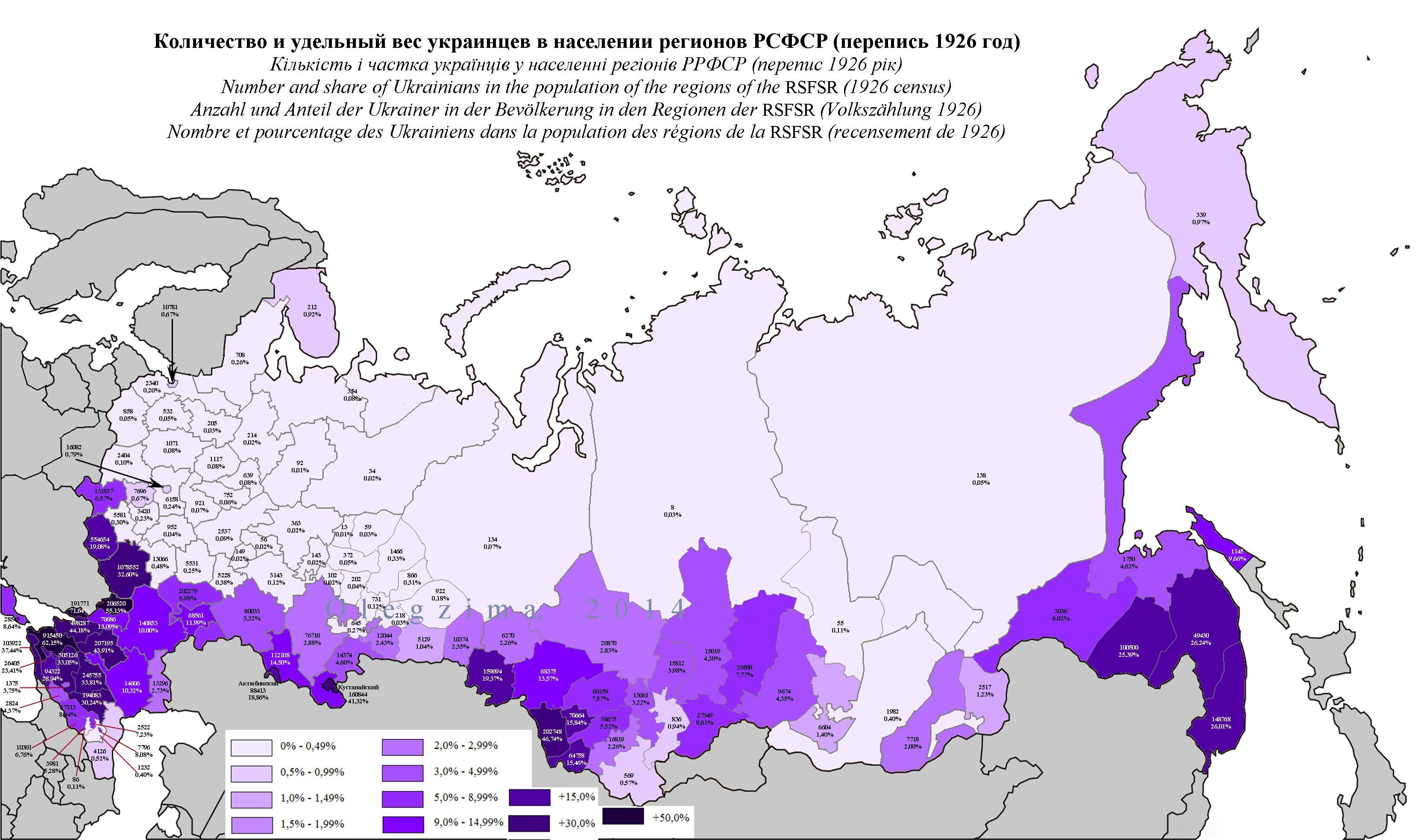
The early Soviet period in the Far East (1922-1934) was, for the Ukrainian Far Eastern community, a substantially better period than the late Civil War. The Bolshevik approach to national-minority policy under Lenin and the early Stalin period — the so-called korenizatsiia ("indigenization") programmes — was substantially supportive of non-Russian minority languages and cultures within the Soviet state. The substantive logic was that early Soviet political authority needed substantial local-cultural legitimacy, and that allowing minority-language institutional development would build that legitimacy in the non-Russian-speaking parts of the Soviet population.

Korenizatsiia in the Far East
The application of the korenizatsiia programmes in the Russian Far East included substantial support for Ukrainian-language institutions. Between 1923 and approximately 1934, the Soviet Far Eastern administration: established a network of Ukrainian-language primary schools in the principal rural Ukrainian-settlement zones (with about 250 such schools operating at peak); supported Ukrainian-language secondary and tertiary education at the principal Far Eastern urban centres (Vladivostok, Khabarovsk, Blagoveshchensk, with Ukrainian-language teacher training colleges and substantial Ukrainian-language faculty in the principal Far Eastern universities); supported the Ukrainian-language press (the substantial Soviet-period Far Eastern Ukrainian-language newspaper, Sotsiialistychna Pereorka, was published at Khabarovsk from 1928 to 1937, with the parallel weekly Khlibodar for the rural population); and tolerated Ukrainian-language cultural-civil institutions (Prosvita society successors, Ukrainian-language theatres at Vladivostok and Khabarovsk, Ukrainian-language radio broadcasting from 1930).
The Far Eastern Ukrainian cultural institutions of the 1920s and early 1930s operated under substantial Soviet political constraints — they were required to operate within the official Marxist-Leninist political framework, with substantial supervision by the Soviet Communist Party and the relevant security services — but the substantive Ukrainian-language cultural life of the community was substantial. The substantial Soviet-period Ukrainian-language Far Eastern literary tradition, including writers like Trokhym Borovets and various poets and prose-writers, was a real and substantive cultural achievement of the period.
The shift
Soviet national-minority policy shifted substantially in the early-to-mid 1930s under the consolidation of Stalin's personal political authority. The substantial korenizatsiia programmes that had been pursued in the 1920s were progressively reversed; the substantive position of national-minority languages within the Soviet state was reduced; Russian was promoted as the primary inter-republic language; minority-language schools were progressively converted to Russian-language operation. The shift was substantially complete by 1936-1938 and was substantially associated with the broader political climate of the Great Terror (covered in Volume VI Chapter IV).
The substantive destruction of the Ukrainian Far Eastern institutional infrastructure came in 1937-1938. The principal Far Eastern Ukrainian cultural and political institutions were systematically suppressed by the NKVD's mass operations. The Ukrainian-language schools were closed or converted to Russian-language operation. The Ukrainian-language press was suppressed. The Ukrainian-language theatre at Vladivostok was closed. The substantial Ukrainian Far Eastern intellectual community was substantially destroyed by direct NKVD operations — perhaps two to three thousand of the most prominent Ukrainian-language Far Eastern community figures were arrested between 1936 and 1938; most were either executed or sent to the Gulag with long sentences.
The substantive ethnic-political pressure on the Far Eastern Ukrainian community was paralleled by the more general Far Eastern ethnic-cleansing operations of 1937-1938, including the so-called Korean Operation (the forced deportation of about 170,000 ethnic Koreans from the Russian Far East to Central Asia between September and October 1937 — one of the largest single forced ethnic relocations in modern history) and the various Chinese, Polish, and other minor ethnic operations. The Far Eastern Soviet of the late 1930s was, in substantive ethnic-political terms, dedicated to the eradication of non-Russian community institutions in the strategic frontier territory; the Ukrainian community's institutional infrastructure was one substantial casualty among several.

The wartime period
The Soviet Far East was, during the Great Patriotic War (1941-1945), a strategically critical area — the principal Soviet position against the Japanese Empire (with which the Soviet Union was, technically, at peace under the Soviet-Japanese Neutrality Pact of April 1941 until the Soviet declaration of war on Japan in August 1945, but with substantial mutual military pressure throughout). The Far Eastern population, including the substantial Ukrainian community, was mobilised for Soviet military and industrial purposes. Approximately 200,000 men of Ukrainian Far Eastern background served in the Soviet armed forces during the war; the substantial Ukrainian Far Eastern industrial workforce contributed to the strategic Far Eastern military-industrial buildup. The substantive Ukrainian-language institutional infrastructure of the community had been largely destroyed by 1939; the substantial Ukrainian community continued to exist as a Russian-speaking ethnic Ukrainian minority of the Soviet Far East.
By the end of the Second World War in 1945, the Far Eastern Ukrainian community was — in institutional terms — a Russian-speaking minority population with substantial folk-cultural inheritance from the pre-Soviet and early-Soviet period but with very limited substantive Ukrainian-language institutional infrastructure. The community would continue to exist in this form through the rest of the Soviet period.
The next and final chapter takes up the post-1939 trajectory of the Ukrainian Far Eastern community and the contemporary memory of Green Ukraine.
End of Chapter V