The Ukrainian Far Eastern political organisation of 1917-1918 was, in institutional form, a sequence of four major political congresses (the so-called Ukrainian Far Eastern Congresses) supplemented by a continuous executive committee (the Ukrainian Far Eastern Central Council) operating between Congresses. The four Congresses — held at Mykolsk-Ussuriysky (June 1917), Khabarovsk (January 1918), Khabarovsk (April 1918), and Vladivostok (October 1918) — produced progressively more ambitious political claims, culminating in the April 1918 declaration of Ukrainian Far Eastern autonomy. The institutional structure was modelled, with substantial modifications, on the parallel structure of the Ukrainian Central Rada at Kyiv (with which the Far Eastern Council maintained occasional telegraph contact through the Russian Civil War period).

The Second Congress (January 1918)
The Second All-Ukrainian Far Eastern Congress convened at Khabarovsk on the 7th of January 1918, just over six months after the First Congress. The substantive political context had changed substantially in the intervening period: the October Revolution had produced the Bolshevik takeover at Petrograd; the Ukrainian Central Rada at Kyiv had declared full state independence (the Ukrainian People's Republic) on the 22nd of January 1918; the Russian Civil War was, in effect, beginning, with substantial Bolshevik-Red and anti-Bolshevik-White political polarisation across the Russian periphery. The Far Eastern political situation in early 1918 was substantively confused, with multiple competing regional authorities (the Provisional Far Eastern Soviet at Vladivostok; the Ataman Semyonov's Cossack regime in the Trans-Baikal; various Provisional Government residual authorities; the substantial Czechoslovak Legion that had begun its journey east from European Russia in late 1917).
The Second Congress's substantive resolutions were substantially more ambitious than the First Congress's. The delegates declared the establishment of a Far Eastern Ukrainian Krayova Rada (Regional Council) as the supreme political body of the Far Eastern Ukrainian community; demanded the formation of distinctly Ukrainian military formations under Krayova Rada command; established a Ukrainian Far Eastern administrative apparatus parallel to the existing Russian provincial administrations; and authorised the Krayova Rada to seek formal political union with the Ukrainian People's Republic at Kyiv. The political programme was, in substantive terms, an autonomy programme rather than an independence programme; the territorial entity would be part of a federated Ukrainian state covering the European Ukrainian provinces and the Far Eastern Ukrainian community.
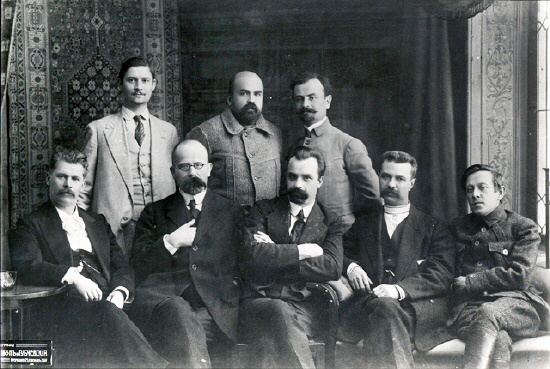
The Third Congress (April 1918)
The Third All-Ukrainian Far Eastern Congress convened at Khabarovsk on the 7th of April 1918. The substantive political context had again changed: the German occupation of the European Ukrainian territories under the Treaty of Brest-Litovsk (March 1918) had substantially complicated the Ukrainian Central Rada's political position; the Kerensky-Krasnov coup attempt against the Bolsheviks in southern Russia had failed; the Czechoslovak Legion's revolt against the Bolsheviks (which would become a substantial factor in the Far Eastern Civil War) had not yet begun but was being prepared.
The Third Congress's substantive declaration — issued on the 12th of April 1918 — was the most ambitious of the four Far Eastern Ukrainian Congresses. The Congress declared the establishment of a Far Eastern Ukrainian autonomous territorial entity (the precise name varies in the surviving sources; the most widely used name in subsequent Ukrainian-diaspora historiography is "Green Ukraine" or "Zelena Ukrayina"); declared the political union of this entity with the broader Ukrainian state; authorised the Krayova Rada to function as the supreme political authority of the territory pending the consolidation of the broader Ukrainian state; and demanded the recognition of the new entity by the existing Russian and international authorities.
The declaration was, on the substantive political record, an aspiration rather than a consolidated reality. The Krayova Rada did not control the Far Eastern Russian administrative apparatus; the major Far Eastern cities (Vladivostok, Khabarovsk, Blagoveshchensk) were under the substantive control of competing political authorities (variously Bolshevik, anti-Bolshevik, and externally backed); the substantive territorial control of the Ukrainian Far Eastern community was largely limited to the rural Ukrainian-majority districts, where local Ukrainian self-government was tolerated by the various competing regional powers but not formally recognised. The April 1918 declaration was a substantial political claim with limited institutional substance.

The Fourth Congress (October 1918)
The Fourth All-Ukrainian Far Eastern Congress convened at Vladivostok on the 25th of October 1918. The substantive political context had again changed: the Czechoslovak Legion revolt against the Bolsheviks had succeeded across Siberia in summer 1918, leading to the collapse of Bolshevik authority in the Russian Far East; the Allied intervention forces (British, American, French, Japanese, Czechoslovak) had landed in the Far East and were operating across the region; the substantial Provisional All-Russian Government had been established at Omsk under Admiral Kolchak (proclaimed Supreme Ruler in November 1918). The Far Eastern political situation in late 1918 was substantially anti-Bolshevik in its political colour but substantially fragmented in its institutional structure.
The Fourth Congress's substantive resolutions reflected the changed circumstances. The delegates abandoned the maximum claims of the Third Congress; declared the continued operation of the Krayova Rada as a substantive political entity; sought formal recognition by the Kolchak regime and by the various Allied intervention authorities; and authorised diplomatic representation to the Ukrainian Hetman government at Kyiv (the post-Brest-Litovsk regime under Pavlo Skoropadsky that had replaced the Ukrainian Central Rada and that was, in late 1918, the substantive Ukrainian state under German military protection). The Congress also established a substantial Ukrainian Far Eastern military programme, with the principal Ukrainian regiments of the Far East formally subordinated to the Krayova Rada.
The institutional position
By late 1918, after four Congresses, the institutional position of the Ukrainian Far Eastern community was substantial in the symbolic-political sense but limited in the substantive-political sense. The Krayova Rada existed as a recognised political entity with substantial moral authority over the Far Eastern Ukrainian community; the Ukrainian-language military regiments existed and were operating; the Ukrainian-language administrative apparatus operated in the rural Ukrainian-majority districts. The Krayova Rada did not, however, control the principal Far Eastern cities; did not collect substantial state taxes; did not operate substantial state services beyond the cultural-educational sphere; did not have formal recognition by any major international authority.
The substantive question of whether Green Ukraine in 1918 was a state at all is, accordingly, complicated. The institutional infrastructure of a state had been substantially declared; the substantive operational reality of a state was limited. The next chapter takes up what happened to the Ukrainian Far Eastern community in the complicated multi-party Civil War of 1918-1922 that followed the Fourth Congress.
End of Chapter III