The Russian Civil War in the Far East (1918-1922) was, in institutional complexity, the most chaotic period of the broader Russian Civil War. The principal political-military actors operating in the territory included: the Bolshevik forces (variously the Red Army, the local Far Eastern Bolshevik soviets, and partisan guerrilla units operating in the rural districts); the White Russian forces (variously Kolchak's army of the Provisional All-Russian Government at Omsk, Ataman Semyonov's Trans-Baikalian Cossack regime, Kalmykov's Ussuri Cossack regime, Diterikhs's Maritime Provincial regime, and various smaller White formations); the Czechoslovak Legion (the Czech and Slovak former prisoners of war who had revolted against the Bolsheviks in summer 1918 and were attempting to reach Vladivostok for evacuation to the western front); the Allied intervention forces (Japanese, British, American, French, Italian, Canadian, Polish, and various smaller national contingents); the Korean partisan formations (Korean nationalists fighting both the Japanese and the Bolsheviks); and the local indigenous-Siberian and Mongol formations operating on the regional fringes. The Ukrainian Far Eastern Krayova Rada and its associated military formations were one substantial actor among many.


The substantive trajectory
The four years 1918-1922 saw approximately three principal phases in the Far Eastern situation. The first phase (1918-1920) was the period of substantial anti-Bolshevik political dominance, with the Far East under the substantive control of Kolchak's regime at Omsk, supported by Japanese, American, and other Allied military intervention. The Ukrainian Far Eastern Krayova Rada operated, during this period, in substantial cooperation with the Kolchak regime — providing Ukrainian military units to the Russian Civil War effort, recognising Kolchak's overall political authority while maintaining substantial autonomy in Ukrainian-cultural and Ukrainian-administrative matters. The relationship was substantially complicated: Kolchak's regime was substantially Russian-nationalist in its political orientation and was suspicious of national-autonomy movements; the Ukrainian Far Eastern community was substantively committed to its own institutional autonomy; both sides made substantive concessions to maintain the working alliance.
The second phase (1920-1922) was the Far Eastern Republic period. After Kolchak's defeat by the Red Army at Irkutsk in February 1920 (Kolchak was captured by the Czechoslovak Legion, handed over to the local Irkutsk Political Centre, and shot on the 7th of February 1920), the Far Eastern Republic — a nominally independent buffer state established by the Bolsheviks to avoid direct military confrontation with the substantial Japanese intervention forces — was proclaimed at Chita in April 1920. The Republic operated as a substantively Bolshevik-controlled state in formal independence from Soviet Russia from April 1920 to November 1922. The Ukrainian Far Eastern Krayova Rada conducted substantive negotiations with the Far Eastern Republic during this period, with the substantive goal of maintaining institutional Ukrainian autonomy under the new arrangement. The Far Eastern Republic's constitution (adopted April 1921) did, in formal terms, recognise national-cultural autonomy for the Ukrainian and other non-Russian minorities; the substantive implementation was limited.
The third phase (1921-1922) was the period of the so-called Diterikhs regime — the last substantial anti-Bolshevik political authority in the Russian Far East, established in Vladivostok in May 1921 under the substantive military protection of the residual Japanese intervention force. The Diterikhs regime, which proclaimed itself the Amur Provisional Government and later the Provisional Priamur Government, operated until October 1922, when the Japanese withdrawal made its position untenable and the Red Army's Far Eastern offensive captured Vladivostok on the 25th of October. The Diterikhs regime was substantially less accommodating to the Ukrainian Far Eastern community than Kolchak's had been; the Krayova Rada's institutional position deteriorated in 1921-1922 under the Diterikhs administration.
The substantive trajectory of the Ukrainian Far Eastern movement
The Ukrainian Far Eastern Krayova Rada and its associated institutional infrastructure declined progressively through the Civil War period. The principal factors were: the substantial military pressure from the various competing regional authorities, which limited the Krayova Rada's ability to consolidate substantive territorial control; the loss of contact with the parent Ukrainian state in the European territories (the Ukrainian People's Republic was substantially destroyed by the Polish-Soviet war and the Soviet-Ukrainian war of 1919-1921; by 1922, the Ukrainian SSR was the substantive successor state in the European Ukrainian provinces, and the residual exiled Ukrainian People's Republic government in Poland was a substantially weaker political authority); and the substantial demographic-political pressure on the Far Eastern Ukrainian community, which suffered substantial population losses during the Civil War period (perhaps a hundred thousand additional deaths from combat, famine, and disease, against a Ukrainian Far Eastern population of about 1.6 million at the war's beginning).
By the time of the Red Army's capture of Vladivostok in October 1922, the Ukrainian Far Eastern Krayova Rada had effectively ceased to operate as a substantive political entity. The principal leadership had been variously killed, exiled, or absorbed into other political institutions. The substantive Ukrainian community survived as a regional ethnic minority but no longer as a self-conscious institutional political project.
The end
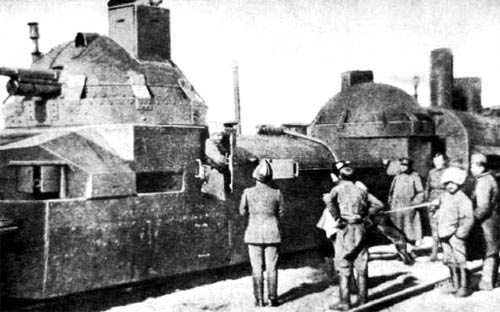
The Far Eastern Republic was absorbed into the Russian SFSR on the 14th of November 1922, just before the formal establishment of the Soviet Union on the 30th of December 1922 (covered in Volume VI Chapter I). The Far Eastern region became, from November 1922, an integral part of the Soviet state under the same administrative and political institutions as the rest of the country. The Ukrainian Far Eastern community continued to exist as a substantial ethnic minority of the Soviet Far East and was, in the early Soviet period (the 1920s), the object of substantial Soviet national-cultural autonomy policy under the so-called korenizatsiia ("indigenization") programmes. The substantive political project of an autonomous Green Ukraine, however, had ended.
The next chapter takes up the Soviet absorption and the subsequent suppression of Ukrainian-language institutions in the Far East.
End of Chapter IV